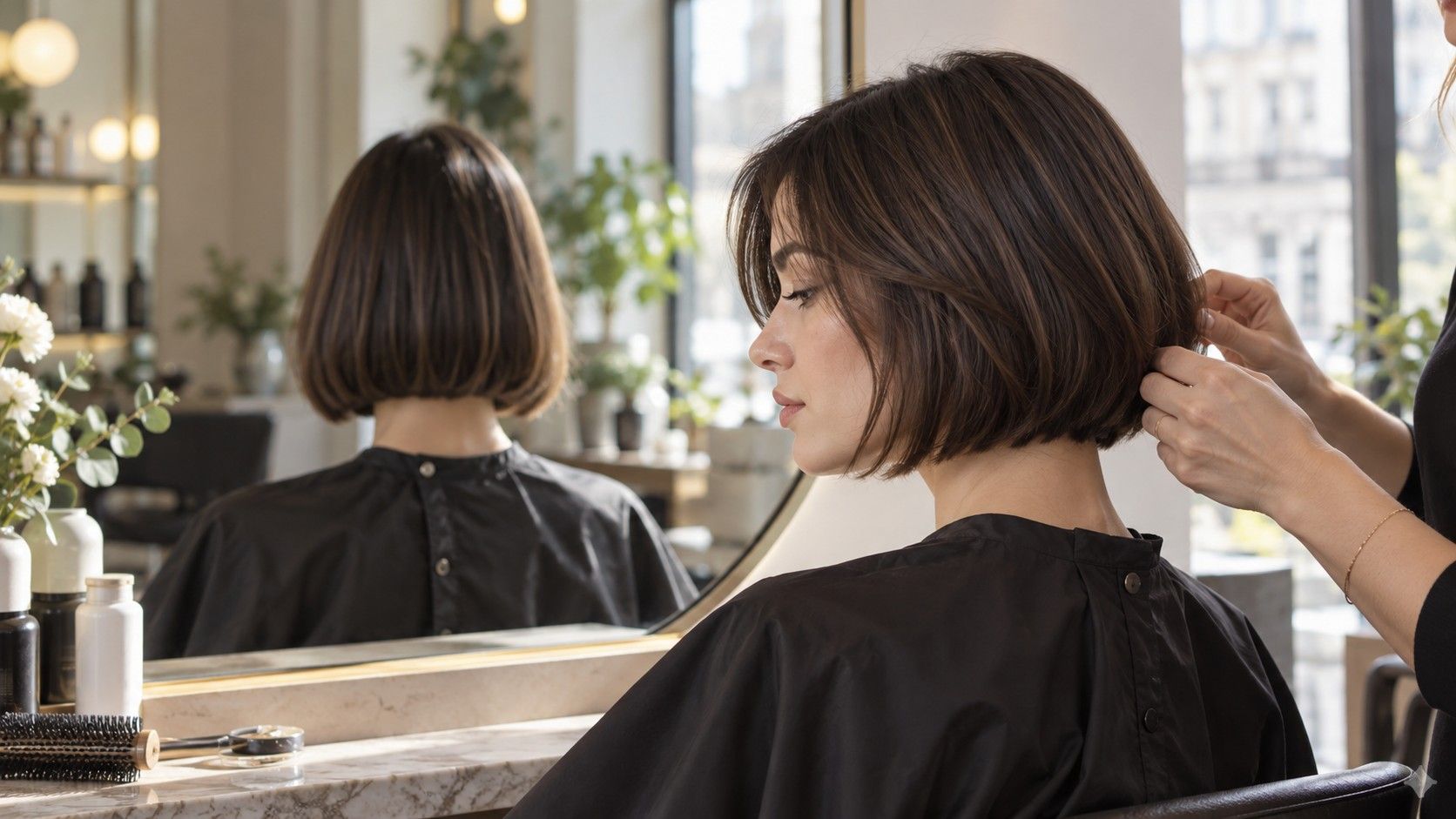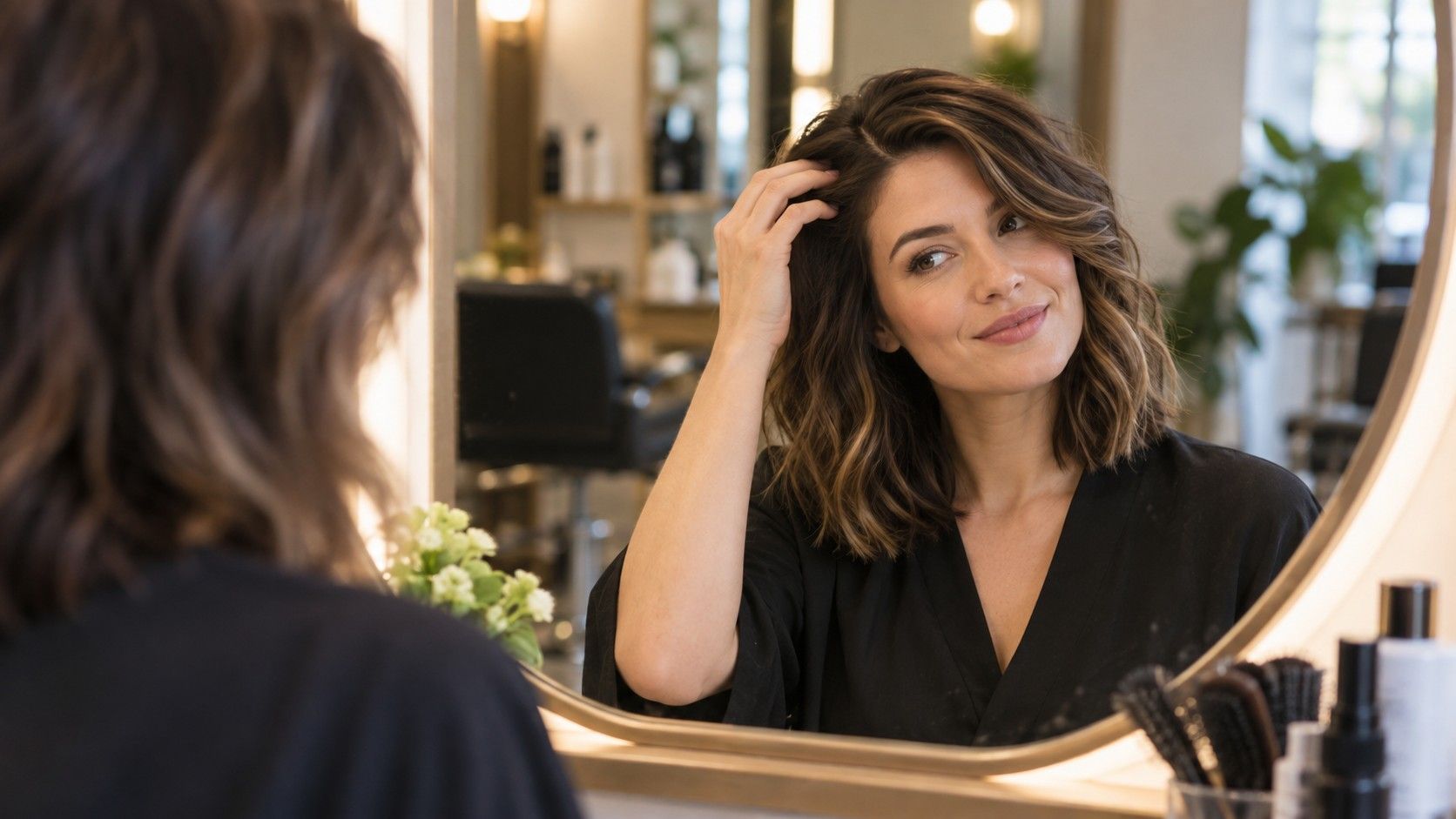
Bangs are a small section of hair with an unusually large daily impact. They change the visible forehead, sit close to the eyes, react quickly to oil and humidity, and need more frequent trimming than the rest of a haircut. The best bangs for face shape are not a guaranteed shortcut to a certain look; they are the fringe style that fits your hairline, texture, glasses, and willingness to style it on an ordinary morning.
The everyday commitment behind bangs
A fringe needs a different maintenance plan from the rest of your hair. Even people who wash their lengths twice a week may refresh bangs more often because they touch the forehead and absorb skincare, sunscreen, and natural oil. A quick sink wash or a mist-and-blow-dry routine can solve that, but it should be part of the decision before the first cut. If you dislike heat styling altogether, ask for a fringe that can dry in its natural direction rather than one that depends on a perfectly smooth bend.
Trims matter too. Most bangs look intentional for about three to five weeks before they begin to cover the eyes, split at the center, or lose the line that made them work. A salon may offer quick fringe trims, but check whether you can realistically visit or safely do a minimal cleanup at home. Growing out bangs is possible, yet it takes several months and usually needs small adjustments into side pieces. Choosing a longer, softer starting point is sensible if you are unsure.
Think about your workday. Do you wear a helmet, exercise regularly, work in a humid kitchen, or spend time outdoors in wind? Those conditions do not rule out bangs. They simply favor a style that can be swept aside, clipped back, or revived without washing your whole head. A fringe that is beautiful only in climate-controlled indoor air may be more work than it first appears.
Curtain bangs and soft framing
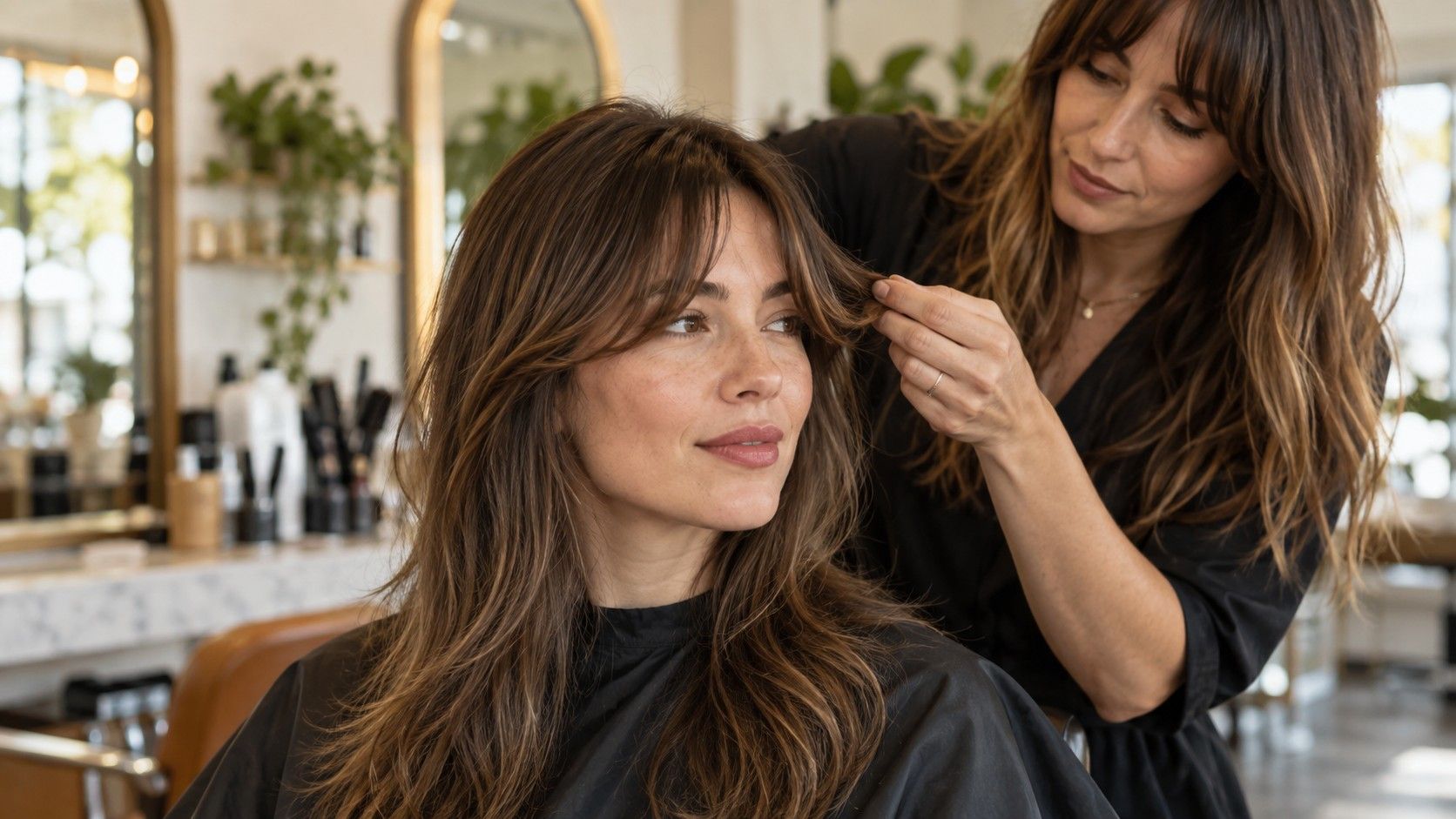
Curtain bangs are parted around the center or slightly off-center and lengthen toward the cheekbones. They are popular because they can blend into layers and move away from the face, which makes the grow-out process gentler than with a straight blunt fringe. On many face shapes, their soft opening leaves some forehead visible while adding movement near the temples. The exact width matters: a narrow curtain can look delicate, while a very wide one can act like full face-framing layers.
They are often a practical first fringe, but they are not maintenance-free. A cowlick at the front can push both sides backward, and fine hair may separate into thin strands unless the fringe has enough density. The usual styling method is simple but specific: dry the bangs first, moving them side to side until mostly dry, then use a small round brush to set the direction. If you let them dry after the rest of the hair, the root pattern may have already chosen the shape for you.
Curtain bangs can suit round, square, oval, heart, and longer face outlines because their length and parting are adjustable. Rather than asking whether they are universally flattering, decide where you want the shortest point to sit. Above the brow makes a stronger statement; around the cheekbone is softer; below the cheekbone reads more like a layer. Bring a photo with a similar hair texture, since loose waves and pin-straight hair make the same fringe look quite different.
Blunt, wispy, and micro bangs
Blunt bangs create a clear horizontal line, usually across or just above the brows. They can make a strong visual statement and work with bobs, long hair, curls, or a cropped cut. The tradeoff is precision: a blunt edge reveals uneven growth quickly and often needs more regular trimming. It can also feel heavy in humid weather if the hair is dense or the fringe is cut too wide. Ask the stylist to show where the outer corners will end; a fringe that extends far past the temples can make the forehead look visually broader.
Wispy bangs use less density and allow more skin to show through. They can be useful for someone who wants a light change or has fine hair, but they are not automatically easier. Too little hair can split into separate strings, especially over a cowlick or after a commute. A slightly denser center with feathered edges often gives more control than a sparse line across the whole forehead. Mention whether you wear glasses: the lower edge should not constantly brush the frames when you look down.
Micro bangs sit well above the brows and leave more of the forehead exposed. They can look sharp and expressive, but their placement is hard to disguise if you change your mind. They also put attention on the hairline and natural growth pattern, so an in-person consultation is especially valuable. Choose them because you genuinely like the proportion, not because someone claimed they will make a particular face shape look smaller or longer.
How texture and cowlicks change the choice
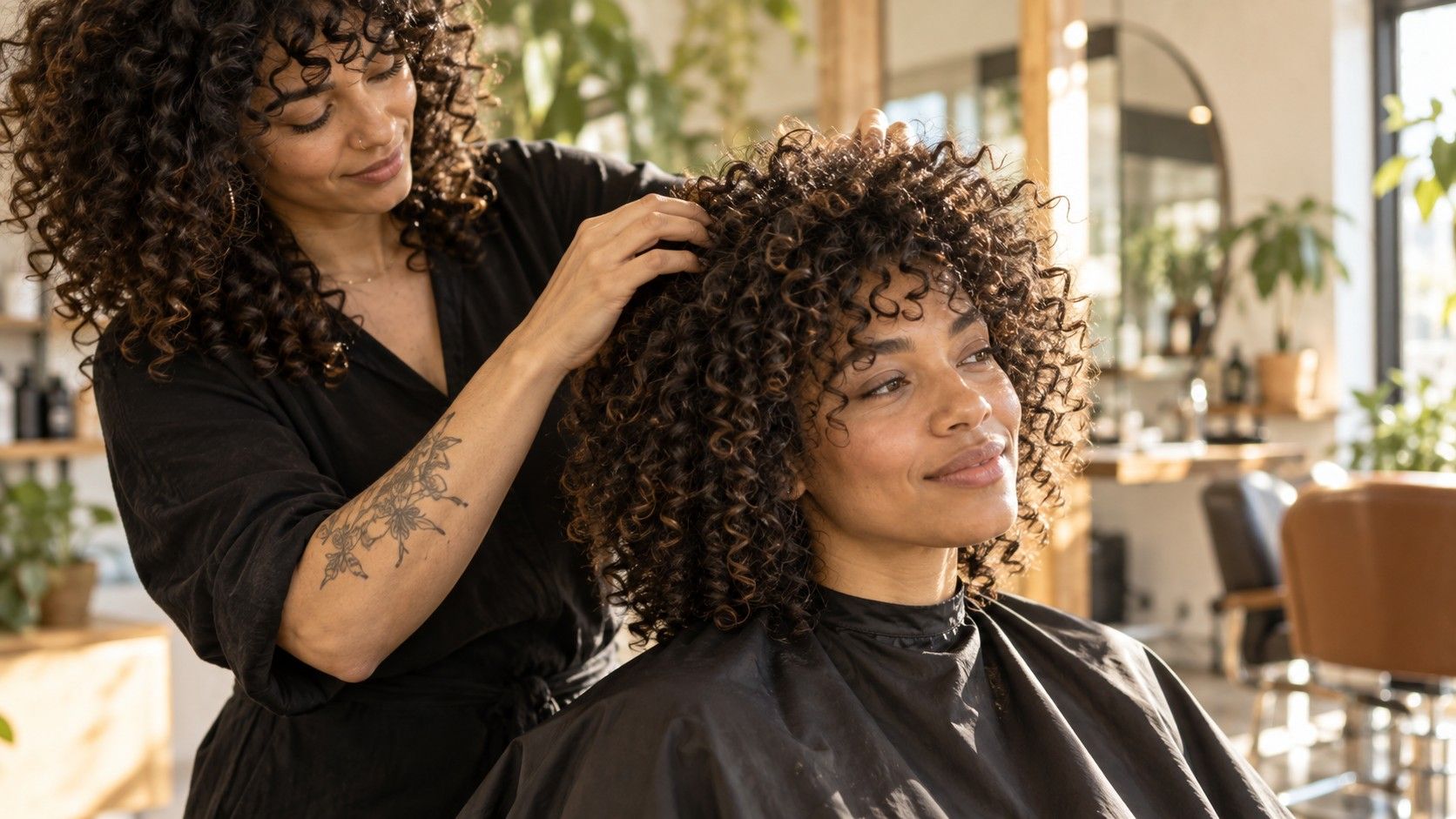
Texture decides how a fringe behaves after the salon. Straight hair may show every bend and split, while wavy hair can shrink upward as it dries. Curly or coily bangs can look excellent, but their length should be judged dry and in the pattern you wear most often. If the stylist cuts curly bangs wet and pulls them straight, the result may spring much shorter than expected. Ask to leave a little room for shrinkage and to see the final edge after the curls settle.
| Hair detail | What to discuss | Useful fringe direction |
|---|---|---|
| Strong front cowlick | Which way the roots push when air-dried | Longer curtain or side-swept shape that follows the growth |
| Fine, low-density hair | Whether the fringe will separate during the day | A compact, slightly denser section with soft edges |
| Dense straight hair | How much weight is comfortable across the forehead | Blunt or textured fringe with controlled internal weight |
| Wavy or curly hair | Dry length, shrinkage, and humidity response | Longer textured bangs assessed in the natural pattern |
Hairline shape matters as much as texture. A widow’s peak, uneven density near one temple, or two opposing cowlicks can make a center fringe separate. This is not a flaw to conceal. It is information the haircut should respect. Sometimes the best solution is a slightly off-center part, a longer side-swept line, or a fringe that starts farther back so it has enough weight. Ask the stylist to wet and dry the front in its natural direction before committing to a short line.
Questions to settle before your appointment
Go in with a few practical answers. How much forehead do you want to cover? Do you want hair in front of the brows, at the brows, or above them? Can you spend five minutes drying the fringe most mornings? Do you wear glasses, and do you need to pin the hair back for sport or work? These questions are more useful than trying to find one authoritative answer to “what bangs suit me.”
Bring reference photos that show the front, side, and relaxed version of the style. Say what you like in each image: perhaps the softness at the sides, the density in the middle, or the way it blends into longer layers. Also name what you do not want, such as a curtain that splits too widely or a heavy line sitting on your lashes. The stylist can then adapt the idea to your forehead, hairline, and natural part instead of copying an image literally.
For a cautious first try, start longer than your final goal. A longer fringe can be shortened at the next trim, while a very short one has only one direction to go. Once you know how your hair reacts to humidity, wash frequency, and a normal workday, choosing among the types of bangs becomes much easier. The best result is a fringe that feels intentional at the salon and still manageable when you are doing it yourself.