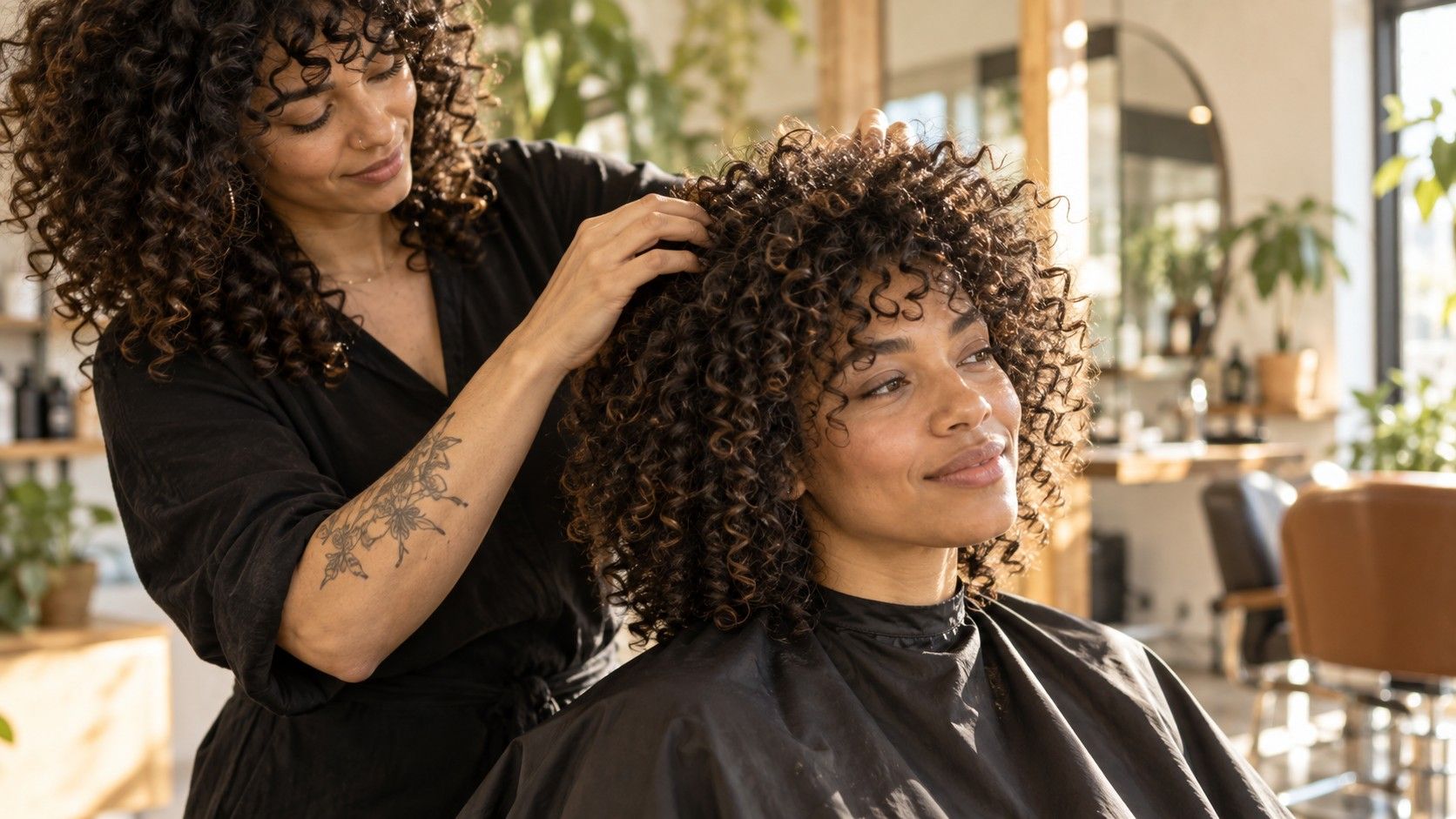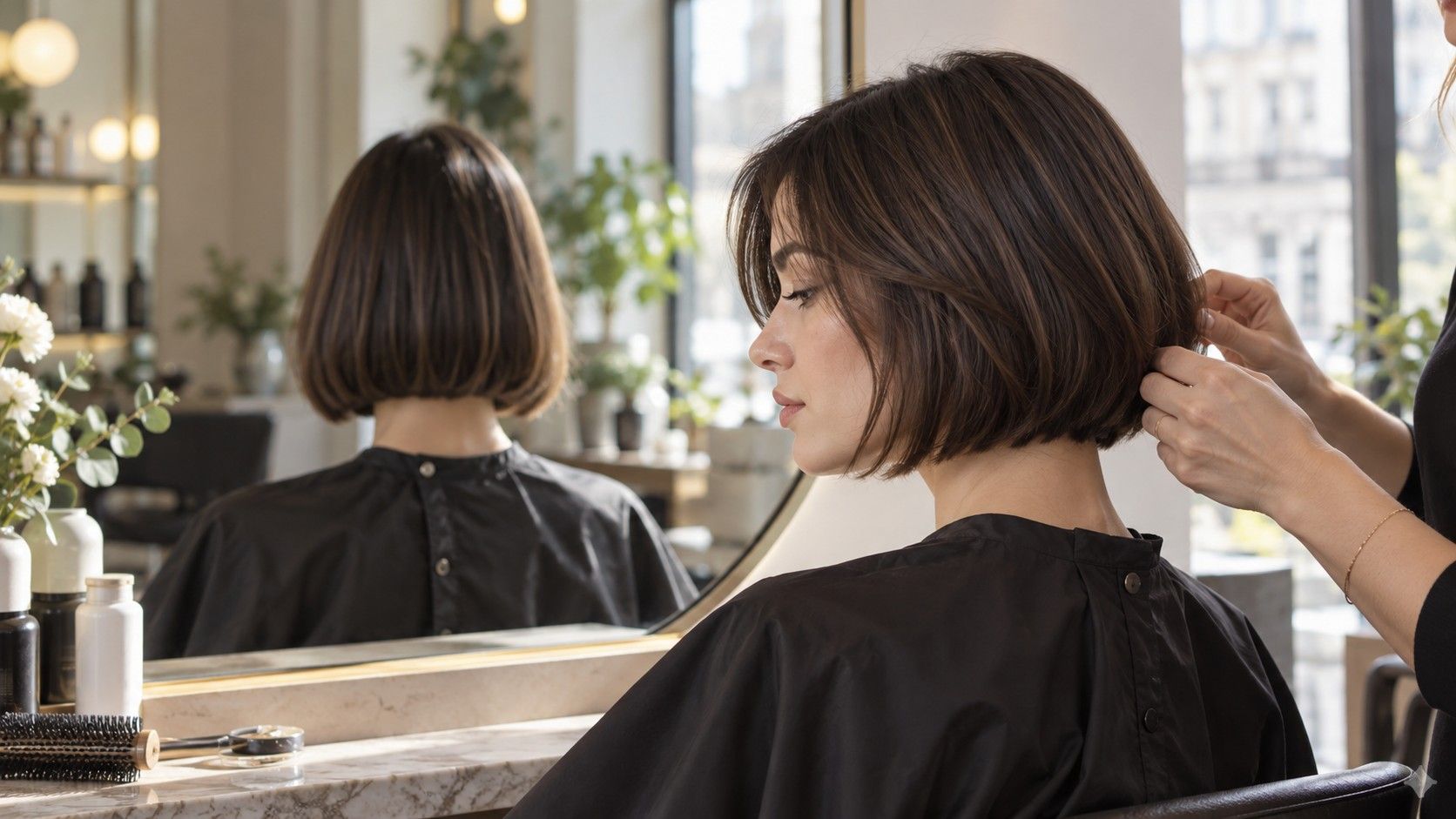
A bob haircut can look effortless in a photo, but its ease comes from choosing the right version for your hair, neckline, parting, and morning habits. The word covers a wide family of cuts, from a short French bob to a collarbone-skimming lob. Before deciding on length, it helps to separate the shape you like from the work it requires once you leave the chair.
A bob is a family of cuts, not one look
The common thread is a relatively compact length with a deliberate perimeter, but that leaves plenty of room for variation. A bob can be blunt and one-length, softly layered, stacked at the back, curved under, or deliberately a little undone. It may stop at the cheek, jaw, chin, neck, or collarbone. Two people can ask for a bob and walk out with cuts that behave completely differently in wind, humidity, and a quick ponytail attempt.
Start by identifying what attracts you. Is it the visible jawline, the fullness at the back, the clean edge, or the way a longer bob swings when you turn your head? Then compare that detail with your own hair texture. Straight fine hair may need a strong edge to look full. Thick hair may need internal shaping so the cut does not sit as a solid triangle. Wavy and curly hair need the perimeter checked dry because the apparent length can change as texture returns.
A reference photo is most useful when you can explain the feature you want rather than asking to duplicate the person. Bring one image for length, another for volume, and perhaps a third for the parting or fringe. This helps the stylist combine ideas without forcing a French bob onto hair that behaves more like a long bob, or building a stacked back into a routine that never includes a blowout.
French, Italian, blunt, and long bobs
The French bob is usually short, often around the jaw or slightly above, with a relaxed line and sometimes a fringe. Its charm is proximity to the face: the eyes, cheekbones, and neck are more visible. That also means it asks for confidence about short front pieces and a willingness to reset them after sleep. Hair with a strong cowlick or a very active wave can still wear this shape, but the fringe and part must be planned around that movement.
An Italian bob is generally fuller, smoother, and longer than a French bob, often landing between chin and neck. It is associated with a rounded, polished outline and enough weight to look substantial. That can be helpful for medium or thick hair, but the finish often benefits from a blow-dry technique. If you air dry most days, ask to see a softer interpretation rather than assuming the salon's glossy version will appear on its own.
A blunt bob uses a crisp perimeter with little visible layering. It can make thin ends look denser and creates a strong graphic line, especially with a center part. The lob, or long bob, extends toward the collarbone and is usually the most flexible member of the group. It can still look intentional down, but it is easier to clip back, tuck behind the ear, or gather into a small tie. That flexibility is why it is often a sensible first move for someone leaving long hair.
| Bob type | What it tends to suit in real life |
|---|---|
| French bob | Short-face framing with regular fringe and shape maintenance |
| Italian bob | Fullness and a polished rounded finish, often with blow-drying |
| Blunt bob | Fine or medium hair that benefits from a strong-looking perimeter |
| Lob | More styling options and an easier transition from longer hair |
Choose length around your jaw and neckline
Length changes the visual emphasis of a bob. A line at the chin puts attention around the mouth and jaw. A cut that sits just below the jaw can soften that transition and make tucking behind the ear easier. A neckline-length bob can show the neck beautifully but may ride up on collars or scarves. The safest approach is to choose a dry landmark that you can see in the mirror rather than relying only on a measured number of inches.
Consider what your hair does at that landmark. A stubborn outward flip near the jaw may be easy to embrace in a textured bob but frustrating in a sleek blunt one. A strong cowlick at the nape can affect how a short back sits. If you wear glasses, headphones, high collars, or a bike helmet regularly, mention it. These small routine details influence whether a short perimeter feels sharp and comfortable or constantly gets disturbed.
Your neck and shoulders matter to maintenance too. A bob that touches the shoulder can flip out because the ends meet a physical ledge; this is not necessarily a bad haircut, but it should be an intentional effect. Moving the length slightly above or below that point can change the behavior dramatically. Ask the stylist to show where the dry ends will land when you stand normally, not only when your head is tilted forward during cutting.
The styling commitment people overlook
A bob is often described as low maintenance because there is less hair to wash and dry. That can be true, but a precise shape reveals sleep creases, parting changes, and uneven bends more quickly than long hair. A five-minute reset may be enough: wet the front, smooth the part, and direct a few pieces with a brush or diffuser. A polished blowout bob takes longer, while a textured wavy version may be simpler if you let its irregularity be part of the design.
Be honest about tools. If you dislike round brushes, choose a cut that does not depend on a perfectly turned-under edge. If you already diffuse waves, ask for a bob that keeps enough texture to look good with that method. Heat tools can refine the front or add a bend, but they should be an option rather than the only way the cut makes sense. The best bob hairstyle for you is not necessarily the one that looks most finished under salon lights; it is the one you will repeat on an ordinary workday.
Parting affects this more than people expect. A center part creates symmetry and can make a blunt edge feel modern, yet it may expose flat roots. A side part creates instant volume but can push more hair over one side of the face. Test both with your natural texture before deciding. If you regularly change your part, the cut should have enough balance that it does not collapse when moved a centimeter.
How often a bob needs reshaping
Most types of bob haircuts look their best when the outline is maintained rather than allowed to drift for many months. A very short French or stacked bob may need attention every six to eight weeks because a small amount of growth changes the proportion quickly. A blunt chin-length bob often benefits from a similar rhythm if the clean perimeter is the point. A lob and softer layered bob can usually tolerate more time because the shape has more room to grow.
Maintenance is not only about the ends. A growing fringe, heavy nape, or crown that loses its balance can change the style before the overall length looks long. When booking, ask which part will need reshaping first and whether a quick fringe or neckline appointment would help between full cuts. That gives you a realistic schedule instead of waiting until the whole haircut feels unfamiliar.
Color and heat habits can alter the schedule as well. Lightened ends may need a small trim sooner to keep a blunt line looking dense. Frequent straightening can make a wavy bob lose some spring and sit differently at the perimeter. Use the first few weeks to observe, not to judge every change as a mistake. Take a quick photo on wash day and another after a normal commute; patterns become obvious when you can compare them.
What to say in the salon chair
A useful request includes length, behavior, and limits. You might say that you want a collarbone lob with a stronger perimeter, enough length to tuck behind the ear, and soft movement that works air-dried. Or you may want a jaw-length bob but no short fringe because you do not want to style it daily. These details give the stylist practical boundaries, which are more helpful than a single label such as modern bob.
Ask for the back, sides, and front to be checked with your usual part. If your hair is wavy or curly, ask to see the perimeter dry before the final length is decided. If your hair is thick, discuss whether weight will be removed internally or with visible layers; those methods leave very different results. A clear answer helps avoid the common disappointment of asking for less bulk and ending up with ends that feel too thin.
Finally, agree on what a successful first week looks like. You may need two or three washes to learn how a new length dries, especially if you are moving from long hair. If one side flips out or the front feels too heavy, a small adjustment is easier than trying to correct it yourself. A well-chosen bob should feel deliberate with your normal routine, whether that routine is a quick air-dry, a diffuser, or a carefully practiced blowout.