Face shape advice is most useful when it gives you a few things to test, not a list of forbidden haircuts. A good cut can shift emphasis with a parting, fringe, layers, or volume, but it cannot and should not turn one face into another. Start by noticing your proportions in everyday light, then choose the details that make you feel comfortable in your own features.
What face shape advice can and cannot do
People often try to identify a face shape by tracing a selfie, then get stuck between two labels. That is normal. A face can have a broad cheekbone area, a soft jaw, and a taller forehead all at once. Instead of forcing a single answer, look at the proportions that affect a haircut: where the face is widest, whether the jawline reads soft or angular, and how much forehead you prefer to leave visible. These observations are more actionable than arguing over whether you are exactly oval or heart-shaped.
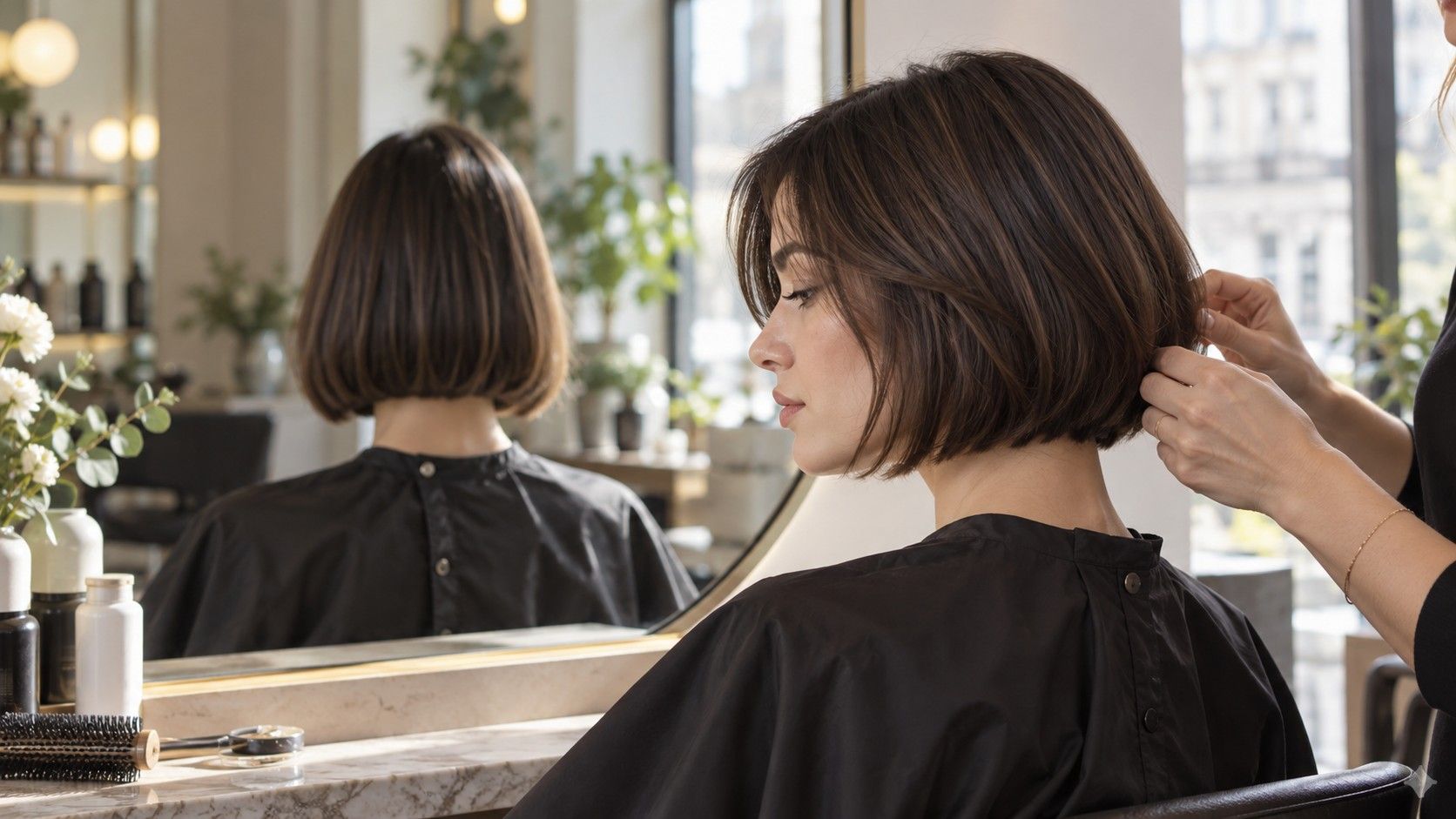
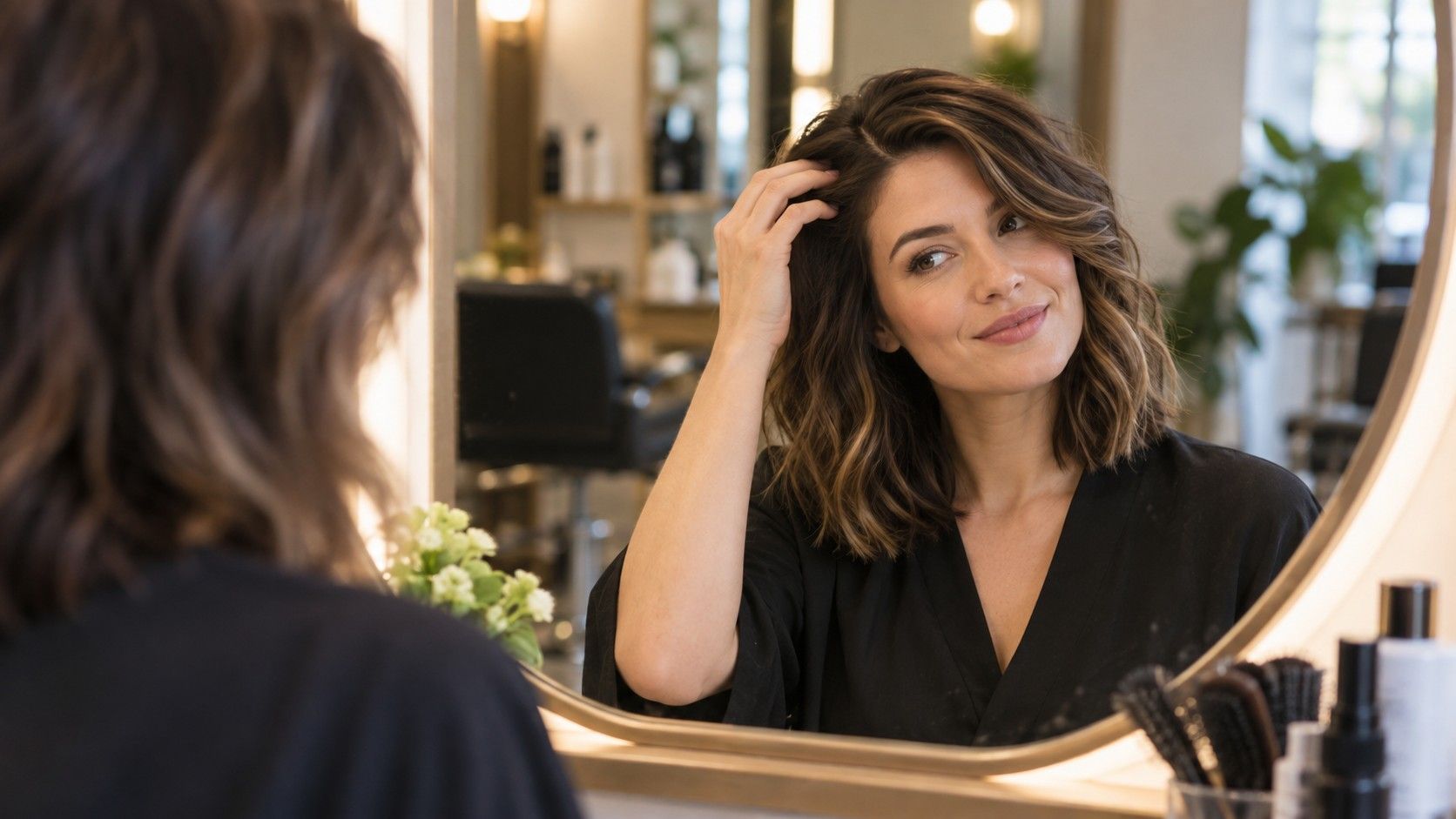
Hairstyles for face shape are really about distribution. Hair close to the cheeks adds width there; lift at the crown adds vertical emphasis; a wide fringe changes the visible forehead; a deep side part shifts asymmetry. None of these choices are corrections. They are design tools, and their effect changes with hair density and texture. A smooth blunt bob and an airy wavy bob can be the same length but create completely different outlines.
Use photos carefully. A front-facing image with the camera near the face can widen the center, while a high camera angle can lengthen it. Check a mirror, a relaxed phone photo taken from farther away, and your side profile before drawing conclusions. The question is not “what haircut suits my face” in the abstract. It is which shape feels good when you see it from the angles that matter in daily life.
Round and square face considerations
A round face often has similar width and length with softer transitions around the jaw. If you want a little more vertical movement, a side part, subtle crown volume, or layers beginning below the cheekbone can do that without relying on an extreme cut. Long face-framing pieces are often easier to live with than short layers that end at the widest point of the cheeks. However, a chin-length bob is not automatically off limits; its success depends on whether the ends are crisp, tucked, waved, or made fuller at the sides.
A square face has a more defined jawline or forehead width. Soft bends, a loose fringe, and pieces that move around the jaw can create a gentler contrast if that is your preference. A strong jaw can also look striking with a precise blunt bob, a pixie, or a center part. The practical decision is about contrast: do you want the haircut to echo the clear lines of your features or add softness around them? Both can work, but ask to see the intended line from the side as well as the front.
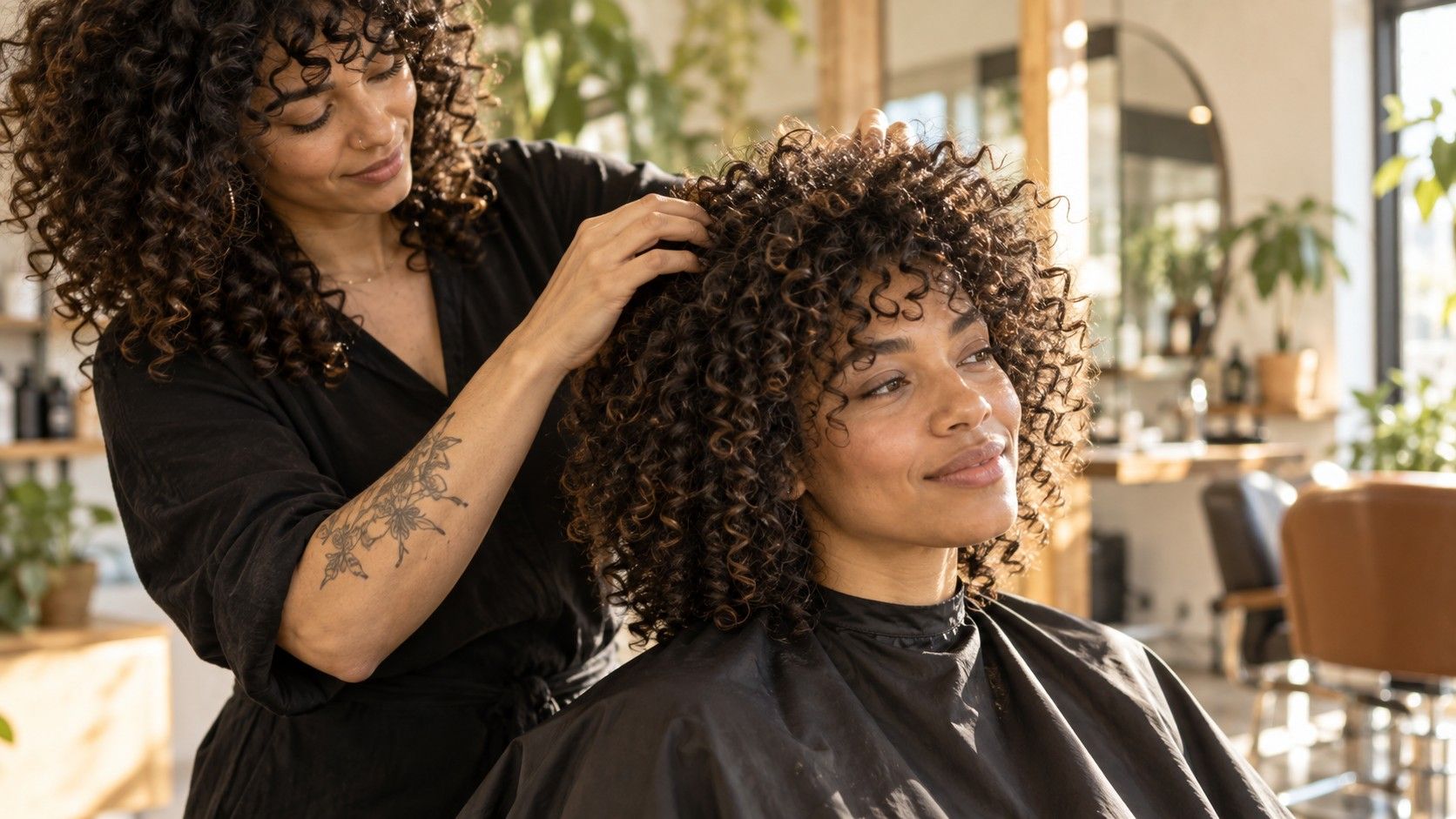
Hair texture changes the advice. Straight fine hair may need an intentional perimeter to avoid looking flat, while dense waves create their own width even without short layers. If your hair expands in humidity, do not judge a sleek reference photo as though it will behave the same way after a rainy commute. Ask how the cut will sit when air-dried, not only after it has been smoothed with heat.
Oval, heart, and long face considerations
An oval face is often described as versatile because its proportions leave room for many silhouettes. That does not mean every style will feel equally practical. A very long face may be part of an oval outline, and then excess height at the crown or long, flat hair can make the face feel more elongated than you want. A fringe, waves at cheek level, or a slightly wider shape through the sides can be worth testing before a major cut.
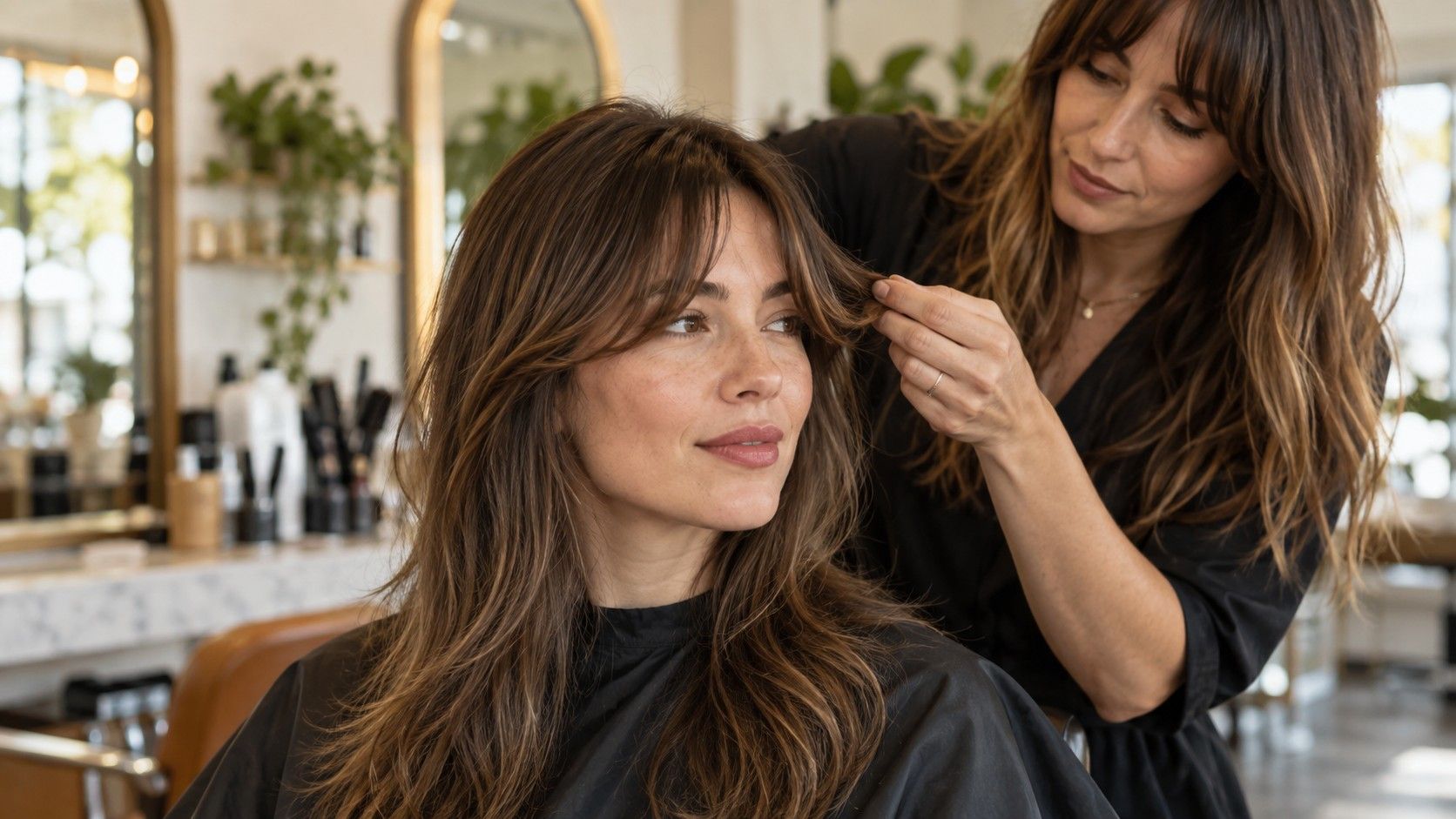
A heart-shaped face may be wider around the forehead and narrower at the chin. Curtain bangs that open gently at the center, side-swept fringe, or chin-level movement can feel balanced because they avoid placing a hard horizontal line across the widest area. Very short, heavy bangs can still work, especially with a strong style preference, but their width and density should be discussed rather than copied from a photo. Glasses are part of that conversation: a fringe that sits on the frames can become an irritation rather than a look.
For a longer face, the simplest experiment is often a new parting and some temporary volume at the sides. A center part can be elegant, but it creates a long vertical line if the rest of the hair is flat. A soft off-center part, bend around the temples, or fringe that breaks up the forehead may change the proportion without losing length. Test these with clips and your normal styling products before deciding you need a completely different haircut.
Use parting and volume before a major cut
Parting is one of the fastest ways to test a hairstyle. Your natural growth pattern may pull hair to one side, so a center part that looks good for an hour can split apart by mid-afternoon. Try a center, a soft side part, and a deeper side part on freshly washed hair, then again on day-two hair. Take notes on where the roots flatten, where the fringe separates, and whether one side exposes more forehead than you like.
| Detail to test | What it changes | Simple trial |
|---|---|---|
| Center part | Creates symmetry and a vertical line | Wear it through a normal day without repeatedly resetting it |
| Soft side part | Shifts volume and can soften a strong center line | Move the part one finger-width from your usual position |
| Crown volume | Adds height without changing length | Use a root clip while drying, then check the shape after two hours |
| Cheekbone movement | Adds width or softness around the middle of the face | Create a loose bend with a round brush or heatless rollers |
Volume should be placed where it supports the shape you want. Big roots with very flat sides can make the top look disconnected; loose width through the mid-lengths often feels more natural. If your hair is fine, a shorter internal layer may create lift, but too many layers can make the ends transparent. If it is dense, reducing bulk may help the shape move, though over-thinning can leave a fuzzy surface. These are reasons to ask for a small adjustment first rather than a dramatic reshape.
Test the shape with a temporary style
Temporary styling is a useful reality check because it reveals your habits. Clip a few pieces forward to imitate curtain bangs, pin the lower length up to see a bob, or add loose waves at the point where you are considering layers. Wear the test to work, outside, and while wearing your usual glasses or headphones. A style that looks convincing for a mirror photo may be irritating when it falls into your eyes or needs constant adjustment.
Bring the strongest test photos to your appointment. Tell the stylist which part of the mock-up you liked and what failed: “I liked the width near my cheeks, but not hair in my eyes,” or “I liked the short shape until my crown flattened.” This gives them a clearer starting point than a face-shape label alone. It also lets them account for density, cowlicks, and the amount of styling you will realistically do.
The best hairstyle for your face shape is therefore not a fixed category. It is a workable combination of line, volume, length, and texture. Start with reversible changes, keep the parts that suit your routine, and let the final cut be specific to the hair that actually grows from your head.