Fine hair is often treated as a single problem with one noisy solution: add volume. That advice misses what makes a haircut successful in daily life. A useful style protects the density you have, gives the eye a clear shape to follow, and does not collapse by lunchtime because it depends on a complicated blow-dry.
Fine strands and low density need different decisions
Fine hair describes the diameter of an individual strand. Low density describes how many strands are growing in a given area. A person can have fine hair and plenty of it, or medium-thick strands with visible spacing at the part. The distinction matters because a cut that creates movement for fine, dense hair may feel too airy on someone whose scalp shows through at the crown.
Start by looking at the ends rather than only the roots. If the lower few inches are transparent, a long cascade of layers will usually make that effect more obvious. If the ends look healthy and compact but the top lies flat, the answer may be a better parting or a modest root lift rather than a shorter haircut. Good hairstyles for fine hair are built around this honest assessment, not around trying to imitate a high-volume reference photo.
Lighting changes the picture too. Overhead bathroom light can make every part look wider, while soft window light can hide it. Check your hair in the conditions where you actually spend time: at a desk, in a car mirror, outdoors, and after a full workday. That is the only reliable way to tell whether a cut needs more perimeter weight, a different fringe, or simply less product at the scalp.
Why a blunt edge often creates the most believable fullness
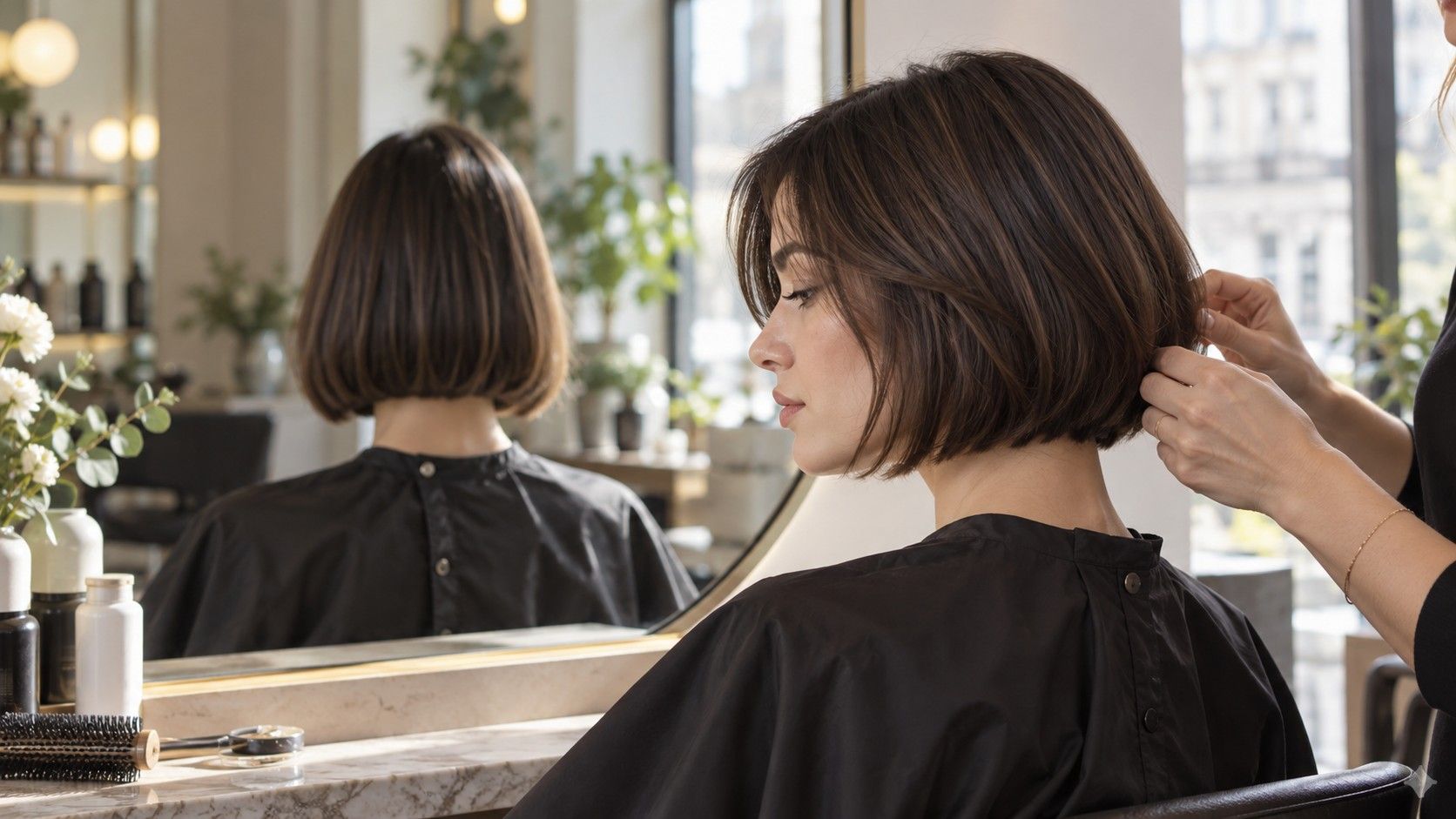
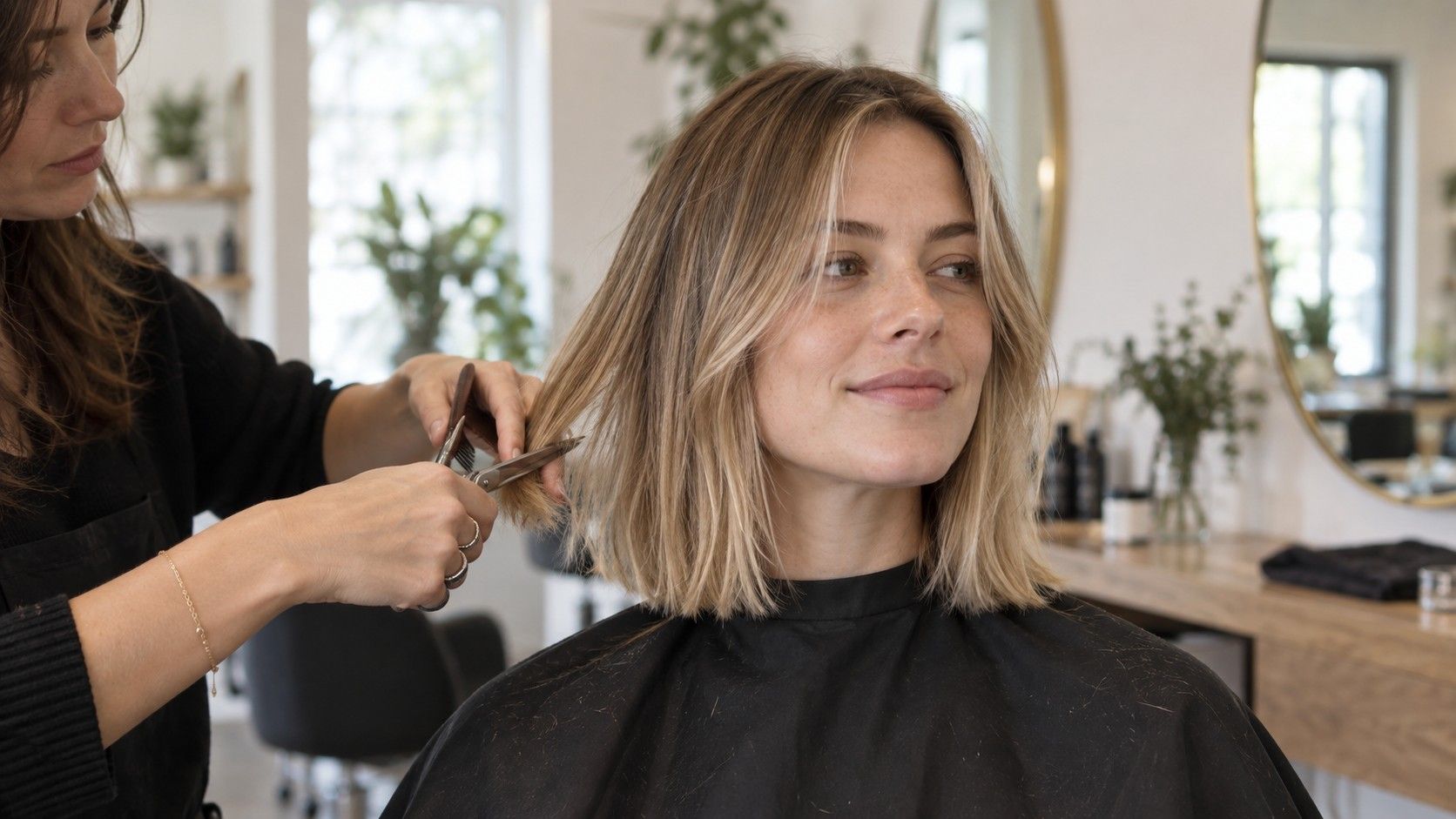
Blunt ends are not boring on fine hair; they are structural. A clean, relatively even perimeter makes the lower edge read as a denser line. A chin-length bob, a collarbone lob, or a one-length cut with discreet face framing can make hair look more substantial because the eye is not following dozens of tapering ends. This is why many haircuts for thin hair work best when the stylist resists thinning the last inch.
The word blunt does not require a ruler-straight finish. The edge can be softened with tiny point cuts so it moves naturally, but it should still hold together. Ask the stylist to show the back in a mirror before texturizing. If the line already looks wispy, more slicing or razor work is unlikely to improve it. Fine hair can look modern without every end being feathered away.
A bob is especially practical when the hair tends to separate at the shoulders. That friction point can make longer fine hair look thinner even when the roots have decent density. A slightly longer front, a quiet side part, or tucked-behind-ear styling can give a bob variety without compromising the weight line. The best hairstyle for fine hair is often the one that makes the ends look intentional on a completely unremarkable day.
Layers should create motion, not erase the perimeter
Layers are useful when they are placed with a reason. Shorter pieces near the crown can stop hair from sitting as one flat sheet. Face-framing layers can add softness around the cheekbones and help a parting look less stark. The problem begins when every section is cut to a different short length. On fine hair, over-layering often replaces movement with see-through ends and a top-heavy shape.
A good compromise is invisible or internal layering that removes very little length from the perimeter. The layers should begin high enough to give some lift but not so high that they create a cap at the crown. On a medium-length cut, this may mean a few carefully blended sections rather than a dramatic staircase. Ask where the shortest layer will fall when dry, and ask how much of the bottom length will remain untouched.
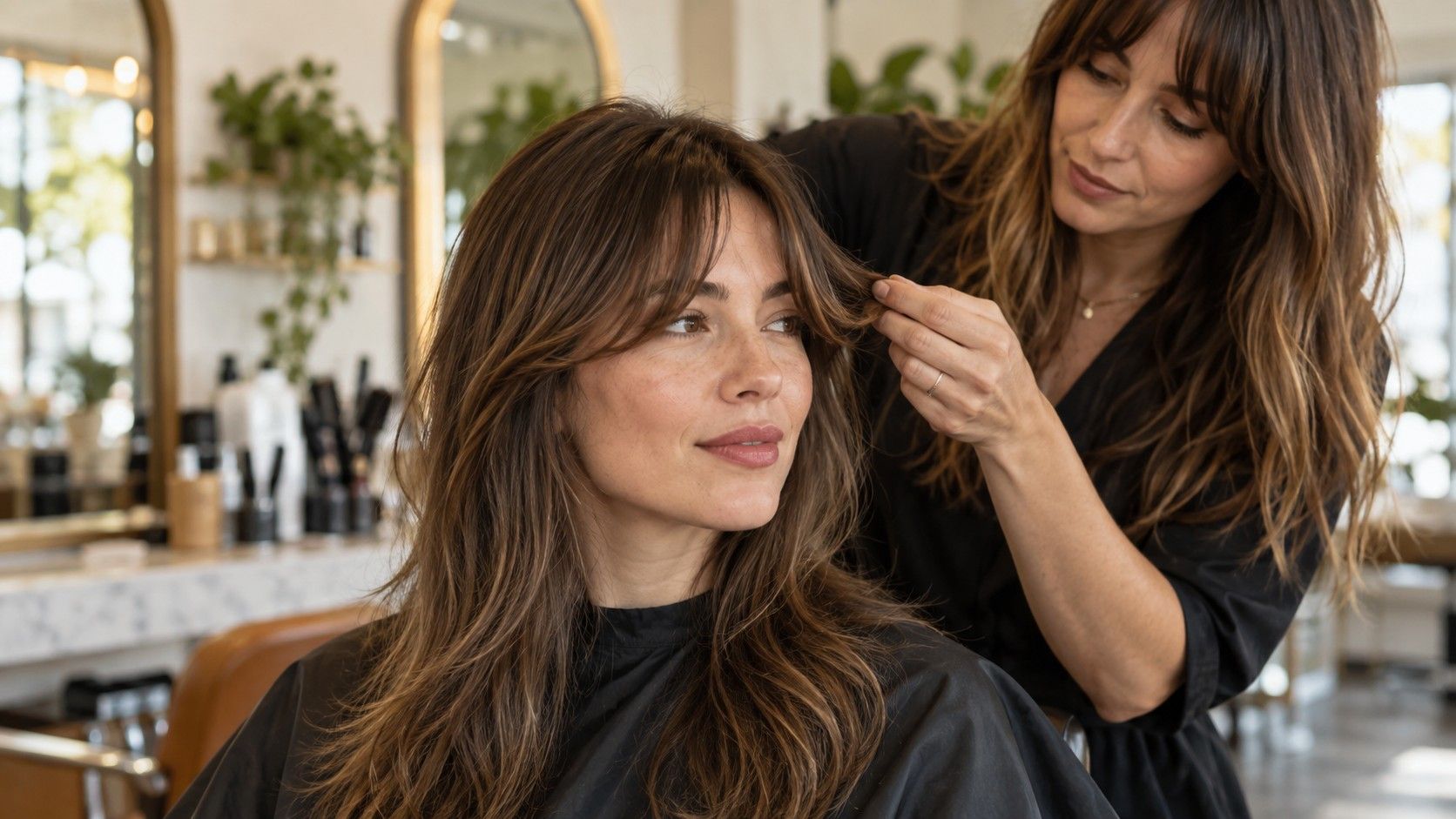
Fringe needs similar restraint. Wispy bangs can be pretty, but an overly sparse fringe may separate into strings by midday. A slightly fuller curtain fringe, cut to open around the brows and blend toward the cheekbones, is often easier to style. It gives the front of the haircut a focal point while allowing the rest of the hair to stay simple. If you dislike daily heat styling, keep it long enough to sweep into the part.
| Length | What it can do well | Watch for |
|---|---|---|
| Short pixie or bixie | Creates lift through the crown and uses less length to weigh down roots | Needs regular trims to preserve the outline |
| Chin to collarbone bob | Keeps a strong weight line and works with a side or center part | Too much layering can make the back look hollow |
| Below the shoulders | Offers styling range and soft face framing | Dry ends and shoulder friction can make density look lower |
Choose length according to your routine, not a rule about age or face shape
Shorter hair is not automatically fuller, but it does remove the weight that pulls roots flat. A pixie, bixie, or short crop can look lively if you are willing to have the crown reshaped every four to six weeks. It is a practical option for hair that dries quickly and loses volume once it reaches the jaw. The trade-off is maintenance: a short cut is forgiving in texture but less forgiving in its outline.
A collarbone-length bob is the middle ground many people return to. It is long enough for a small ponytail, yet short enough that the ends do not drag the roots down. It also gives a stylist room to make subtle changes to the front without taking the whole haircut into a dramatic direction. Fine hair with a slight wave can look especially good here because the bend adds variation while the perimeter stays substantial.
Long hair can still work, particularly when density is good through the ends. The key is to avoid treating every appointment as an opportunity to add more layers. Keep the bottom line healthy, remove split ends before they travel upward, and use longer face framing rather than aggressive short pieces. If your long hair only looks full after a hot-tool session, a few inches less length may be a more useful change than another volumizing product.
Small styling habits that support the cut
Start at the scalp, but do not overload it. Fine hair is easily coated, and too much mousse, oil, or cream can make clean roots collapse. A light root product applied in sections, followed by a short blow-dry in the opposite direction from your usual part, is often enough. Let the hair cool before flipping it back; cooling is what helps the root hold its new position.
Dry shampoo is useful as prevention rather than rescue. Applied lightly to clean roots before bed, it can absorb overnight oil and create a little grip by morning. Used heavily on already oily hair, it may build up and make the scalp feel uncomfortable. A clean brush and occasional clarifying wash matter because product residue weighs down fine strands more quickly than many people expect.
Changing the part by even half an inch can disguise a flattened area without pretending it is not there. A deep side part creates asymmetry and can make the front look fuller, while a soft off-center part is easier to maintain than an exact center line. These adjustments are not tricks to chase impossible volume. They are ways to let a well-cut shape remain visible between washes and appointments.
What to say at the salon before the scissors come out
Bring photos, but explain what you like about them: the strong ends, the soft fringe, the low-maintenance texture, or the amount of styling shown. Mention whether your hair gets oily at the root, whether the crown separates, and whether you normally air dry. A stylist can work with those details. Simply asking for more volume may lead to layers that look good on day one and leave the ends weak later.
Ask for a plan that protects the bottom edge. If layers are proposed, find out how many and where they begin. If thinning shears are suggested, ask what problem they are meant to solve; on fine hair, removing bulk is rarely the priority. Leave enough time at the end of the appointment to see the cut with your usual parting and without an elaborate salon finish.
Fine hair does not need to be disguised. It responds best to clean lines, thoughtful proportions, and a routine that does not demand perfection. When the cut respects your actual density and your willingness to style it, the result has a quieter kind of volume: it looks like your hair, only more deliberate.