Glasses are part of your face every day, so a haircut should work with them rather than pretend they are absent. The right choice is rarely about a strict face-shape rule. It comes from noticing where your frames sit, what happens at the temples, whether you wear a fringe, and how often you push hair behind your ears between the first coffee and the end of the day.
Let your frames become part of the overall shape
Start with the pair you wear most, not the pair reserved for photos. A wide acetate frame creates a different line across the face than a thin metal one, and oversized lenses occupy more visual space than a narrow rectangular shape. None of those features need correcting. They simply affect where hair looks most comfortable: a little movement around the cheeks, a clear brow area, or a cleaner outline at the jaw.
Look at the relationship between the top of the frames and your parting. A center part can make the face feel very open with round or large frames, while a soft side part may add useful asymmetry if the frame has a strong horizontal line. The goal is not to balance a supposed flaw; it is to avoid a haircut that puts every line in the same place and feels stiff when you see it in profile.
Frame color can influence the overall impression, but it does not dictate hair color or haircut length. Dark frames can look especially good with a simple, clean perimeter; pale or transparent frames often leave more room for a textured fringe or airy layers. What matters more is contrast in daily light. Try on your frames with your hair down, tucked, and tied back before committing to pieces that will sit directly beside the hinges.
For hairstyles with glasses, comfort is an aesthetic factor. If the temples pinch when hair is bulky underneath, you will keep moving both hair and frames, and the style will never feel settled. Tell the stylist whether your frames slide after you tuck hair behind your ears, whether the arms catch in a dense curl pattern, and whether you switch between prescription glasses and sunglasses with different widths.
Choose bangs that do not compete with your glasses
Bangs and glasses can look natural together, but the length needs a real plan. A blunt fringe that rests on the top rim can feel crowded, especially when it separates into pieces during the day. It may work well if you like drying it smooth and keeping a little space above the frames. It is less forgiving if you rely on air drying or if your fringe tends to bend at the center.
Wispy bangs can create a lighter gap around the brow, yet they are not automatically lower maintenance. Fine pieces often need a quick wash and reset, and they can cling to lenses if they are cut too long. Ask your stylist to show where the fringe will sit when it is dry, with your usual part, rather than judging it only while it is damp and stretched downward.
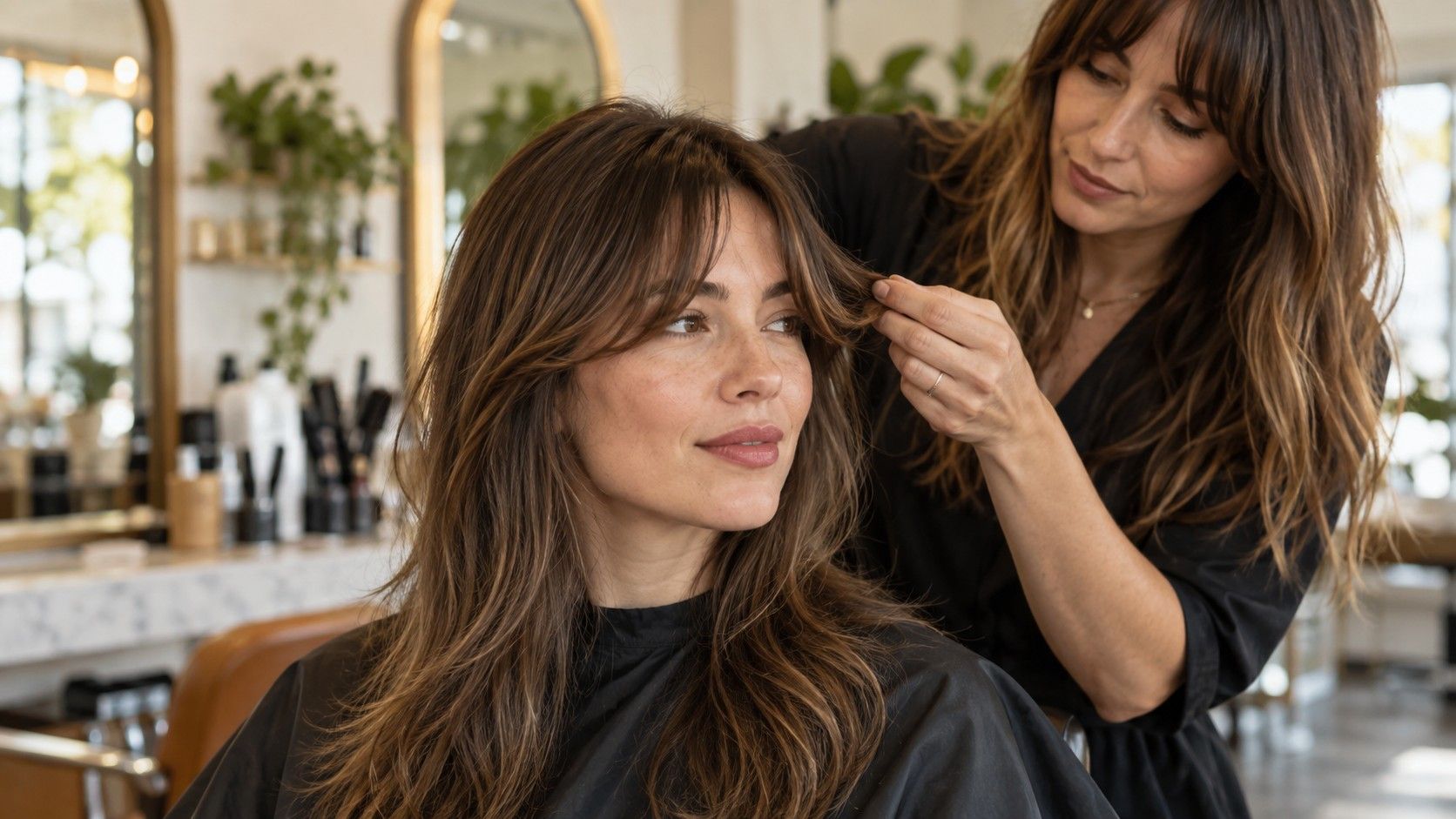
Curtain bangs are a flexible option when you enjoy some face framing but want an exit route. They can open around the frames, sweep to one side, or blend into longer layers as they grow. Their weak point is the morning direction: cowlicks and a center part may need a few minutes of heat at the roots. If that feels like too much, keep the shortest point below the top rim and make sure it can tuck behind an ear.
Bring your glasses to the consultation and put them on before the first section is cut. A stylist can see whether the fringe catches on the hinges, sits over the lens, or needs a softer center. That small check is more useful than a generic rule about bangs for glasses because it accounts for your exact frame depth, brow height, and natural hairline.
Short cuts need attention at the temple area
Short hair can make frames look especially intentional because both the cut and glasses are visible. The practical issue is the temple zone. If hair is clipped very close around the arms of the glasses, the frames may become the dominant line; if it is left too bulky, it can push against the arms or flare outward after an ear tuck. A soft taper or carefully placed weight often gives the best middle ground.
A pixie does not have to mean an exposed, severe outline. Longer texture on top can soften the transition into the frame, while a side-swept front can leave room around one eyebrow. The part should be chosen with the glasses on, particularly if one lens sits slightly differently because of your nose bridge or ear height. Most faces are not perfectly symmetrical, and a haircut that accepts that can feel easier to wear.
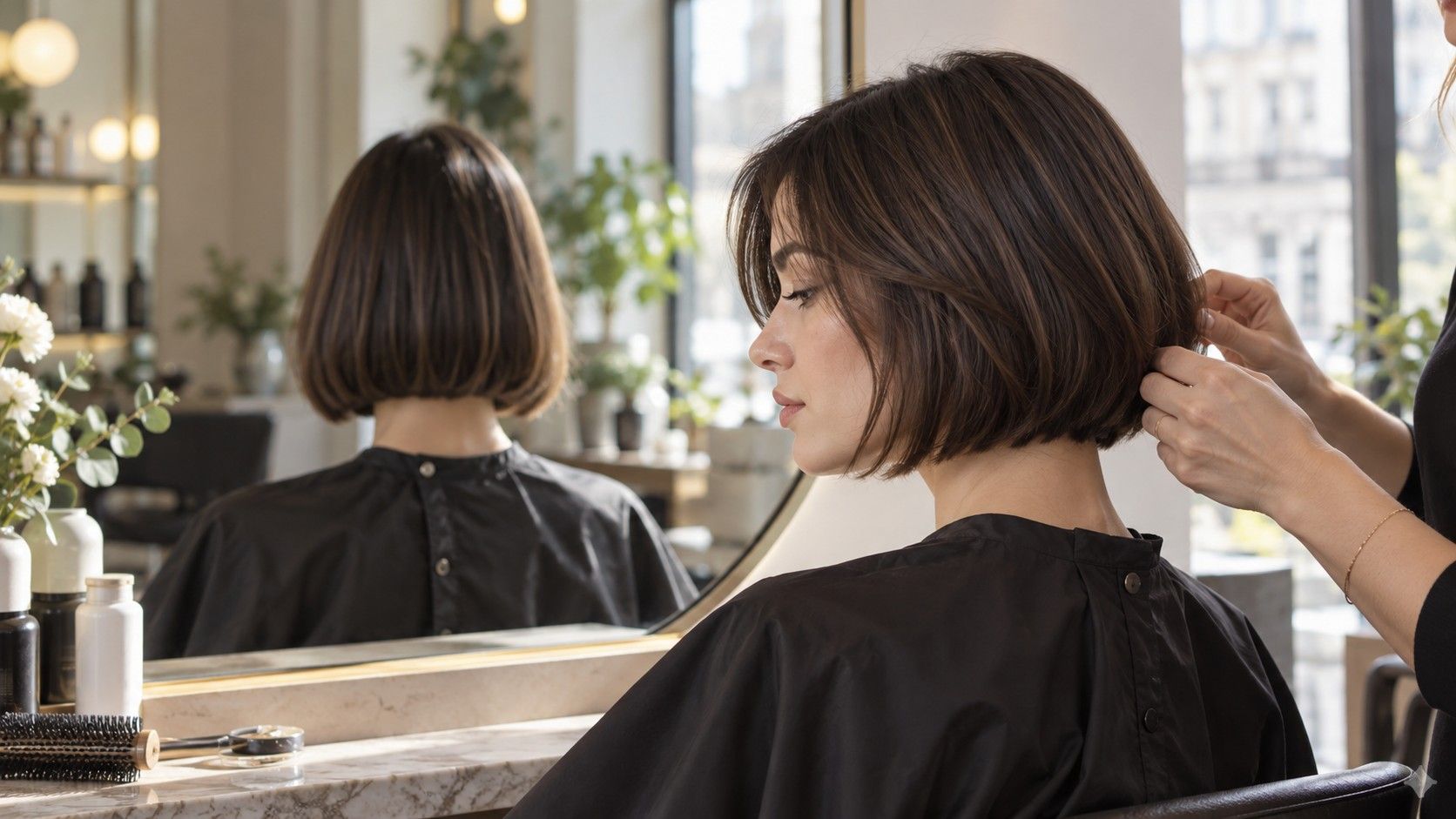
For a short bob, pay attention to where the ends meet the frame arms. A jaw-length line can look polished, but it may kick outward if it lands at the widest point of your glasses and your hair has a natural bend. A slightly longer front or a less rigid perimeter can prevent that recurring flip without asking you to straighten it every morning.
| Hair direction | Useful frame check | Everyday consideration |
|---|---|---|
| Short textured crop | See how the temples sit beside the arms | Allow for regular outline trims |
| Jaw-length bob | Check whether ends hit the hinge area | Test the air-dry pattern before cutting blunt |
| Curtain fringe | Keep the shortest point clear of lenses | Expect a small root-styling step |
| Long layers | Try a full ear tuck with frames on | Keep enough length for a secure tie |
Do not let a stylist assume that you want the arms hidden. Some people prefer a clean, visible temple area; others like a curl or soft piece beside the frame. The decision is visual and practical. Think about how often you take glasses on and off, wear headphones, or use a mask or hat, because those habits reveal whether a very close cut or a little extra softness will suit you better.
Long hair, layers, and the ordinary ear tuck
Long hair gives more options with glasses, but its best feature is often the ability to get out of the way. A good ear tuck should not make the whole style look lopsided or cause the frames to slide forward. If you tuck both sides several times a day, ask for face-framing layers that remain long enough to stay put, rather than short pieces that spring loose at the first movement.
Layers can make hair feel lighter around the cheeks, especially with wider frames, but excessive layering may create a busy outline beside the lenses. The cleanest result usually has a few purposeful lengths: a face-framing point that clears the frame, a longer layer that connects it to the rest of the cut, and enough weight at the ends to keep the hair from breaking into separate shelves.
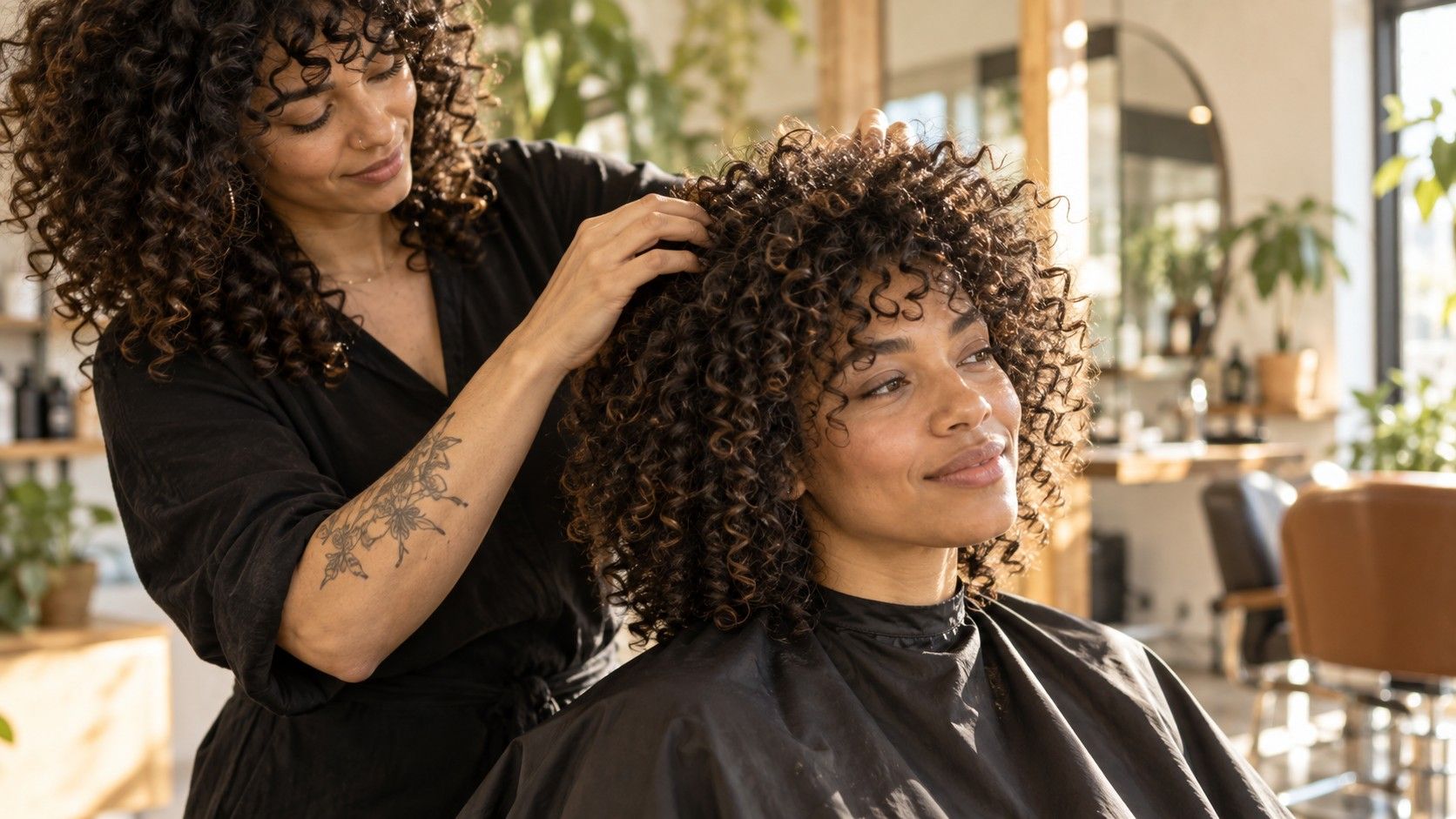
Natural waves introduce another consideration. They may dry differently behind the ears than in front, creating a dent from the glasses arms or a flattened patch at the temple. This is normal, and a style does not need to hide it. A haircut that has some texture throughout is often more forgiving than one that relies on a perfectly smooth surface, because small shifts look like movement rather than damage.
If you wear your hair up, test a low ponytail and a loose clip while wearing your frames. The pieces that pull at your temples or snag on hinges are exactly the pieces to discuss. Haircuts for people with glasses work best when they are designed for the positions hair actually takes during a day, not only for one carefully arranged moment in front of the mirror.
Bring your everyday frames to the appointment
Arrive with clean, dry hair in its usual state and bring the frames you use most often. If you rotate between two very different pairs, bring both. A stylist can see immediately whether one has thicker arms, a lower bridge, or a wider temple span. That information helps them place a fringe, refine sideburn length, and decide whether a layer should begin above or below the hinge.
Use straightforward language: “These slide when I tuck my hair,” “I do not want bangs touching the lenses,” or “I need to wear a headset over these.” Those are not fussy requests. They define the everyday comfort that makes a haircut successful. Mention how you clean your lenses, whether you push frames up repeatedly, and if you get headaches from pressure at the sides, since bulk near the arms can make that worse.
Reference photos help when you explain what you are drawn to, but point out whether it is the fringe, the part, the side profile, or the relationship between hair and frames. A photo of someone with different hair density and another frame shape is still useful if it starts a specific conversation. It is less useful as a demand to copy every line exactly.
The best hairstyle for glasses feels unremarkable in the best sense: you stop adjusting it. Your frames sit where they should, the hair around them has room to move, and an ear tuck or a windy walk does not turn the rest of the day into repair work.