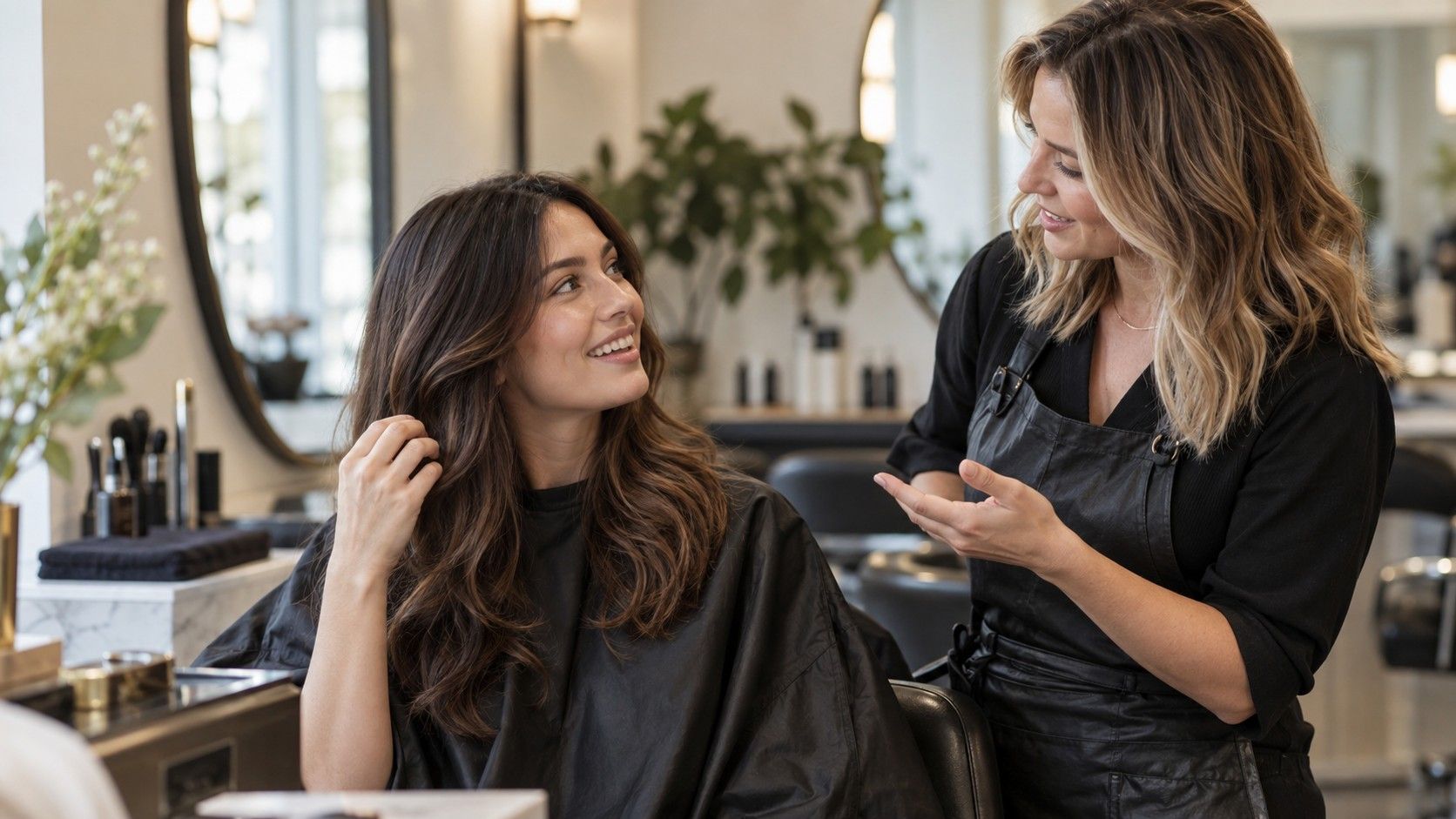
A useful haircut conversation does not require salon vocabulary or a perfect folder of pictures. It requires a few honest details about your hair, your routine, and the parts of a cut that make you nervous. A stylist can work with “I need it to tie up” or “my fringe separates here” far better than a vague request for something flattering.
Bring reference photos for the right reason
Haircut reference photos are a starting point, not a blueprint. The person in a photo may have different density, curl pattern, face proportions, or a professional blowout that changes everything. That does not make the image useless. It becomes useful when you can say what caught your attention: the soft line at the jaw, the way the front opens, the amount of volume at the crown, or the fact that the hair still looks good when tucked behind an ear.
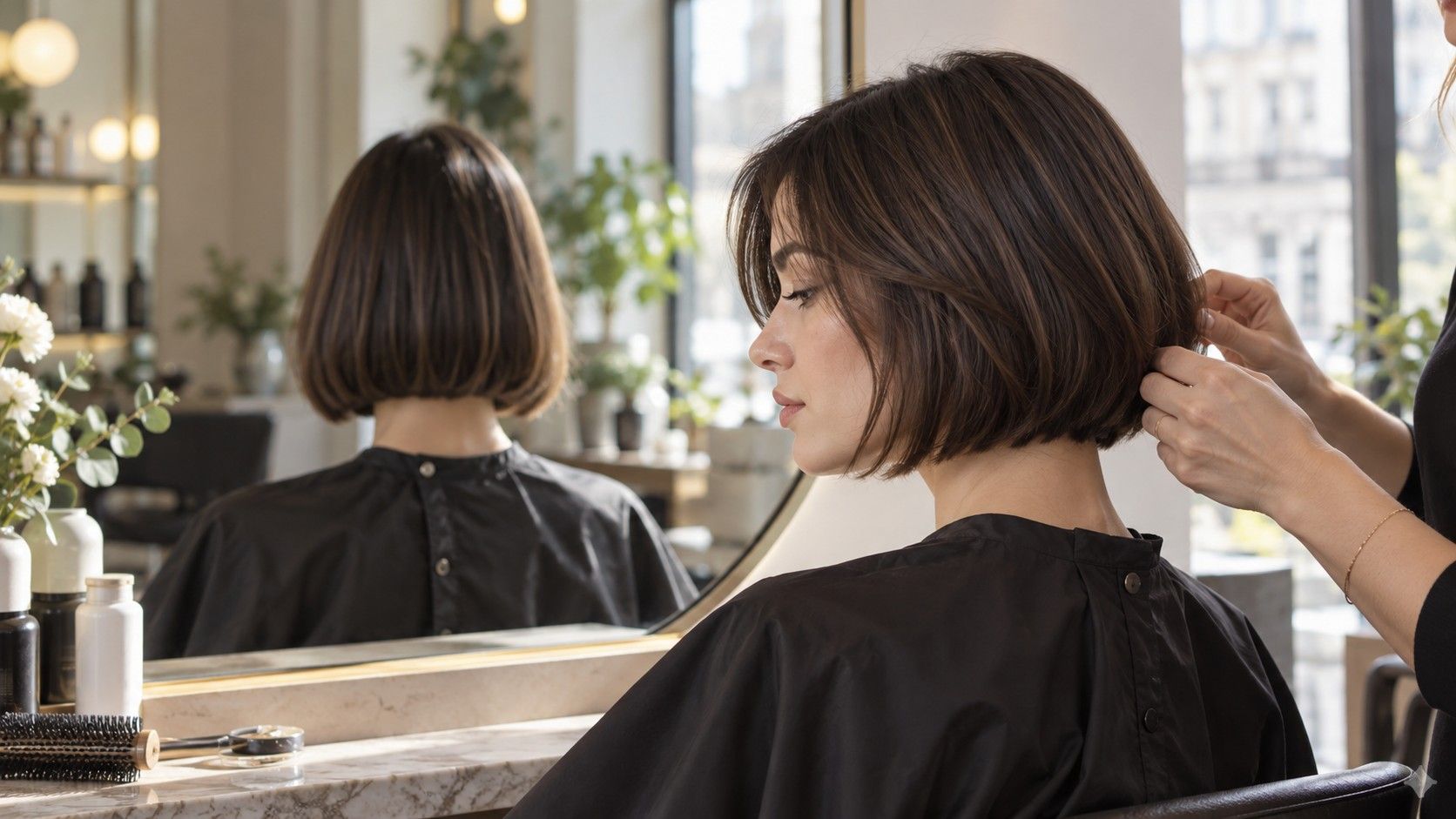
Choose two to four pictures instead of twenty near-duplicates. Include a front view and, if possible, a back or side view. A front image tells the stylist what you expect around the face; the back shows whether you like a blunt perimeter, graduation, layers, or a softer shape. If all of your photos are taken in studio lighting with curled ends, add one image that shows an ordinary version of the length you want.
It helps to bring one “not for me” example as well. Perhaps you dislike a heavy stacked back, very short layers near the cheeks, a sharp undercut, or a fringe that sits on the brows. Saying what you do not want is not negative. It narrows the choices before scissors are involved and prevents a stylist from guessing which version of a popular cut you mean.
Use the image to describe a direction rather than to ask for an exact copy. Try: “I like the movement around the face, but I need mine long enough for a ponytail,” or “I want this amount of texture, not the short fringe.” That kind of sentence gives the hair stylist permission to adapt the idea to your own hair instead of promising an outcome that depends on someone else’s texture and styling.
Explain what you like and what you do not
Before the appointment, make a short list of non-negotiables. These might include keeping enough length for a bun, avoiding thinning shears, retaining a center part, or not exposing the nape. Small preferences are easy to forget once you are in the chair, especially if you feel pressure to decide quickly. A clear list also lets you notice where two preferences conflict, such as wanting maximum layers while keeping every piece tieable.
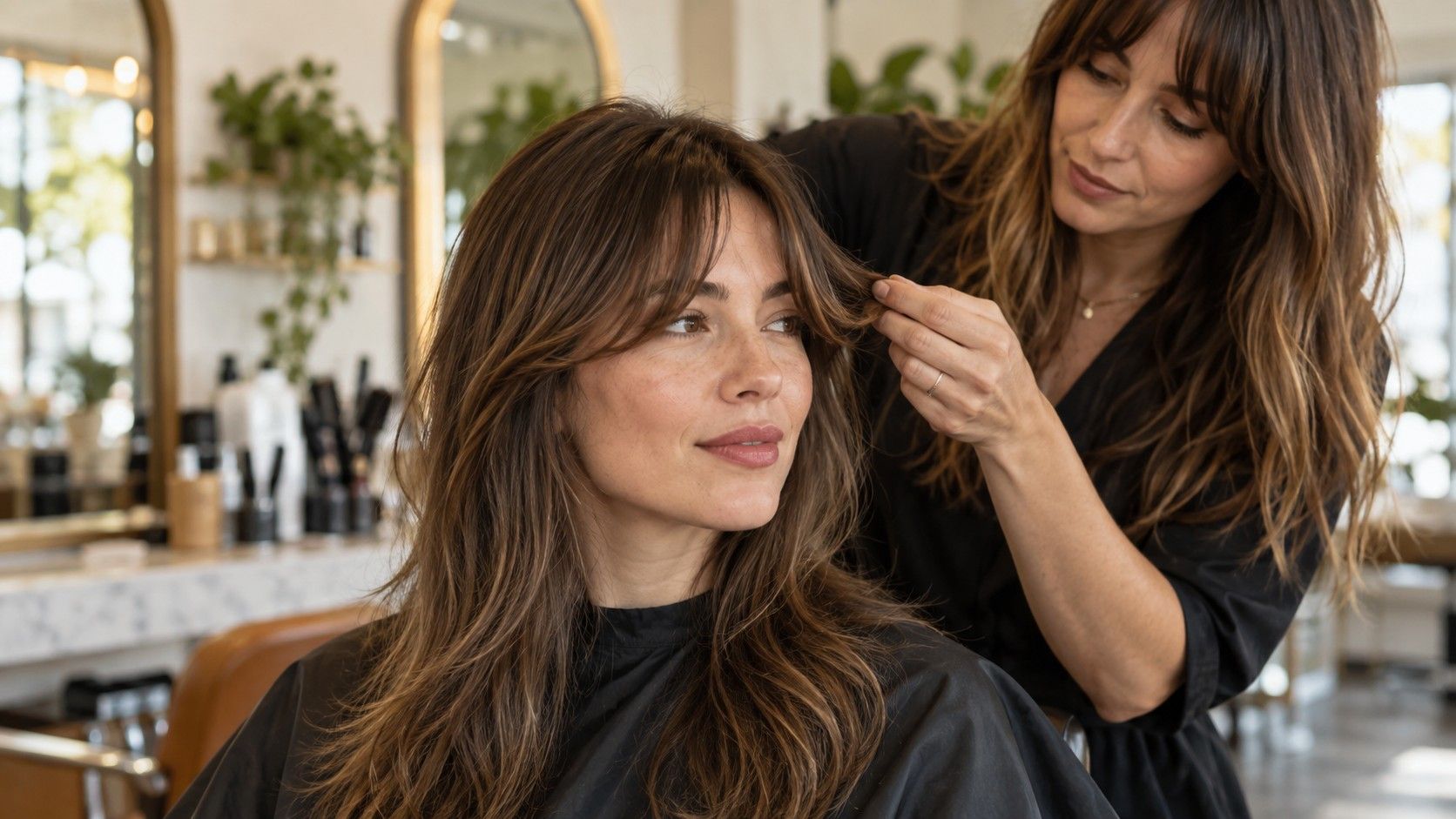
Be specific about the front. People often say they want “face framing,” but that phrase can mean a long curved section beginning near the chin, a short piece near the cheekbone, or a fringe that opens at the center. Point to the level you mean. If you wear glasses, mention whether you tuck hair behind your ears and whether short pieces catch on the frames. If you wear a headset, say so; it changes what feels comfortable at the temples.
Describe your past haircuts in practical terms. “The last one looked good for two weeks but the back became bulky,” or “the layers made my ends look thin” gives more information than “I hated it.” A stylist can use that history to decide where to preserve weight, how much graduation to avoid, or whether the problem was actually caused by the way the cut grew out.
It is also fair to name your anxiety. If losing length worries you, say that before the first cut. Ask to agree on the starting length while the hair is dry, or request a check after the initial section. A thoughtful consultation makes space for caution. You do not have to defend wanting a conservative first appointment, particularly when you are changing from long hair to a shorter shape.
Describe your daily styling honestly
When deciding how to ask for a haircut, the most helpful information is often what happens on an ordinary Tuesday. Say how often you wash your hair, whether you air-dry, diffuse, use a round brush, or usually put it up. A stylist who knows you have five minutes in the morning will make different layer and fringe choices than one who assumes you enjoy a daily blowout.
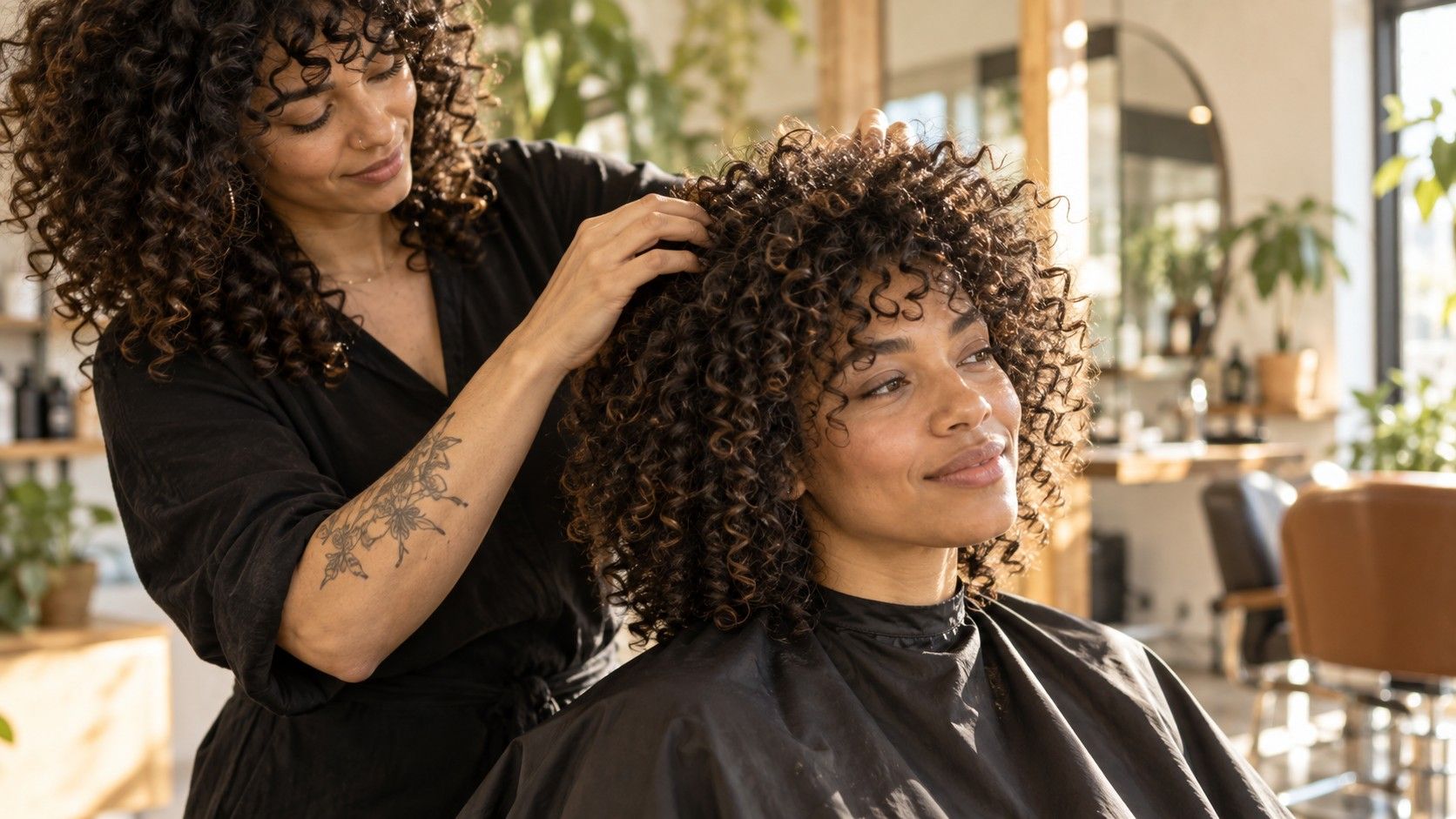
Bring your hair in the state it usually has when you want advice. If you routinely wear it naturally wavy, arriving with it flat-ironed can hide the pattern that needs to be cut around. If you normally style it smooth but it has an unreliable bend underneath, mention that too. The point is not to arrive perfectly; it is to give an accurate picture of the hair the new cut will live on.
Talk about wash days and second-day hair. A cut may look good just after a salon finish but create problems once your roots become oily, your curls expand, or your ends lose their bend. If you depend on a claw clip, a low ponytail, or a braid between washes, ask which layers will stay contained. That question often prevents the regret of discovering that beautiful short face pieces cannot be secured.
| What to mention | Why it changes the cut | A useful way to say it |
|---|---|---|
| Wash frequency | It affects fringe and root-volume choices | “I wash twice a week and need day-three hair to work.” |
| Heat tools | It sets a realistic styling expectation | “I will diffuse, but I will not round-brush daily.” |
| Hair-up habits | It determines safe layer lengths | “Everything near my face must fit into a low tie.” |
| Natural texture | It guides weight and shape placement | “My hair bends outward here when it air-dries.” |
Do not promise a routine you do not want. There is nothing wrong with liking a polished style, and there is nothing wrong with wanting an air-dry cut. The problem is choosing a haircut built for one life while living another. Honest limits give you a result that is easier to repeat after the first week.
Agree on length before you discuss layers
Length is the part most people notice immediately, so settle it before getting lost in trend names. Use a physical reference when it helps: collarbone, jaw, lower lip, or the point where a ponytail still feels secure. Remember that wavy and curly hair can spring up as it dries. If your texture shrinks noticeably, ask to see the initial length with that shrinkage in mind rather than relying on a wet-hair measurement alone.
Layers should serve a reason. They can remove bulk, encourage movement, support a wave pattern, or keep a long shape from looking heavy. They can also make fine ends look thinner, create extra styling work, or grow out awkwardly if placed too high. Ask where the shortest layer will begin and what it will do when your hair is not freshly styled. That turns an abstract request into something you can assess.
The perimeter matters just as much. A blunt baseline usually keeps more visual density, while a softened or textured edge can make movement easier. Neither is universally better. If you have thick hair that spreads at the ends, too much bluntness may feel heavy; if you have fine hair, too much removal may leave it see-through. Explain the problem you want solved rather than requesting thinning or layers by default.
If you are unsure, choose a staged change. Start with less length removed or fewer layers, then live with it for several weeks. Hair can always be refined at the next appointment. A measured approach is especially sensible when you are moving between very different lengths, changing your part, or adding a fringe for the first time.
Check the plan before the first cut
Before cutting begins, repeat back the plan in plain language. For example: “We are keeping the length near my collarbone, adding long layers that I can tie back, and leaving the front below my cheekbones.” This does not make the conversation formal or awkward. It is a quick way to catch a misunderstanding while changes are still easy to make.
Ask what the stylist expects you to do at home. You do not need a product list or a complicated lesson, but you should understand the basic direction of drying, where the part belongs, and whether the fringe needs a small reset. If the answer requires a tool you do not own or a routine you know you will skip, say so immediately and ask whether the shape can be adjusted.
During the cut, speak up early if something looks shorter than you expected. Wet hair, tension, and sectioning can make length hard to read, so a calm question is better than waiting until the end. A professional would rather clarify than discover that you were worried through the entire appointment. The same is true if you see a layer near the face that seems shorter than the agreed starting point.
Finish by discussing the trim plan. Ask when the shape is likely to lose its balance, whether bangs need a separate visit, and which changes are normal as it grows. The best result is not just a good salon-day haircut. It is a shape you understand well enough to wear confidently after the photos are gone and your normal routine takes over.