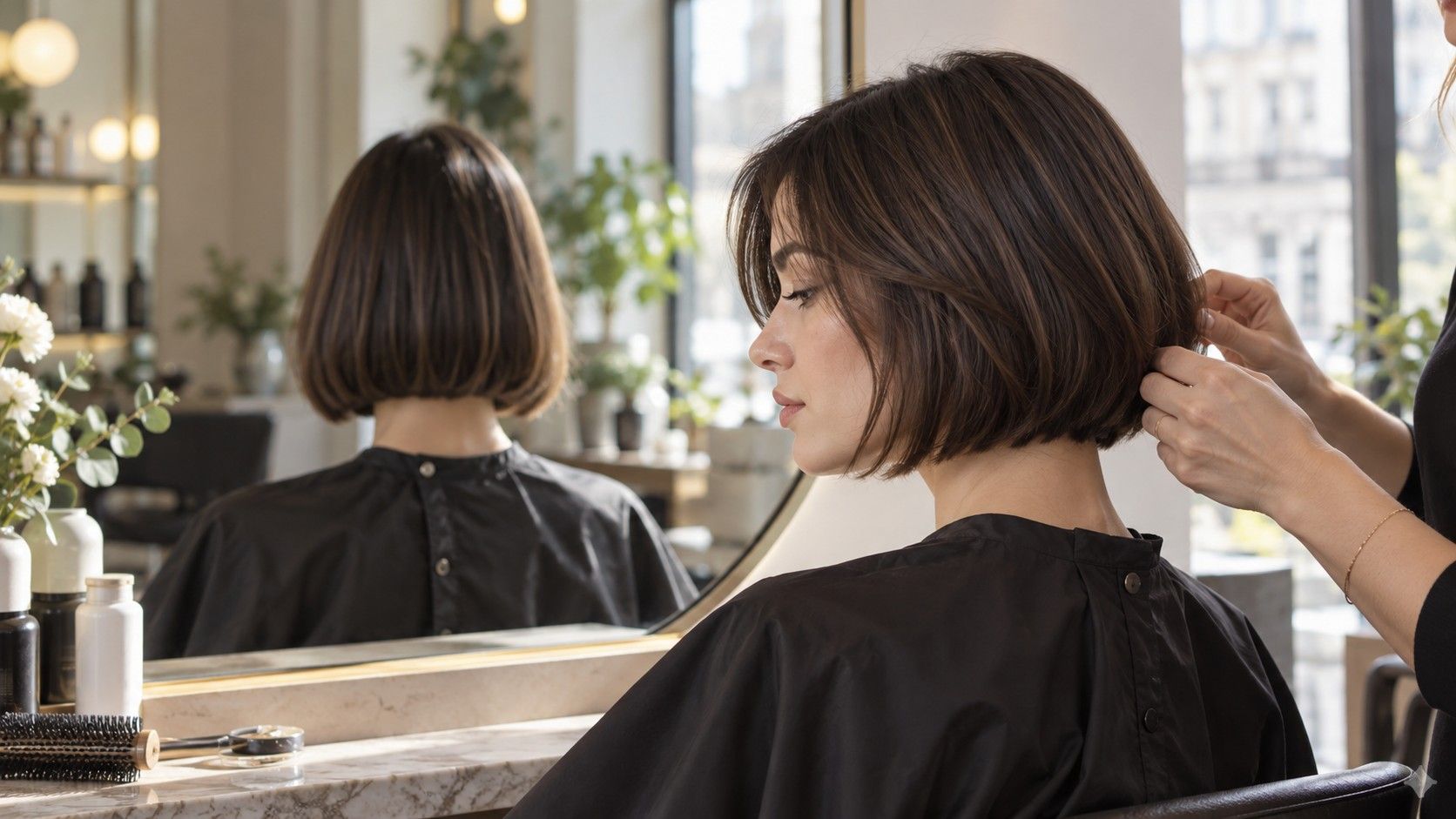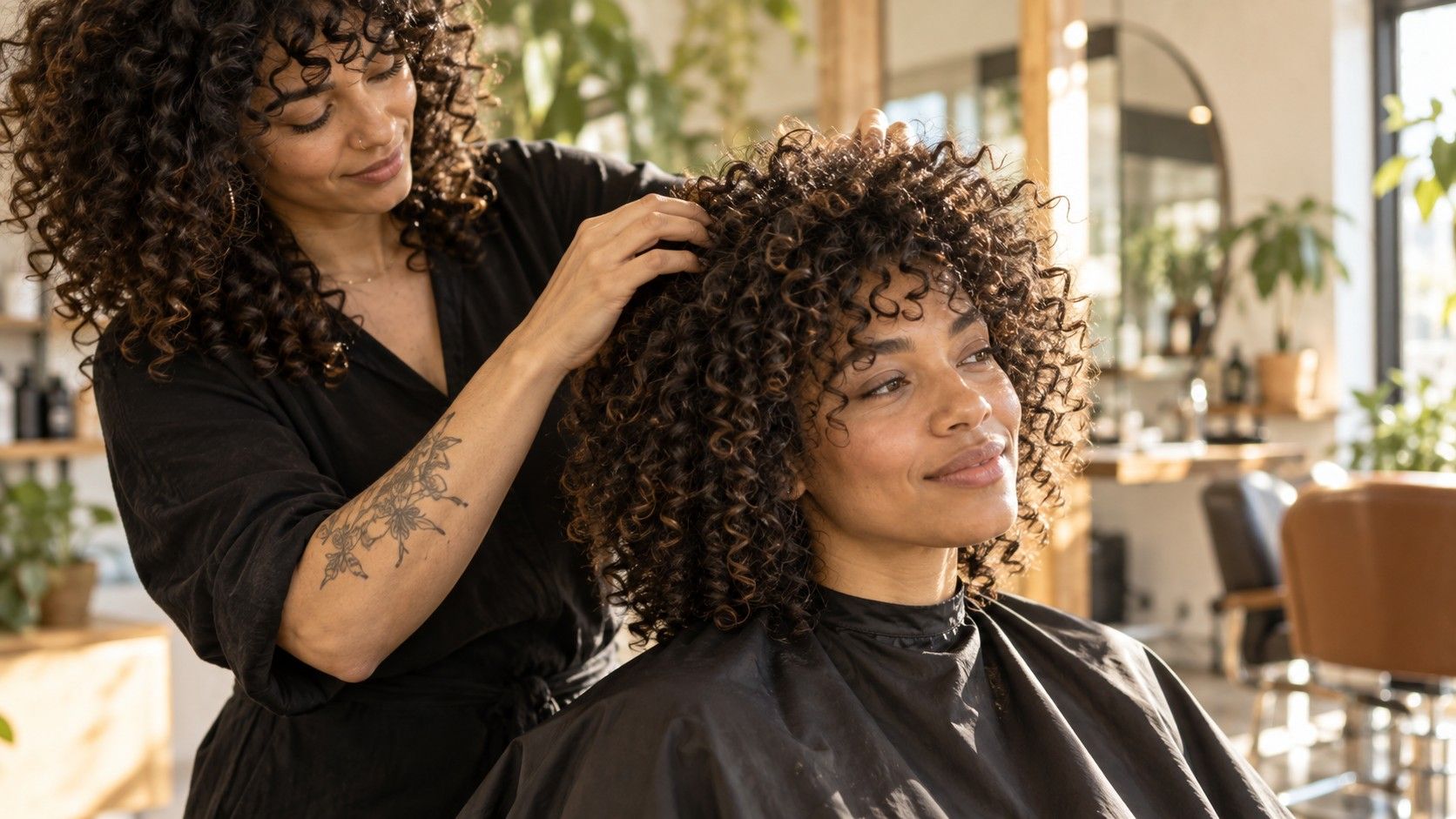
The best hairstyle for you is rarely the one that looks most dramatic in a saved photo. It is the cut that still makes sense on an ordinary Tuesday: after a rushed shower, in damp weather, with your usual part, and without forty minutes in front of a mirror. A useful choice starts with the hair you have, the time you will give it, and the features you want to notice rather than hide.
Start with the routine you already have
Before deciding on length or layers, be honest about what happens between wash days. Someone who air-dries thick wavy hair and someone who blow-dries fine straight hair can both want a shoulder-length cut, but they need very different shapes. Count the styling time you can repeat most mornings, not the time you might have on a special occasion. Ten minutes is enough for a simple fringe and a quick pass with a brush; it is not enough for a cut that needs a round brush, sectioning, and hot tools to sit correctly.
Look at the patterns that are already present. Does your hair split at the crown, puff at the sides, flatten around the temples, or bend outward at the shoulders? Those details are more useful than a vague label such as “unruly.” A cut can cooperate with a natural wave or fight it. If you usually tie your hair back for work, exercise, or childcare, test whether the proposed front pieces and shortest layers will stay in a ponytail. The most flattering face-framing piece can become annoying if it escapes every clip by lunchtime.
Maintenance is also a routine question. A sharp bob may need a trim every six to eight weeks to keep its line, while long soft layers can grow out gracefully for three or four months. Neither is better. The right schedule is the one you will book. If salon visits tend to slip, ask for a shape that becomes softer rather than lopsided as it grows.
Use face shape as a guide, not a rule
Face shape can help you describe proportions, but it does not issue a verdict on which haircut you are allowed to wear. Stand in front of a mirror with your hair pulled back and notice three things: the width around your cheekbones, the line of your jaw, and the height of your forehead. Then look at your usual expression, glasses, hairline, and where your part naturally falls. These details often affect the result more than assigning yourself to one category.
A rounder outline may feel balanced with height at the crown, a side part, or longer pieces below the cheekbone. A square jaw can look great with a blunt cut, but a little movement near the jaw may feel less severe if that is what you prefer. An oval face usually gives plenty of room to experiment, while a heart-shaped face may make you pay closer attention to fringe width and volume at the chin. This is not about correcting a face. It is about deciding where you want the haircut to put its visual weight.
Try the low-risk version first. Change your part for a week, pin back a mock fringe, or tuck one side behind the ear and photograph the result in daylight. Phone-camera photos are especially useful because they show the shape from the angle other people see. If a style only works from one mirror position, it is probably not a reliable answer to “what hairstyle suits me.”
Match the cut to texture and density
Texture describes whether strands are straight, wavy, curly, or coily; density is how much hair you have in a given area. They need separate attention. Fine hair can have a lot of density, and coarse hair can be sparse around the hairline. A stylist who only hears “thin” or “thick” may solve the wrong problem, so describe the visible behavior: “The ends look stringy by week eight,” “my crown collapses,” or “the lower half becomes triangular when it dries.”
Fine hair often benefits from a clearer perimeter, restrained layering, and a length that does not pull every bit of lift downward. That does not mean fine hair must be short. Long hair can work when the ends are kept healthy and the layers are placed with restraint. Dense straight hair may need internal weight removal, but too much thinning can make the surface look frizzy or leave blunt chunks. Wavy and curly hair need the cut assessed when dry or close to its natural pattern; wet curls can look deceptively long and uniform.
Growth pattern matters at the front. A strong cowlick can push a short fringe apart every morning. A double crown may make a cropped style stand up in two directions. These are not reasons to avoid a cut automatically, but they are reasons to ask how it will be styled at home. Ask the stylist to show you the quick version with your own part, not only the polished finish created after a full salon blowout.
Choose length by the life of the haircut
Length is not just an aesthetic choice; it determines weight, drying time, tangling, and the point where hair begins to flip. A chin-length bob can be efficient to wash but may need deliberate styling at the ends. A collarbone cut is often flexible because it can be worn down or tied back, yet it is also exactly where many hair types kick outward. Long hair offers more styling options but makes damage and uneven ends more visible.
| Length range | Useful when | Check before committing |
|---|---|---|
| Pixie to ear length | You enjoy regular trims and want a visible change | How the crown grows and whether you need hair off the face |
| Chin to jaw length | You like a defined outline and lighter drying time | Natural bend at the jaw and how often you will reshape it |
| Shoulder to collarbone | You want versatility without very long drying time | Whether it can be tied back and where the ends flip |
| Below the shoulders | You use braids, buns, or heatless styles often | Condition of the ends and a realistic trim schedule |
Think about the awkward middle stage too. If you are growing out a pixie, a drastic crop can be exciting but requires patience through several in-between lengths. If you are cutting off damaged length, decide whether you would rather make one clean change or remove it gradually. A hairstyle you can wear through its grow-out phase is usually the safer choice than one that is perfect for two weeks.
Bring reference photos that answer a useful question
Reference photos work best in pairs: one picture for the overall silhouette and another for texture, fringe, or finish. Bring images of people with a similar hair type when possible, but do not discard an inspiration photo just because the model has different features. Tell the stylist exactly what you like: the weight at the ends, the curtain fringe, the side profile, or the way the hair moves. “I want this” is less useful than “I like that the shortest layer starts below the cheekbone and the back does not look stacked.”
Bring a photo of what you do not want as well. It can prevent a common mismatch, such as heavily feathered layers when you prefer a solid baseline, or a fringe that is too sparse to show up on fine hair. Mention your non-negotiables early: glasses, a hard-to-hide cowlick, a part that always returns to the same place, or a job that requires hair tied up. Good salon consultation is a conversation, not a test of whether you chose the correct vocabulary.
Before the cape goes on, ask for a plan in plain language: where the shortest piece will sit, how much length is coming off, whether layers are visible or internal, and when to return for a trim. If the answer does not match the image in your head, pause. Choosing a hairstyle is less about finding one universal “best” cut and more about translating a visual idea into a version your texture, routine, and growth pattern can actually support.