Long layered hairstyles promise movement without sacrifice, but layers are not automatically kind to long hair. The wrong shortest piece can make a ponytail feel thin, tangle around the shoulders, or leave the ends looking less substantial. A useful long haircut starts with the perimeter and the hair’s real density, then adds movement where it will still look good after a wash day, a braid, and a rushed air-dry.
Choose the perimeter before you ask for layers
The perimeter is the outer line of the hair when it hangs naturally. On long hair, it carries most of the visual weight. A blunt line looks dense and deliberate, while a U-shape keeps the center long with a gentle curve toward the sides. A V-shape can feel dramatic, but it concentrates length in one narrow point and may make fine ends look even thinner. Pick this line first because every layer above it will be judged against it.
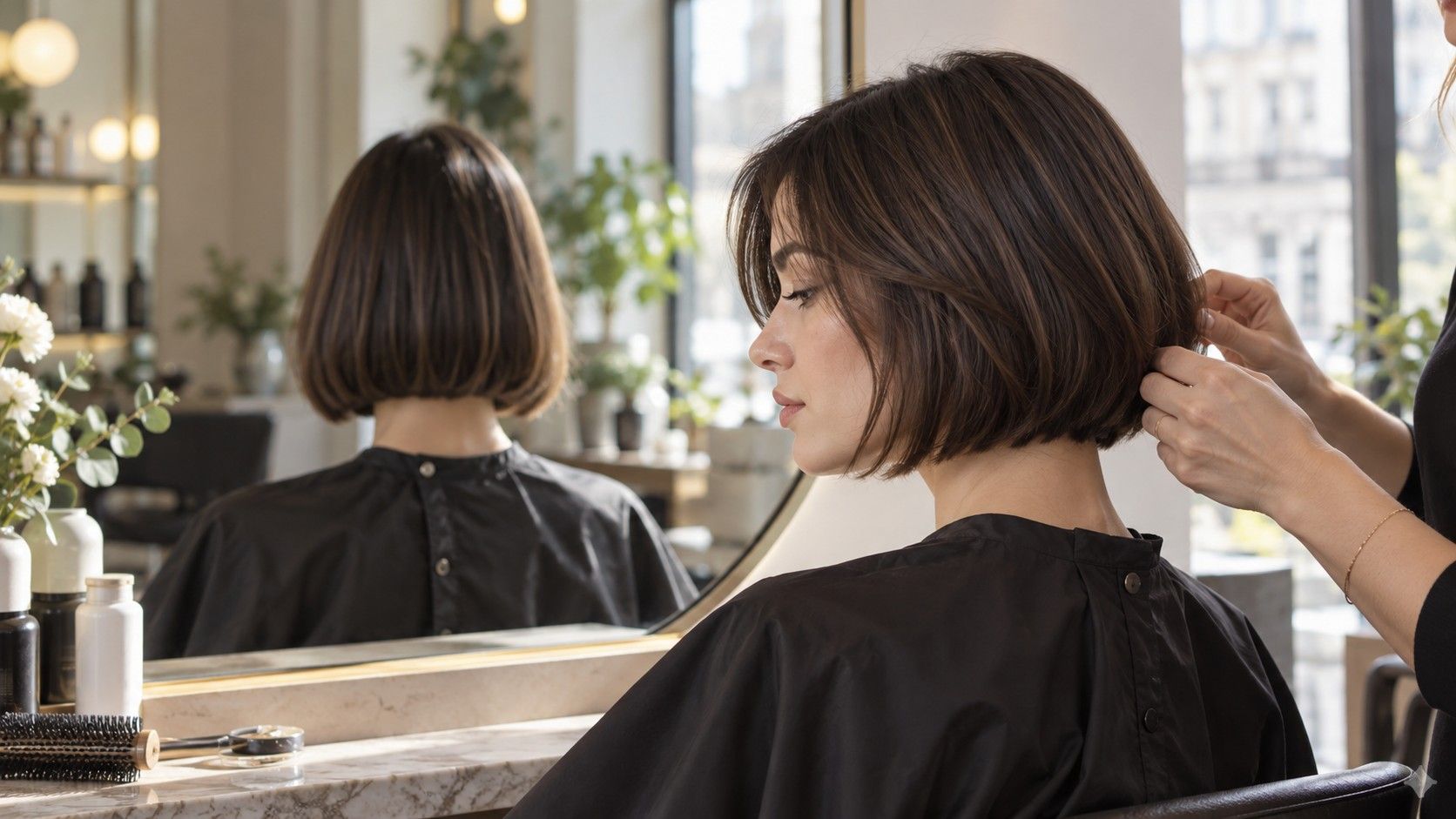
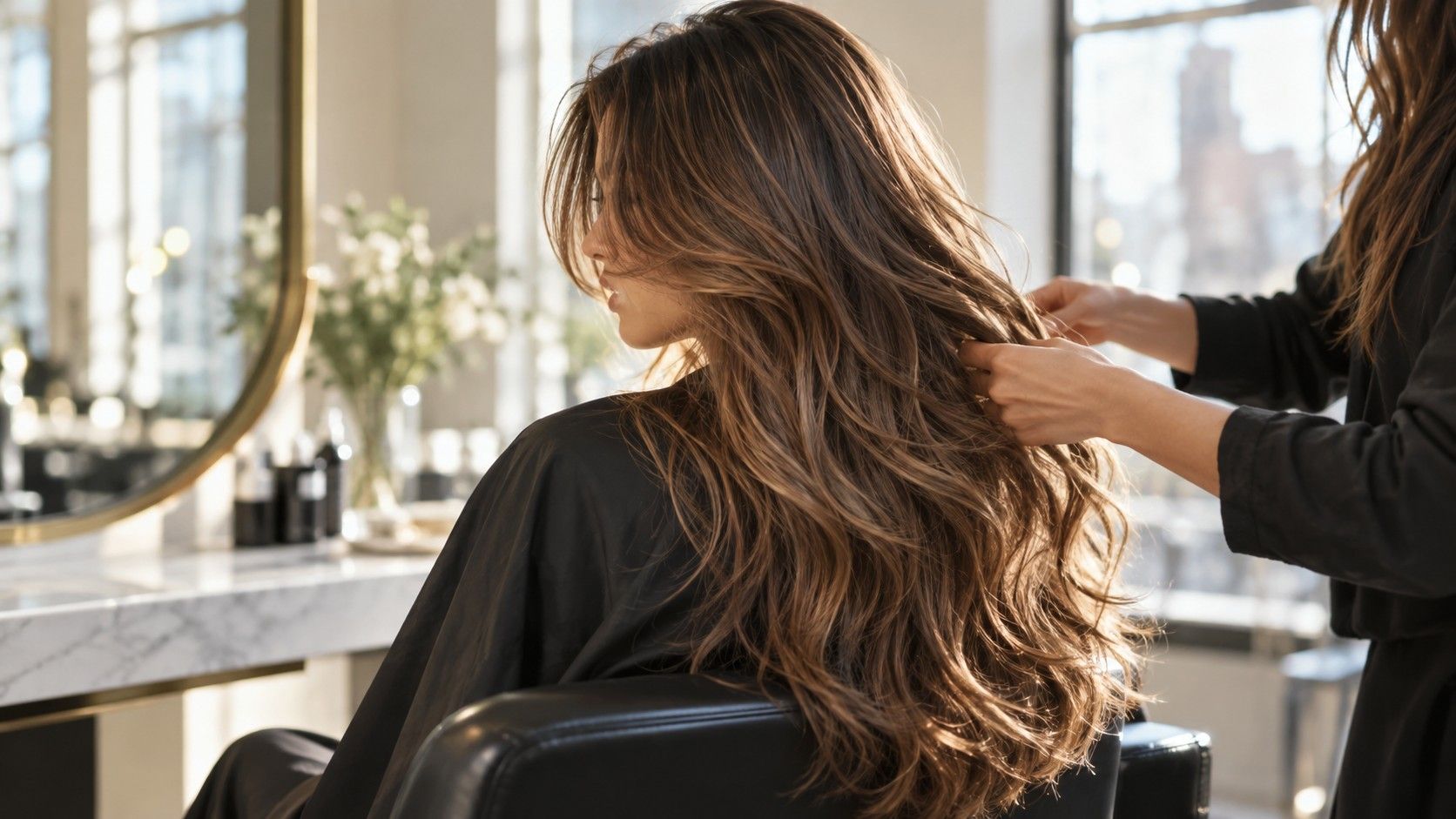
Look at your hair from the back before deciding. If the last few inches are already delicate from bleach, heat, or old color, removing more from the sides can make the whole cut seem shorter even when the center remains long. A modest U-shape is often the more practical option: it gives movement without turning the perimeter into a collection of wisps. Long haircuts do not need a theatrical outline to look considered.
Set the shortest layer where it can still be useful
The shortest layer is the part that changes daily styling most. Starting it near the cheekbones can create visible face-framing movement, but it also means those pieces need attention when they are damp, wavy, or tucked behind the ears. Starting lower, around the collarbone, gives a quieter result that blends easily into braids and ponytails. Neither placement is more modern; they solve different routine problems.
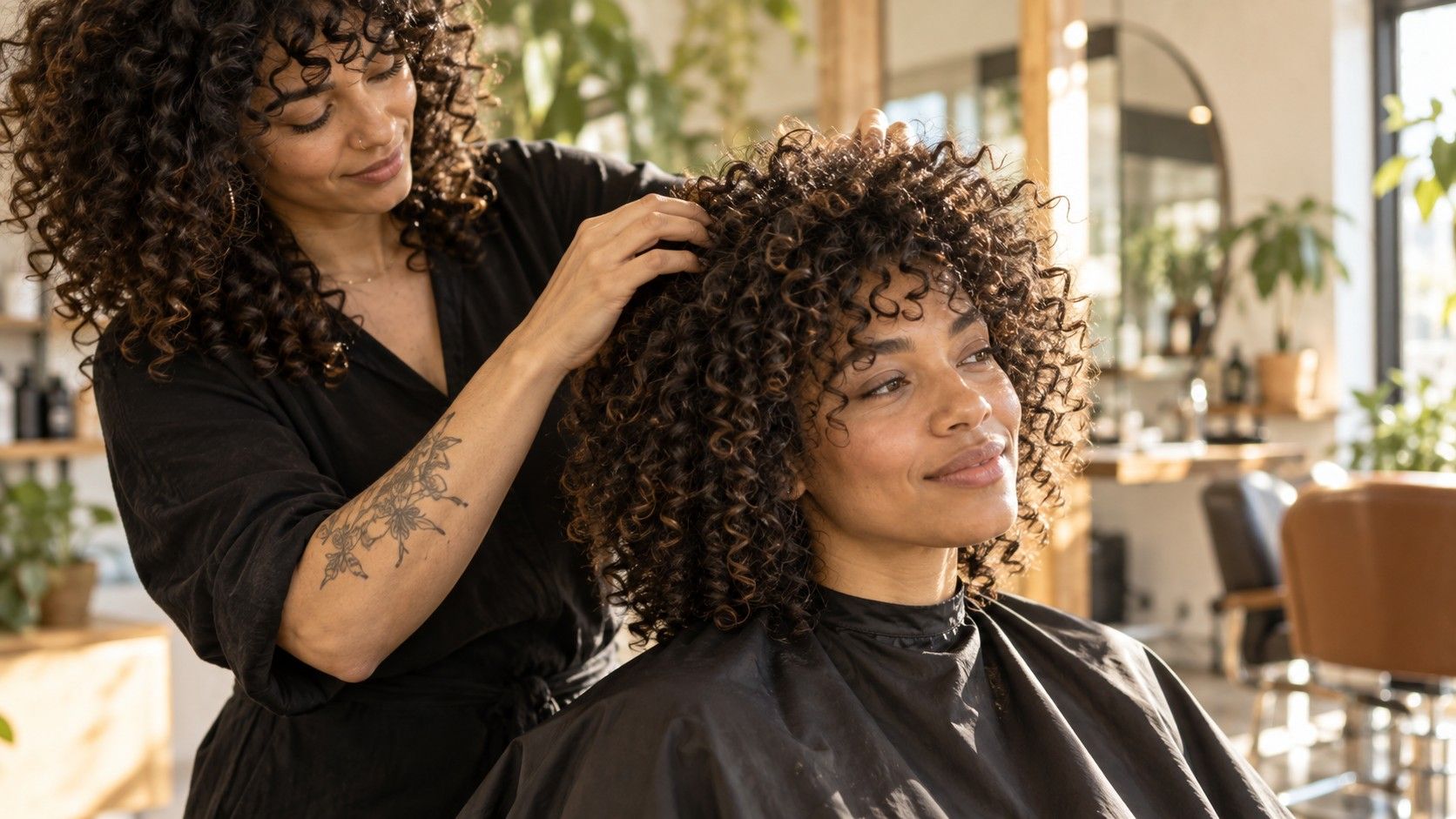
Ask the stylist to explain where the shortest layer will land when your hair is dry. This is especially important for wavy or curly textures, where a damp section can look much longer than it will after it springs up. If you often wear your hair tied back, gather it loosely in front of the mirror before the appointment. Very short face pieces may look pretty down but escape every ponytail, which becomes tiresome faster than a reference photo suggests.
Face-framing layers and all-over layers create different movement
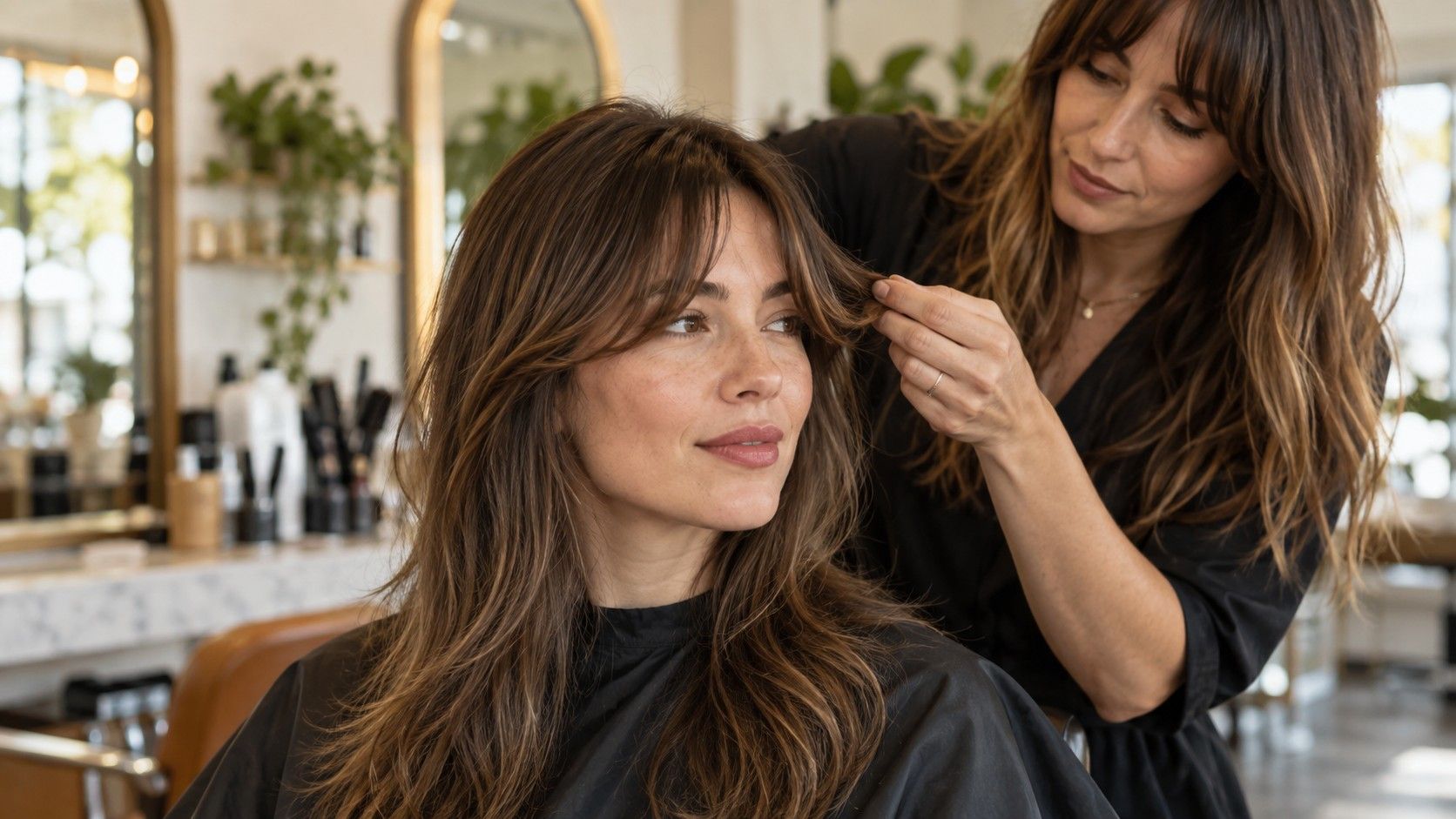
Face-framing layers focus the change around the face while leaving much of the back length intact. They are a sensible choice for someone who wants a lighter look but values thick-looking ends. They can soften the transition between a fringe and the rest of the hair, or make a center part feel less severe. The catch is that the front pieces are always visible, so their length should fit how you normally part and dry your hair.
All-over long layers distribute movement through the entire back and can help dense hair avoid a heavy, triangular shape. They need more restraint on fine hair, where each removed section reduces the impression of fullness. A good consultation uses the words “where” and “how much,” not simply “more layers.” Ask whether the interior will be shaped without over-thinning the surface. The goal is a connected flow, not a staircase hidden under a blowout.
| Layering choice | Best for | Watch for |
|---|---|---|
| Long face-framing layers | Movement near the cheeks with a strong back perimeter | Pieces too short to tuck or tie back |
| Low, blended all-over layers | Dense hair that feels heavy through the middle | Loss of weight at the ends if overdone |
| Minimal invisible layers | Fine hair that needs a fuller outline | Expect subtle movement, not dramatic volume |
| More pronounced layers | Wavy hair with enough density to support texture | Extra tangling and a bigger styling commitment |
Match layer placement to density rather than a trend name
Density is how much hair you have, not how thick one strand feels. Fine hair can be dense, and coarse hair can be sparse. This distinction matters because layers for long hair remove visual weight differently in each case. Dense hair may benefit from carefully placed interior layers that let it move instead of forming one solid mass. Low-density hair often benefits from a cleaner perimeter and only a few long, almost invisible layers.
Do not rely on an online label such as “butterfly cut” to settle the question. The same name can mean short, dramatic front sections on one person and a mild long-layered shape on another. Ask to see the difference between removing bulk from inside the hair and shortening visible lengths. If your ends already feel thin, say so plainly. It gives the stylist a useful limit and keeps the plan from chasing volume at the crown by emptying the bottom.
Style long layers without depending on a salon blowout
A blowout makes almost any layered cut look smooth because it controls the direction of every section. The better test is what happens when you dry the roots, add a little direction around the face, and let the rest finish naturally. For straight hair, a quick bend through the mid-lengths can keep layers from looking too separated. For waves, a light scrunch and minimal touching may give the layers more definition than repeated brushing.
Heat tools are optional, but the technique should be simple enough to repeat. When using a dryer, point air down the hair shaft and give the face-framing pieces a small turn away from the face. When using a curling iron, alternate directions lightly instead of making every strand identical. Long layered hairstyles usually look better with a little irregularity. If the cut only appears blended after forty minutes of styling, the cut is asking too much of your weekday routine.
Protect the ends while keeping movement
Layers cannot repair breakage, and cutting more layers does not make damaged ends healthier. Long hair is older at the bottom than at the roots, so it needs gentler handling there: detangle from the ends upward, avoid repeatedly tightening elastics in the same place, and use a braid or loose twist when friction is likely. This is not glamorous advice, but it is what lets a long shape keep its length long enough to enjoy.
Trims should be guided by the perimeter’s condition. If the bottom line starts to look see-through or catches constantly on a brush, a small cleanup may preserve the overall haircut better than waiting for a major cut. Ask for the layers to be checked at the same time; they should still connect into the ends rather than floating above them. A well-maintained long cut has movement in the middle and enough substance at the bottom to look intentional.
Build a grow-out route into the consultation
Even a successful layered cut changes as it grows. Face-framing pieces reach the chin, the weight line drops, and layers that once blended may begin to separate. Planning a grow-out route avoids the common cycle of cutting more off simply because one section feels awkward. A stylist can tell you whether the shape is likely to become a softer U-cut, a one-length baseline, or a longer version of the same layered style.
Take photos from the side and back after the cut, then again after several weeks in your normal routine. Those images show how the hair settles far better than a memory of the salon mirror. The best long haircuts leave room for change: enough structure to move well today, enough perimeter to stay full tomorrow, and no layers that force you into a styling ritual you do not want to keep.