A low-maintenance cut is not a style that looks identical every morning without any attention. It is a cut whose less-polished version still feels intentional on your hair, with your schedule. Before choosing one, it helps to count the minutes you actually spend washing, drying, arranging the front, and booking trims—not the routine you hope to adopt next month.
Low maintenance is personal, not a label on a haircut
One person considers ten minutes with a blow-dryer easy; another wants to leave the house after finger-combing damp hair. A blunt bob can be very manageable for someone who enjoys a quick smooth finish, yet high maintenance for someone whose cowlick splits the front every time it air-dries. The useful question is not whether a cut is fashionable or simple on a salon model. It is whether its difficult moments match the effort you are comfortable giving it.
Start with the inconvenient parts of your current routine. Perhaps the ends puff up after a rainy commute, the crown goes flat on day two, or the fringe separates after a workout. Those details are more useful than saying that your hair is “hard to manage.” They tell a stylist where a shape needs weight, where it needs room to move, and which problem should not be solved by asking you to use a hot tool every morning.
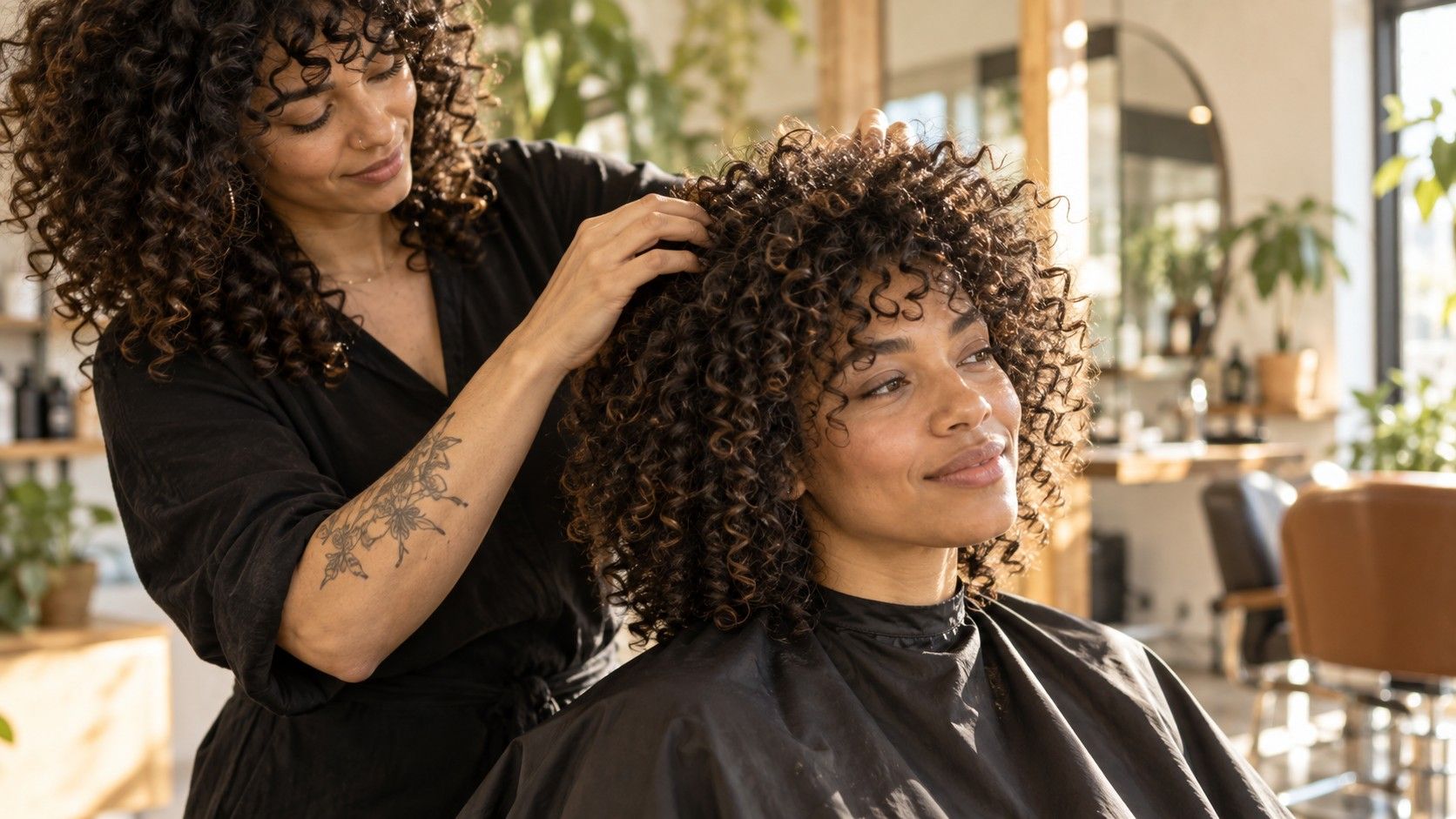
Hair texture changes the meaning of easy. Fine straight hair may need a perimeter that keeps it from looking sparse, while dense wavy hair may need enough internal room to avoid a triangle shape as it dries. Tight curls often do best when the cut respects their spring rather than forcing a daily stretched-out silhouette. The same reference photo can therefore be low effort on one head and a small daily project on another.
It also helps to separate maintenance from boredom. A familiar length can be easy because you know how it behaves, but it may still require frequent color appointments or a fringe trim. Conversely, a visible change can grow out quietly if the outline is soft and the layers are placed with your natural movement. Good low maintenance hairstyles usually have a little tolerance built in: a shifted part, a missed wash day, and a few weeks beyond the planned trim do not make the whole cut collapse.
Match the cut to your wash-and-style routine
Be exact about wash days. If you wash every morning, a shape that benefits from being styled damp may suit you well. If you wash twice a week and rely on a loose bun or dry texture between washes, ask how the cut behaves on day three rather than only immediately after a shampoo. A stylist can leave enough length around the face for tucking and tying, or avoid short pieces that pop out of every ponytail.
Air drying deserves its own conversation. Hair that dries with a bend usually needs a cut that allows the bend to land somewhere useful; heavy, perfectly even ends can make it spread outward, while too many short layers can turn it into uneven volume. Bring in your hair as you commonly wear it when possible. A consultation based only on freshly ironed or salon-blown hair hides the texture that the cut must live with most often.
Heat styling is not all-or-nothing. You may be happy to diffuse curls on wash day but unwilling to use a round brush before work. Say which tool you will realistically pick up, how long you have, and whether you travel often. An easy to style haircut can be designed around a five-minute front refresh, a diffuser, or simple air drying; it should not quietly assume a twenty-minute blowout to make the shape look right.
Notice how you wear your hair when you are busy. If it is clipped back during a workout, pushed behind your ears at a desk, or tied up while cooking, those habits affect the best length and layer placement. A haircut can look lovely down but still be irritating if the shortest pieces constantly escape the tie. Convenience is usually found in these ordinary moments, not in a dramatic before-and-after picture.
Choose a length that grows out without a crisis
Very short cuts are often quick to wash and dry, but they usually show growth sooner because the outline is close to the head. That is not a reason to avoid them. It simply means a pixie, cropped fringe, or sharply tapered nape is best for someone comfortable with regular salon visits. If appointments every four to six weeks feel burdensome, ask for a softer edge or choose a length that can pass through several shapes on the way down.
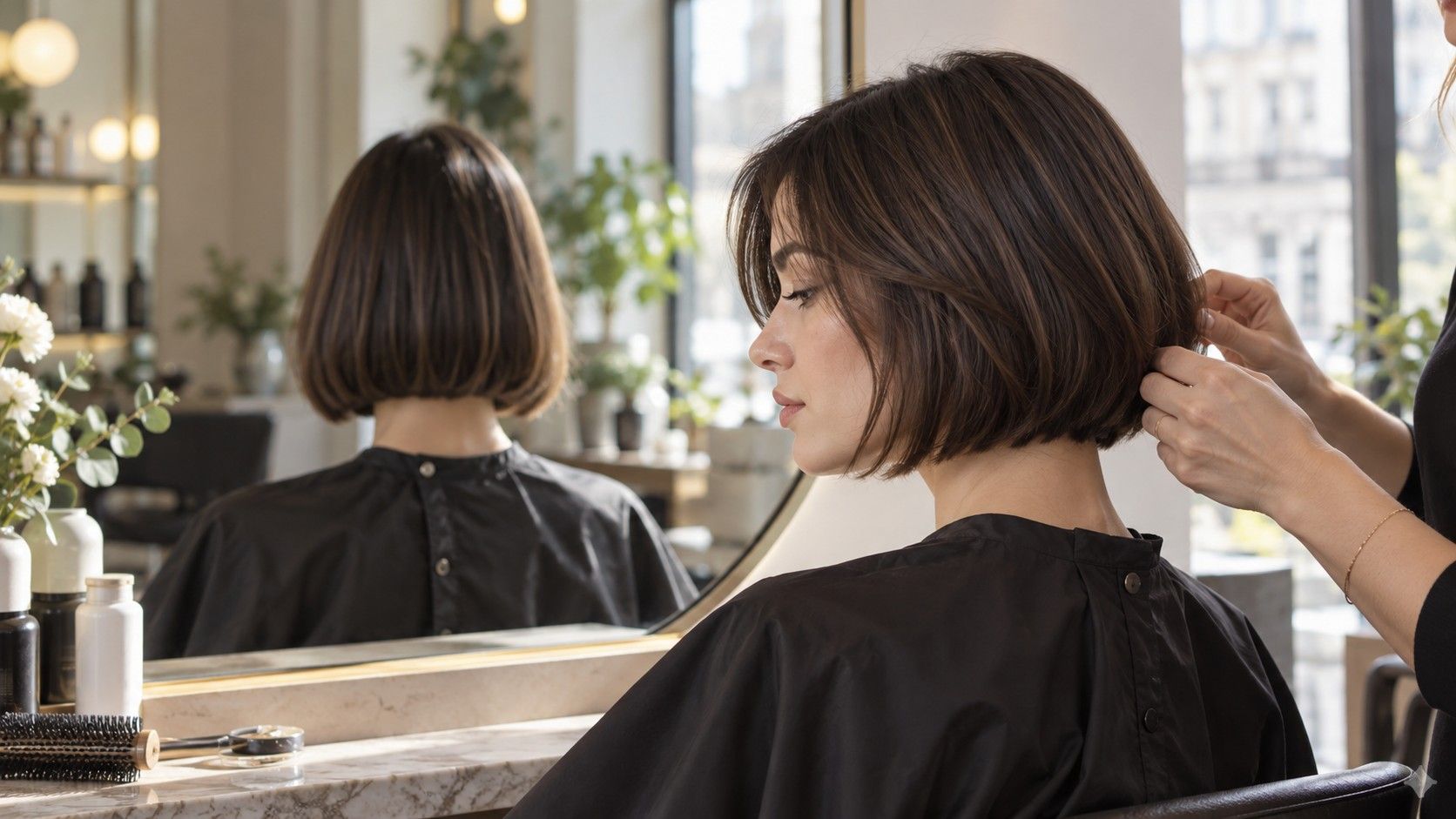
Between chin and collarbone, small choices matter. A bob with a strong blunt line may need a trim before the ends start flipping unpredictably, while a slightly longer, softer shape can survive more time because it can be tucked or worn with a natural bend. Shoulder-grazing hair is often forgiving, but only if the front remains long enough for your preferred part and the ends are not cut so heavily that every bit of humidity changes their direction.
Long hair is not automatically low effort. It can take longer to wash, detangle, dry, and keep healthy, especially with bleach or fragile ends. Its advantage is flexibility: it can be braided, clipped, or tied up on difficult days. If that is the reason you keep it long, protect enough length for your usual tie and avoid face-framing pieces so short that they require constant pinning.
| Cut direction | Often manageable for | Plan for |
|---|---|---|
| Soft pixie or crop | Fast washing and drying | Frequent outline trims |
| Jaw-to-shoulder bob | People who like a tidy shape | Checking how it air-dries at the ends |
| Collarbone layers | Easy tying, tucking, and flexible parts | Keeping face layers long enough to secure |
| Long soft layers | Updos and low-fuss second-day hair | More washing and drying time |
The calendar matters as much as the length. Ask what the cut will look like at eight, ten, and twelve weeks, not just what it looks like in the mirror that day. A good answer explains which part will grow first, whether the shape can be adjusted at home with a part change, and when a short maintenance visit would make more sense than waiting for a full haircut.
Bangs and color are the upkeep people forget to count
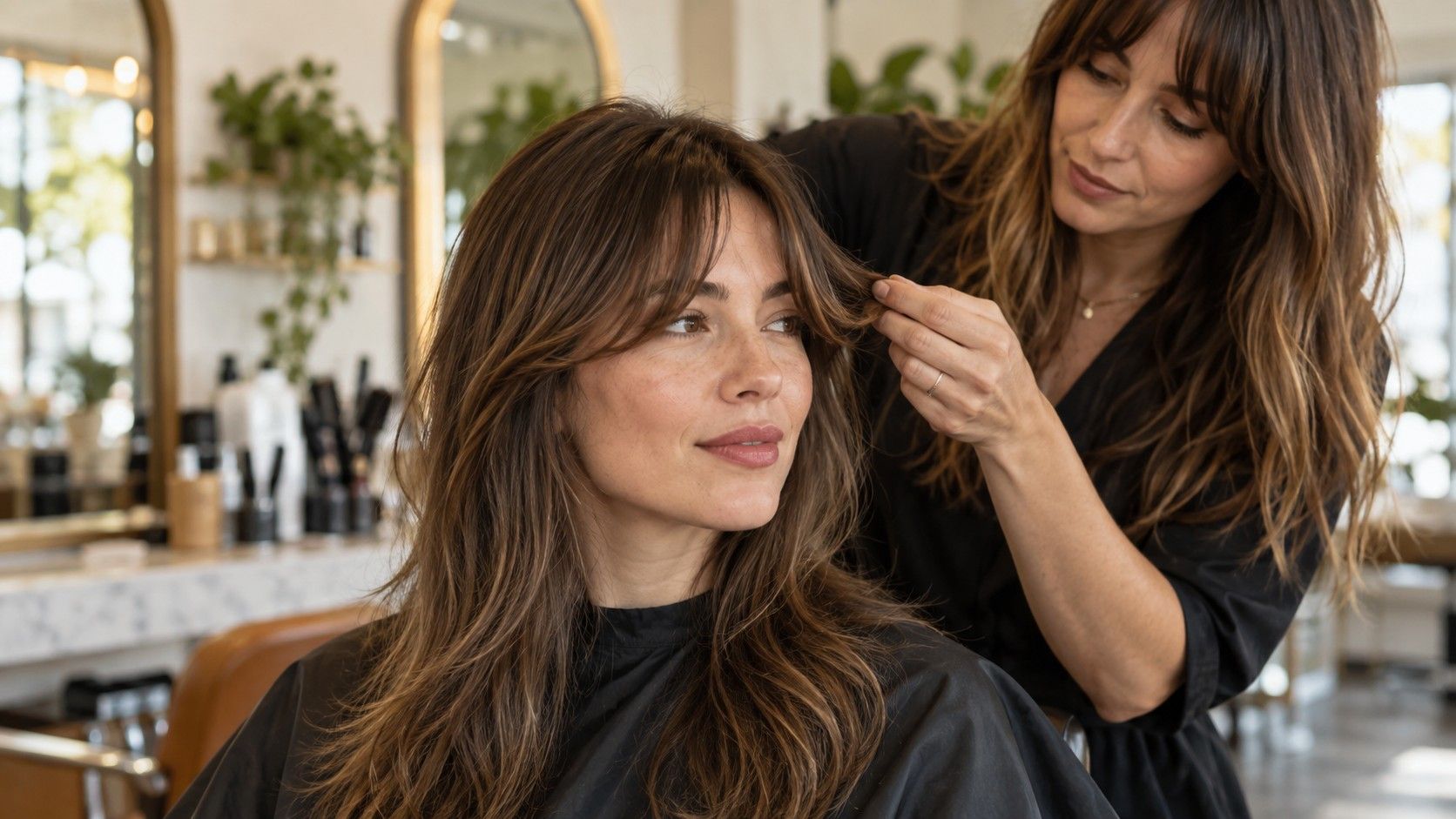
Bangs are often the least forgiving feature of an otherwise practical haircut. They touch the forehead, pick up oil or moisture quickly, and can be redirected by one awkward sleep. Curtain bangs may be easier to blend away than a blunt fringe, but they still need a deliberate part and some attention around the temples. If you do not want to style them, choose a length that can live behind the ears or grow into face framing without looking accidental.
Ask yourself what happens when you are late. If you usually rinse a fringe, dry it separately, and enjoy that small routine, bangs may be worth it. If washing only one section feels like an annoyance, do not choose them because they looked good in a photo taken after a professional blow-dry. The same practical test applies to tiny pieces around the face: they can soften a cut, but they cannot disappear into a ponytail when you need them to.
Color can make a haircut feel more demanding even when the shape itself is relaxed. A soft root, close-to-natural dimension, or gradual change in tone usually gives more room between appointments than a precise all-over shade or bright contrast at the hairline. This is not about avoiding color; it is about choosing upkeep you enjoy. A trim schedule and a color schedule are two different commitments, and both belong in the decision.
Texture services deserve the same honesty. A smoothing treatment, regular gloss, or curl routine may be part of a look you love, but it should be treated as maintenance rather than a surprise after the cut. If you stop doing it, ask what the underlying hair will do. The most durable choices leave you with a version of the style you can still like when life gets busy.
Describe your limits clearly at the salon
Useful salon language is specific and calm: “I wash twice a week, air-dry most days, and will use a diffuser on weekends,” or “I need to put it in a low ponytail for work.” That gives a stylist a clear starting point rooted in your actual life. Saying “make it easy” without those details can lead to a cut that is easy only by the stylist’s definition.
Bring a few reference photos, but point to the parts you mean. One image may show a fringe you like, another may show the length you need, and a third may show the amount of texture that feels comfortable. Mention what you do not want as well: a stacked back, visible thinning, layers too short to tie, or a front that needs heat styling. Clear boundaries prevent a stylist from guessing which feature caught your eye.
Ask for an honest description of the first week and the eighth week. Find out whether the cut should be dried in a certain direction, which pieces will need a quick bend, and what happens if you skip that step. This is not a test of the stylist. It is how you make sure the proposed haircut fits the time, tools, and patience you have available.
Finally, leave room for your hair to be itself. The best easy hairstyles do not demand perfect symmetry or erase every wave. They give your natural texture a flattering route to follow, then make the occasional polished day feel optional instead of mandatory.