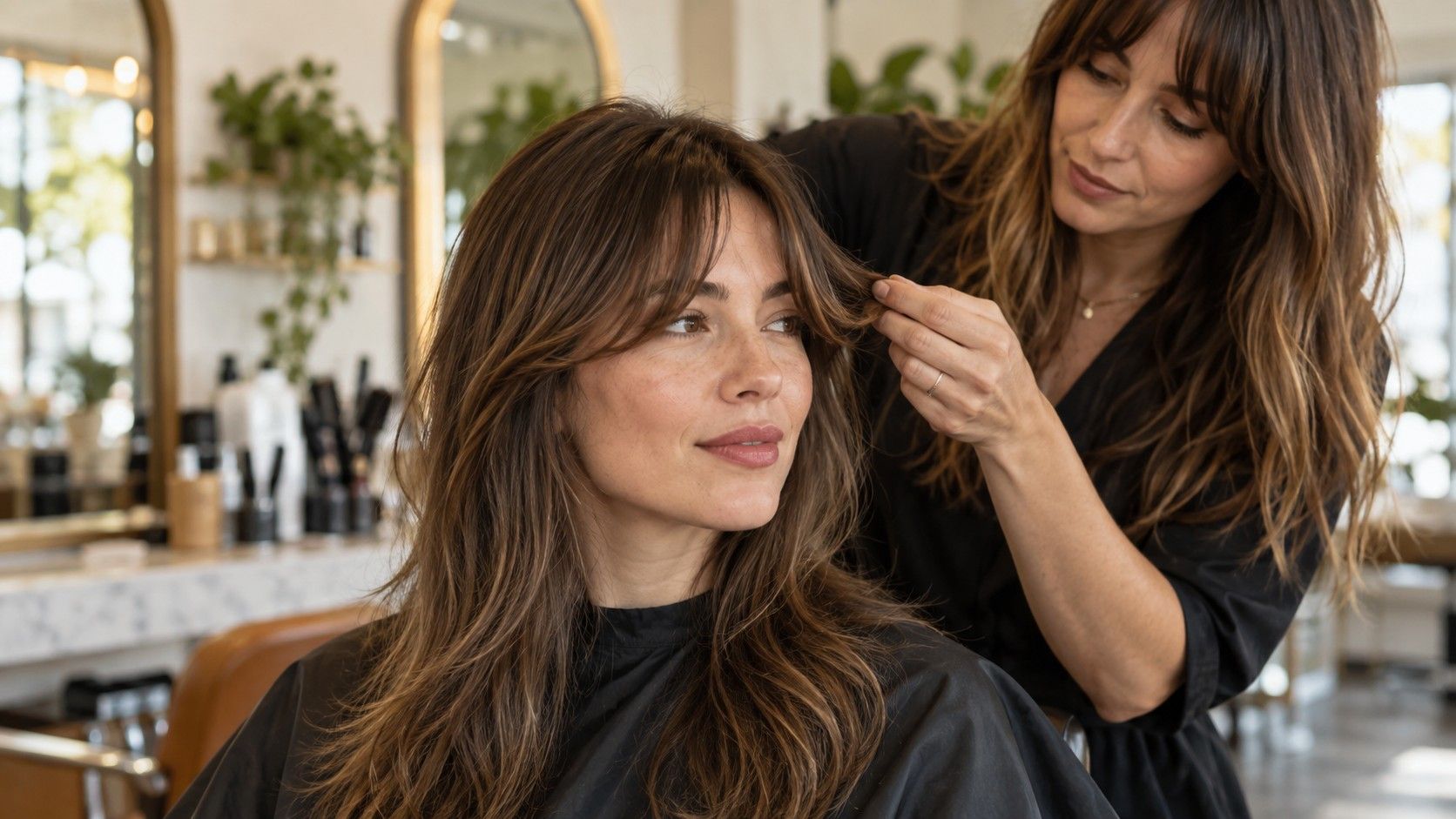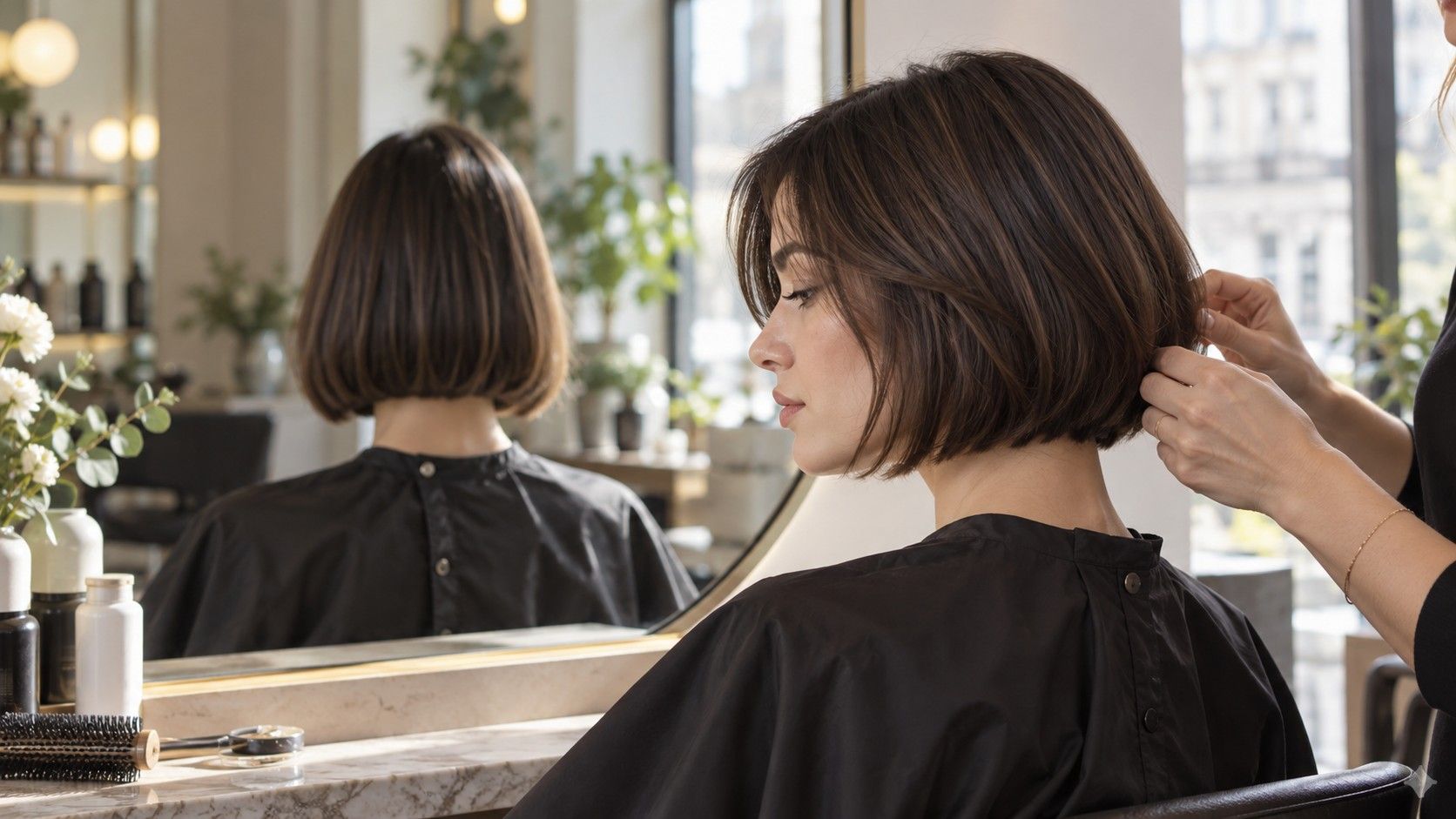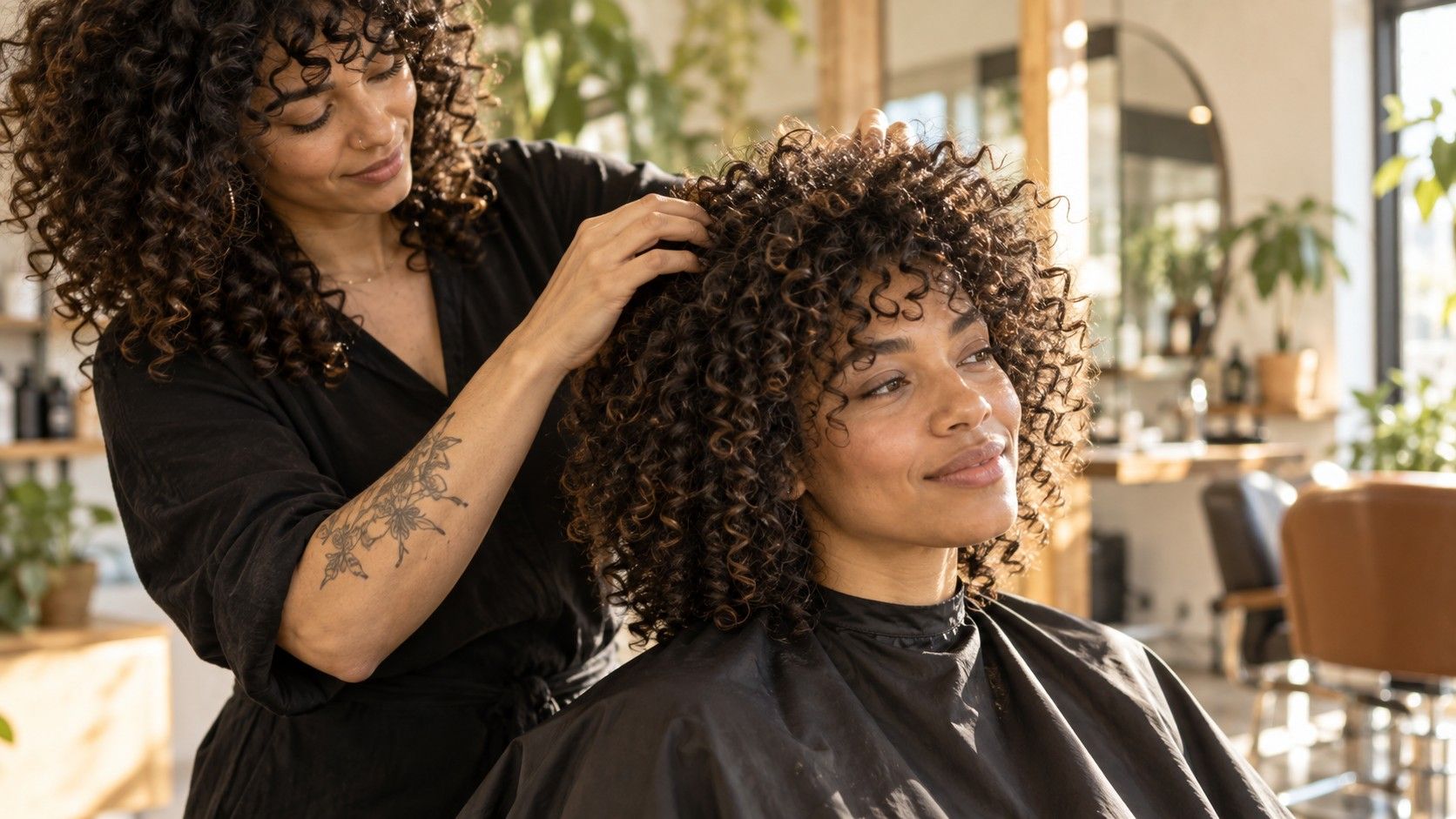
Medium length hairstyles are often sold as the safe choice, which undersells them. Shoulder-length hair can be a lob, a one-length cut, a layered shape, or a grow-out stage with no plan at all. Its real advantage is flexibility: it can be worn down, clipped back, tied up, or air-dried without demanding the constant maintenance of a very short cut or the detangling commitment of long hair.
Why medium length is not one haircut
“Medium” describes a range, not a single line on the body. Hair that lands above the shoulders behaves very differently from hair that reaches the collarbone. At the shoulder, ends often flip outward because they meet the body and clothing. Just below it, they usually settle more easily but may be too long for a small ponytail to feel secure. That few-inch difference matters more than the name written on a salon menu.
Start by deciding what you need the hair to do on ordinary days. If you must pin it away from your face, test whether your current length reaches a comfortable ponytail without pulling the temples. If you mostly air-dry, look at where your natural wave starts. A medium haircut that cuts through the widest part of a wave can puff out, while one that sits just below it may form a relaxed bend with almost no styling.
Choose collarbone length when you want the easiest reset
A collarbone-length cut is one of the most forgiving shoulder length haircuts because it has enough weight to settle and enough length to gather. It can look purposeful with a center part, a soft side part, or a low clip. For people growing out a bob, this length often feels like the first point where the hair stops looking accidental, especially once the front has caught up with the back.
The practical catch is the neckline. Collarbone hair brushes against collars, scarves, and jacket shoulders, so fragile ends can become noticeable. A blunt perimeter may keep fine hair looking dense, while a slightly rounded or U-shaped line gives thick hair more movement. Neither is universally better. Ask to see the back at the end of the appointment, because a front view cannot show whether the line is balanced as your hair moves.
The lob and a true shoulder-length cut have different jobs
A lob usually sits between the jaw and shoulders and is defined by a fairly clear perimeter. It can make straight or loosely wavy hair look intentional with little effort, particularly when the front is a touch longer. A true shoulder-length cut tends to have more room for internal movement and tie-back options. If you regularly wear a ponytail, the slightly longer version is often easier even if the lob photo looks more dramatic.
Do not choose a lob solely because it is called low maintenance. A blunt lob on hair that kinks at the shoulder can need a dryer or flat iron to keep its line crisp. On the other hand, a softly textured lob can look good air-dried but may lose the striking graphic edge that attracted you in the first place. The useful question is whether you want a clean shape or a forgiving texture when you skip styling.
| Medium cut | Works well when | Potential friction |
|---|---|---|
| Blunt lob | You like a clear, dense-looking edge | Ends may flip at the shoulder |
| Collarbone one-length cut | You want easy tying-back and air-drying | Needs regular end care against clothing friction |
| Soft layered medium cut | Your hair has wave or moderate density | Too many layers can thin the perimeter |
| Face-framed shoulder length | You want movement around the cheeks | Front pieces require a little direction when drying |
Use layers to create movement, not to make every strand busy
Layers are useful when they solve a visible problem: heavy hair that sits like a curtain, waves that need a place to bend, or a face that benefits from softer movement near the cheekbones. They are less useful as a default add-on. On fine hair, a stack of short layers can make the bottom line look sparse. On very thick hair, random thinning can leave frizz at the surface without making the shape easier to manage.
For medium hair ideas that remain wearable, ask where the shortest layer will begin and how it connects to the perimeter. Internal layers can remove density without leaving obvious shelf-like steps. Face-framing pieces should be long enough to tuck behind an ear if you need them out of the way. A good cut gives the hair a few choices; it should not require you to recreate the stylist’s brushwork before breakfast.
Keep enough length for a ponytail, clip, and actual updo
Medium hair is praised for versatility, but not every version truly ties back. A shoulder-skimming cut may make a small ponytail while the nape pieces fall out. That can be charming on purpose, yet irritating in a warm office or during exercise. If tying your hair is part of your routine, say so before the first section is cut. A stylist can leave a little more around the nape and temples without sacrificing the overall shape.
Claw clips, half-up styles, and low buns are often more realistic than a high ponytail at this length. Dense hair may need a larger clip, while fine hair benefits from a smaller twist that does not slide out. Do a quick test with the accessories you already use. A beautiful medium cut that only works when worn down is not a flexible cut; it is simply a haircut with a narrower daily role.
Air-dry and heat-style routines should lead to different cuts
If you air-dry most days, the cut should respect the hair’s natural bend. Let it dry naturally once or twice before an appointment and take a photo from the front and side. That shows whether the ends turn under, flare outward, or form uneven waves. A good air-dry shape often has a slightly softer outline and layers placed where the texture already wants to move, rather than forcing smoothness onto hair that resists it.
If you enjoy a blowout, you have more freedom with polished lobs and face-framing volume, but consider the time honestly. Medium hair can take longer to dry than expected because it is long enough to hold moisture yet short enough to need direction at the ends. A round brush and dryer can produce a lovely finish, but the cut should still look decent after a simple rough dry. Heat styling should refine the shape, not rescue it.
Maintain the shape without chasing every split end
Medium length often looks best with trims timed to the condition of the ends rather than an arbitrary calendar. Fine or bleached hair may need a small cleanup sooner because split ends travel upward and make the perimeter fuzzy. Healthy, unprocessed hair can usually wait longer if the line still feels balanced. The point of a trim is to preserve the shape, not to repeatedly remove the length you were trying to grow.
Between appointments, notice the first sign that the haircut is losing its logic: a fringe that will not stay with the part, a heavy back that pushes forward, or layers that no longer blend into the ends. Those clues are more useful than a generic rule about weeks. With a clear target length, restrained layering, and a routine you can actually maintain, medium hair becomes flexible in the way people promise it will be.