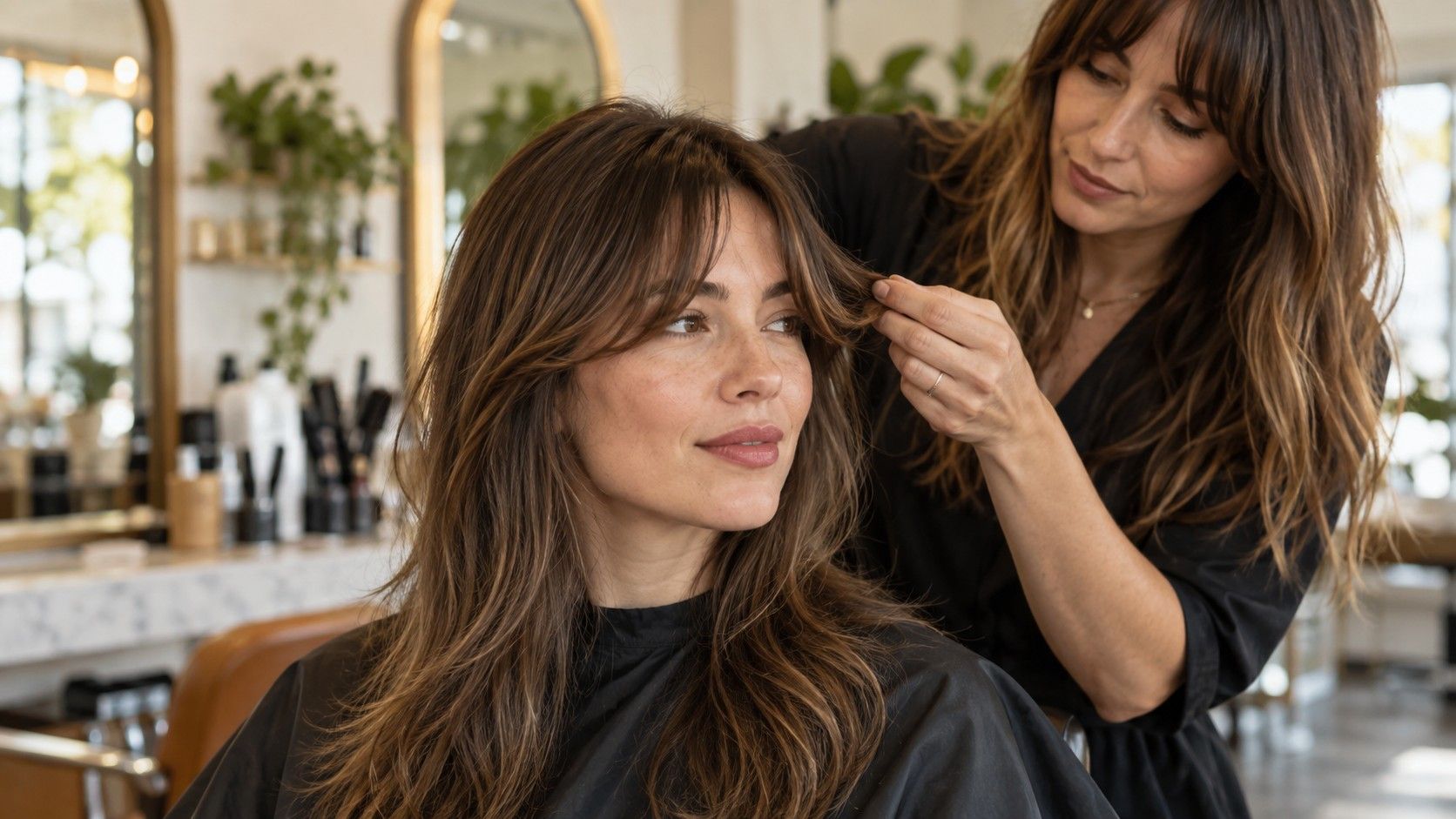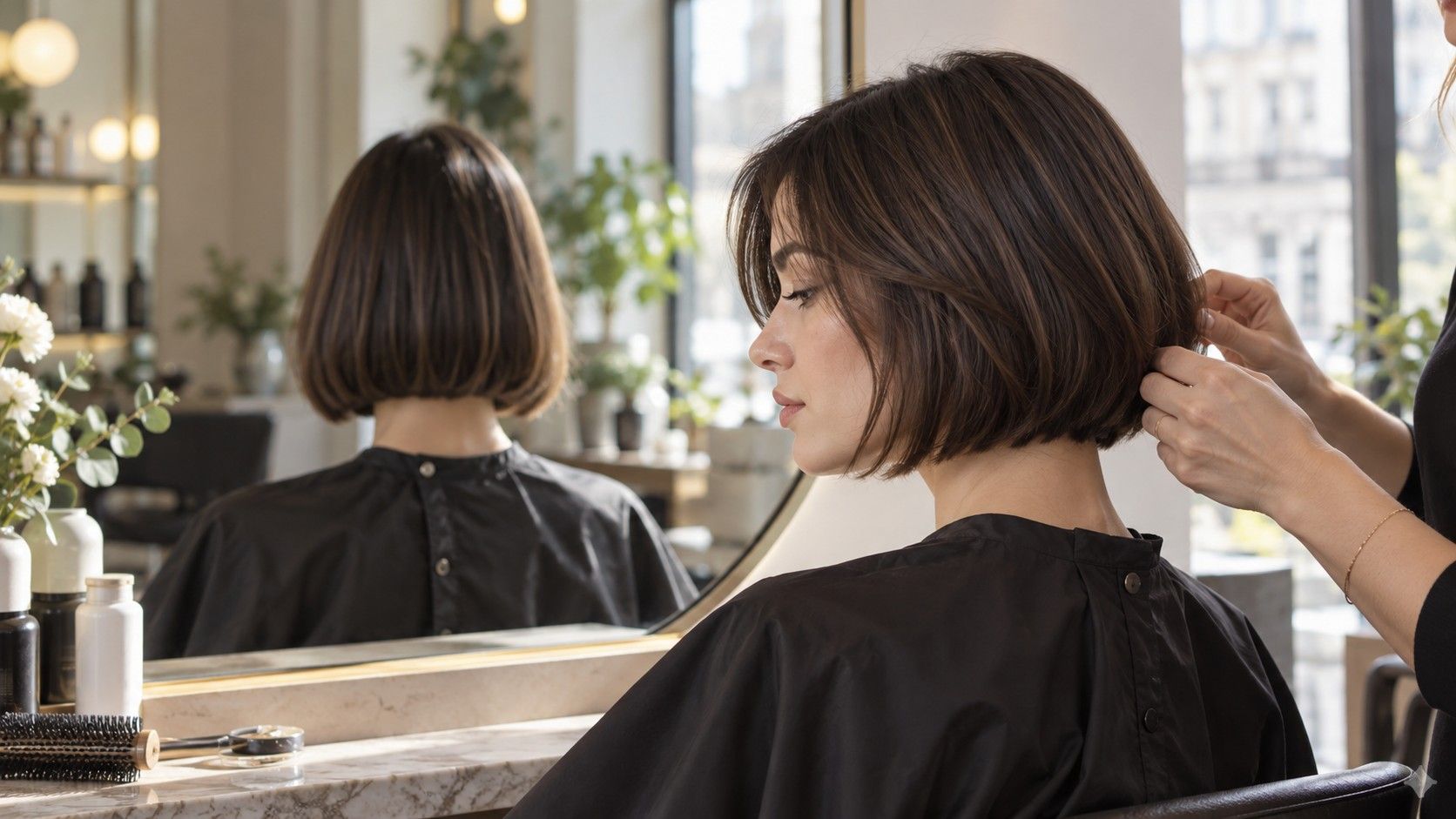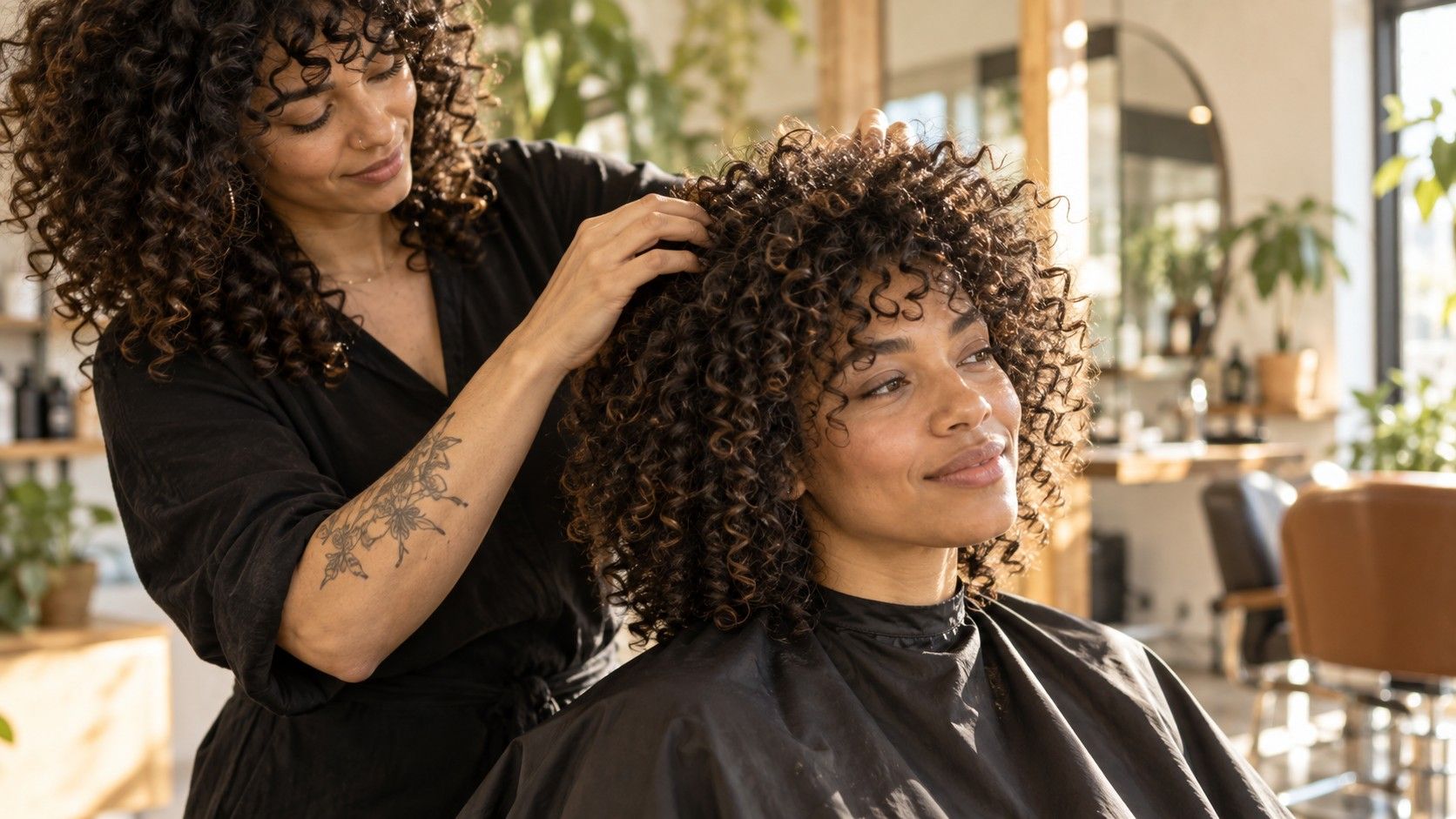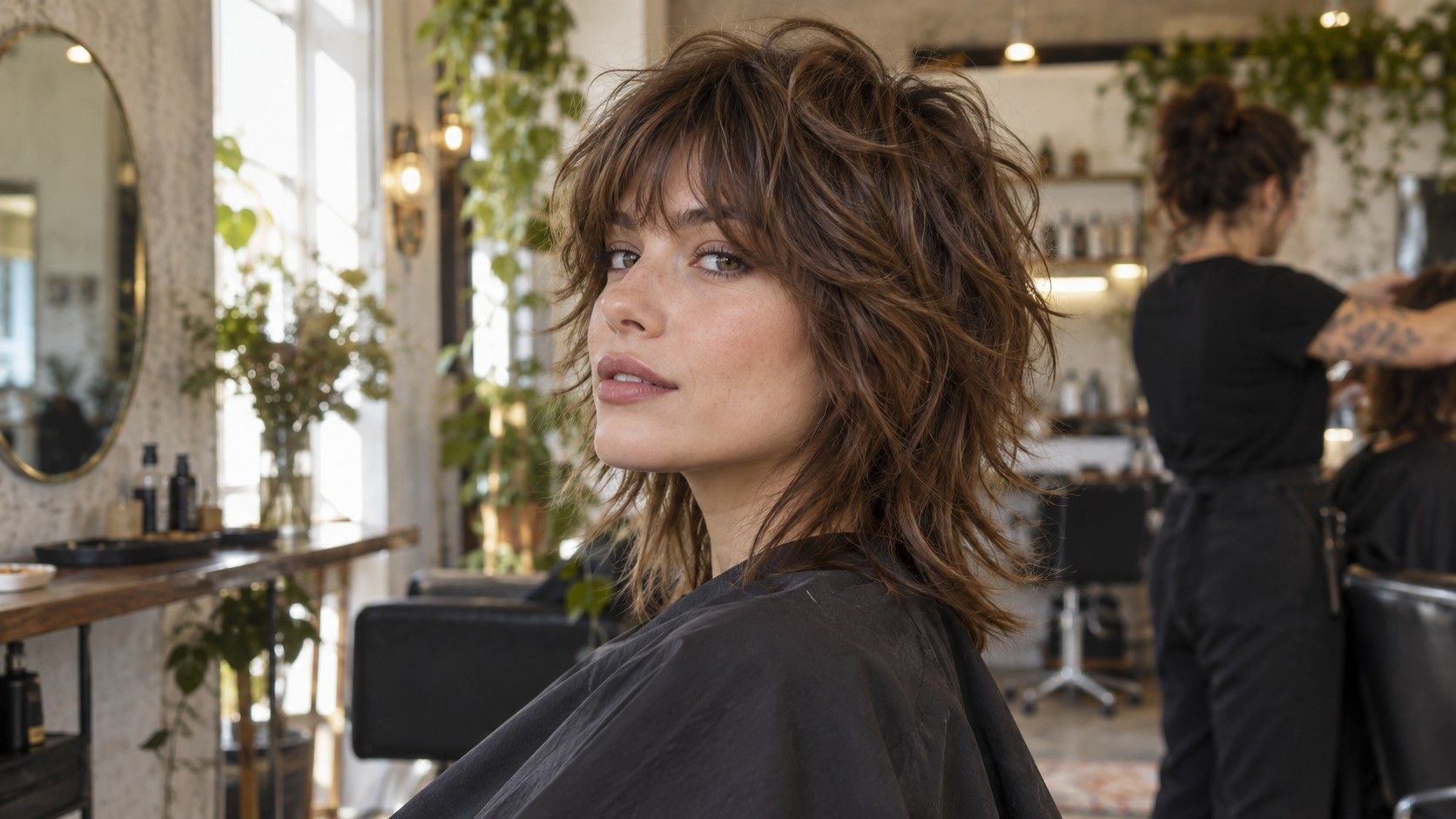
A shag haircut and a wolf cut can look almost identical in a saved photo, especially when both are blown out with plenty of texture. The useful difference appears when the hair is dry, when you tuck it behind your ears, and six weeks after the appointment. One shape is a flexible layered cut; the other deliberately pushes contrast between a short, lifted crown and a longer, looser back.
The shared DNA: movement, broken-up layers, and an imperfect finish
Both cuts borrow from the same family of ideas. They use layers to interrupt a solid block of hair, create air around the face, and make a simple parting look less severe. A good layered shag hairstyle usually has fringe or shorter face pieces, a soft crown, and ends that do not form one blunt shelf. It is meant to move when the wearer turns their head rather than sit in a polished helmet shape.
That does not mean every layered cut is a shag. In a classic shag, the layers can be distributed through the sides and back so the silhouette stays fairly balanced. The crown has lift, but the eye is not pulled only to the top. A stylist may use point cutting, a razor on selected pieces, or soft slide cutting to avoid a rigid edge. The result can be worn with waves, curls, or a rough blow-dry without losing its basic outline.
Photos make texture look automatic, yet the starting hair matters. Natural wave reveals separated layers quickly; very straight, dense hair may show a smoother version unless it is styled. Fine hair can benefit from moderate layering, but too many short pieces can make the lower perimeter look sparse. Before calling a cut a shag, look at the unstyled back: if the length still feels connected and the crown does not sit like a separate cap, it is probably the more balanced option.
Where a wolf cut becomes visibly more dramatic
The wolf cut takes the shag idea and exaggerates its contrast. It often has a shorter crown, a stronger round shape through the top, and longer pieces left at the nape. That slight mullet influence is not an accident; it is what gives the cut its recognizable profile. From the side, the head can look compact at the crown and deliberately longer behind the neck, even when the overall length is only shoulder level.
This contrast can be flattering when someone wants visible volume around the temples and cheekbones, or when a heavy length needs a more animated outline. It can also become awkward fast if the short crown is cut without regard to the hair's spring. Curly or dense wavy hair may lift several inches as it dries. A wolf cut that looked softly tousled in the chair can turn into a triangle at the sides and a hollow gap at the nape if those shrinkage patterns were ignored.
Ask to see where the shortest layer will land when the hair is dry, not only when it is damp and combed flat. A small difference around the occipital bone changes the whole cut. The shorter that point is, the more obvious the wolf-cut effect becomes. If you like the energy but not the mullet reference, request a softer transition from crown to back and leave more weight around the perimeter.
| Feature | Balanced shag | Wolf cut |
|---|---|---|
| Crown | Lifted but blended into the sides | Shorter and more visibly separated |
| Back length | Connected to the overall outline | Often longer than the crown and sides |
| Silhouette | Soft, even movement | Higher contrast and more directional |
| Grow-out | Usually forgiving with small trims | Needs shape checks as the crown catches up |
Choose by texture and density, not by the reference photo alone
Fine, straight hair often needs a cautious version of either cut. Long, shredded layers can remove the very density that makes hair look full. A shag can work well when the stylist keeps a clear weight line at the ends and limits the shortest layers to the crown and face. A wolf cut can also work, but the contrast should be gentle; an extremely short crown may expose the scalp under overhead light and leave the lower lengths looking stringy.
Medium-density hair with a slight bend is the easiest canvas because it can show separation without needing a long styling session. A diffuser, a little mousse near the root, and fingers instead of a brush may be enough. With thick hair, the question is less about creating volume and more about placing it. Internal weight removal can make a shag feel lighter, while a wolf cut may need the back shaped carefully so it does not expand into a wide shelf.
Natural curls deserve a dry-hair conversation. Curl pattern is rarely uniform: the fringe may spring more than the back, while one side near the temple can stay looser. A stylist who cuts every layer to the same wet length may create uneven visual levels after drying. Bring a reference with a similar curl pattern and discuss whether you usually diffuse, air dry, or stretch the hair with a brush. The best version is the one that still has intention on an ordinary Tuesday.
Styling is part of the haircut, even when you want an undone look
Neither shape requires a salon blowout every morning, but both benefit from a simple routine. For a shag, drying the fringe forward first and lifting the roots at the crown can establish the shape. Twist a few damp sections away from the face, then leave the rest alone. Over-brushing turns the cut into a fuzzy cloud and hides the deliberate changes in length.
A wolf cut usually asks for more cooperation at the top. If the crown dries flat while the lower section dries wide, the contrast can look accidental rather than intentional. A small amount of root-lifting product, a round brush only at the crown, or a diffuser held close for a minute can make a major difference. The aim is not uniform curl; it is a controlled high point with relaxed length below it.
Air drying is realistic when the hair already has texture, but it is worth judging the cut after a full air-dry before deciding it failed. Humidity can swell the shortest layers first, particularly around a curtain fringe. In damp weather, a light cream through the ends and a tiny amount of hold near the crown tends to work better than loading every layer with spray. Heavy oils often collapse fine hair and make separated layers clump together.
How to ask for a version that grows out gracefully
The clearest salon request describes the shape, the routine, and the limit. Say whether you want a shag haircut with blended crown layers or a wolf cut with a distinct short crown and longer nape. Mention your usual parting, whether you tuck hair behind your ears, and how often you are willing to style it. Those habits tell the stylist more than a dozen pictures of different people under studio lighting.
For a low-risk first appointment, keep the perimeter longer and let the face framing do most of the work. You can always shorten the crown at a later trim; rebuilding a cut that has been over-layered takes patience. If you wear a fringe, ask where it will sit when it is dry and whether it can be swept aside on days you do not want it on your forehead. Curtain fringe is often the easiest bridge because it can blend into cheekbone layers instead of creating a hard line.
Plan a check-in trim around eight to twelve weeks, sooner if your hair is short or the crown is very cropped. A balanced shag often grows into softer layers with little drama. A high-contrast wolf cut changes more noticeably as the nape and crown approach the same length, so it may need a small reshaping rather than a full restart. The right choice is not the trendier name; it is the outline you will still like when the texture, weather, and styling time are ordinary.