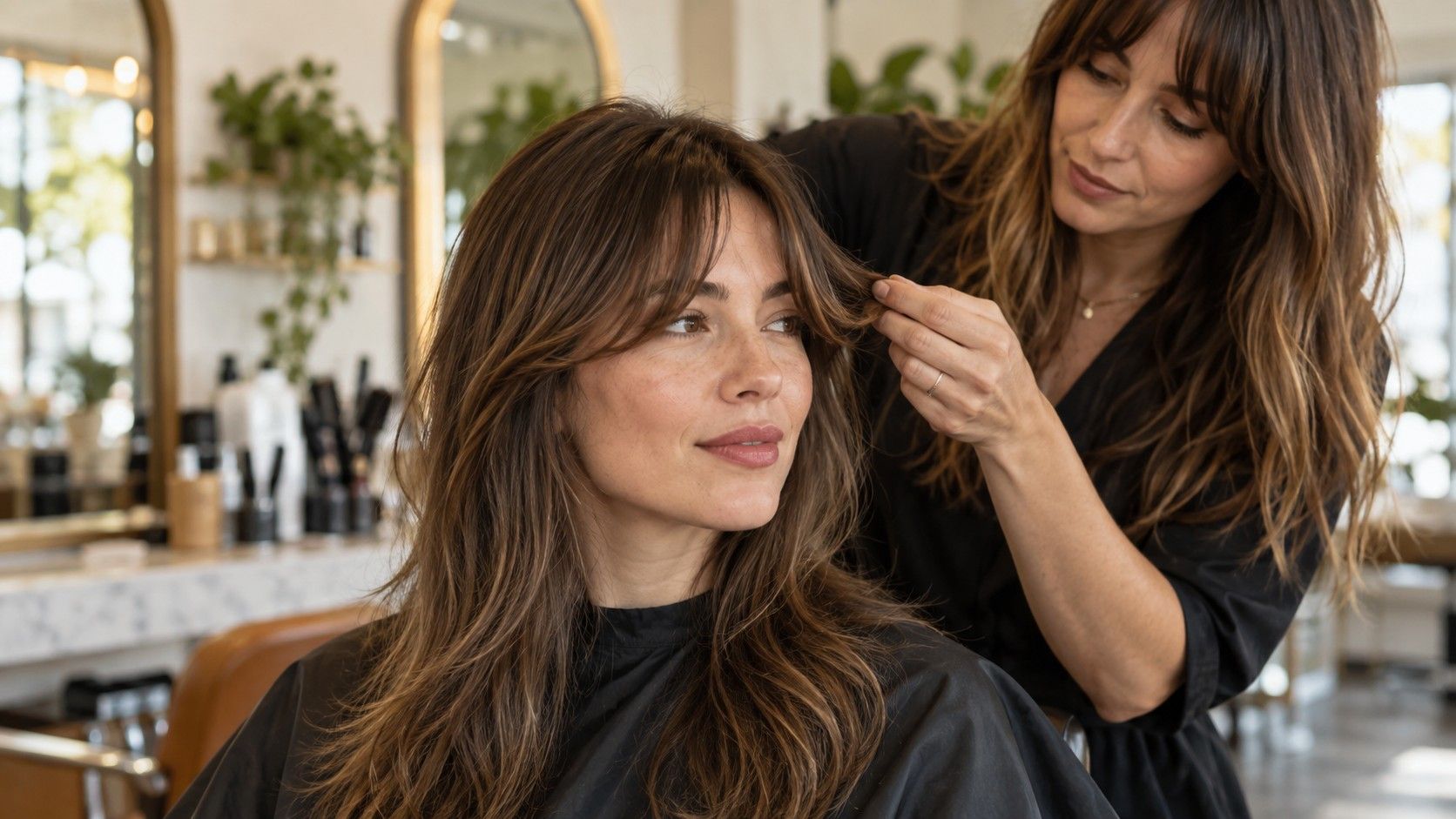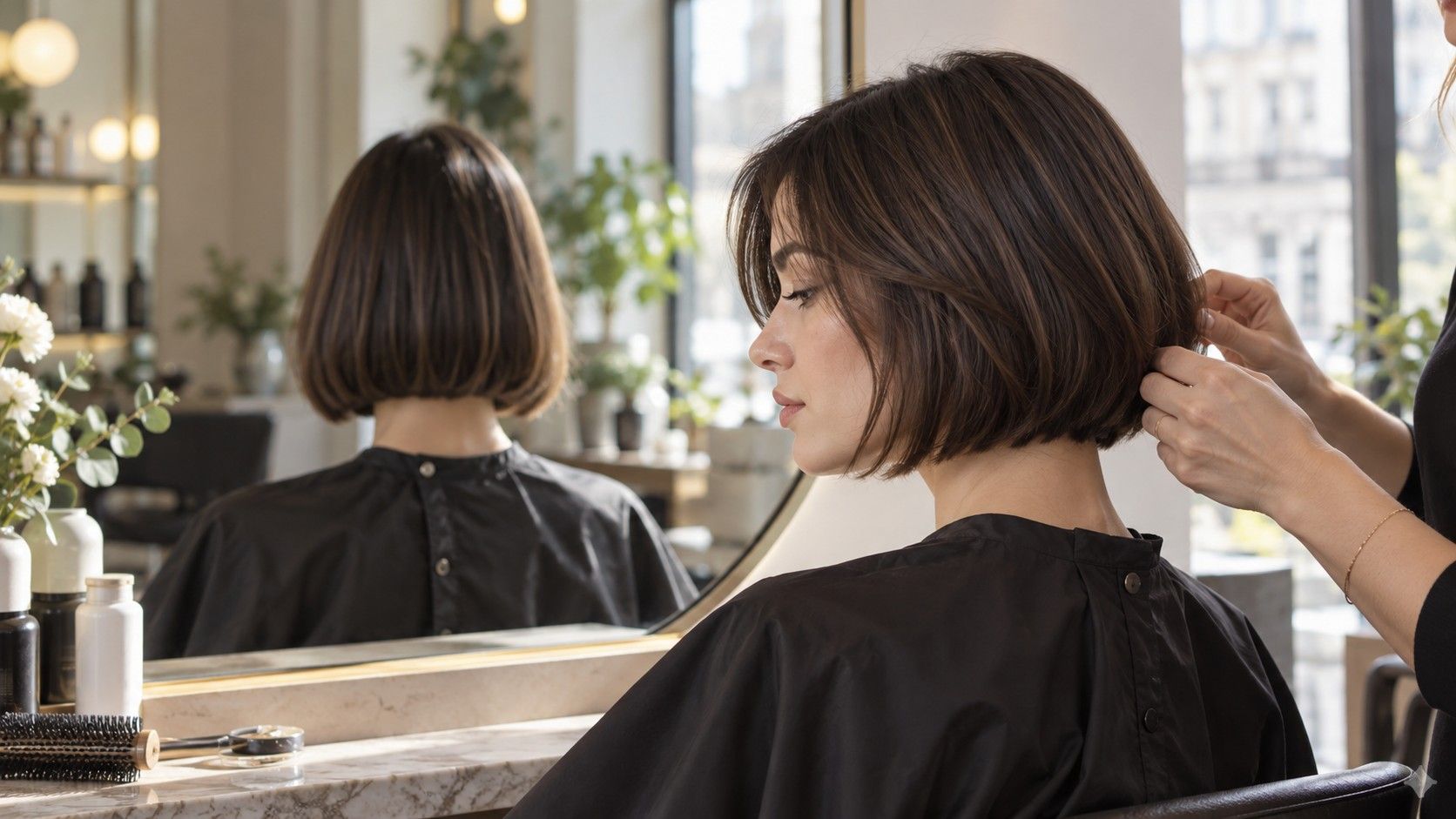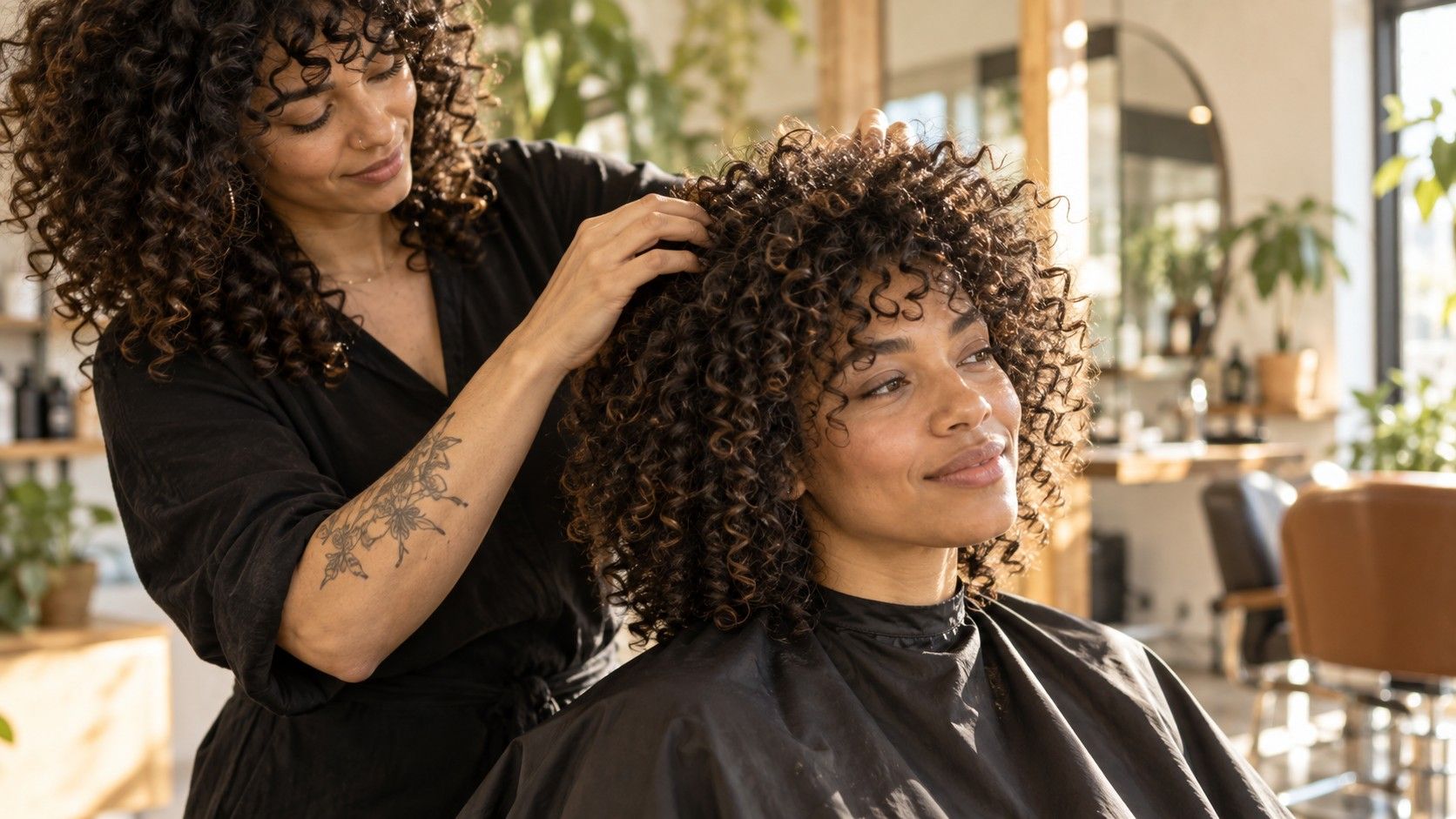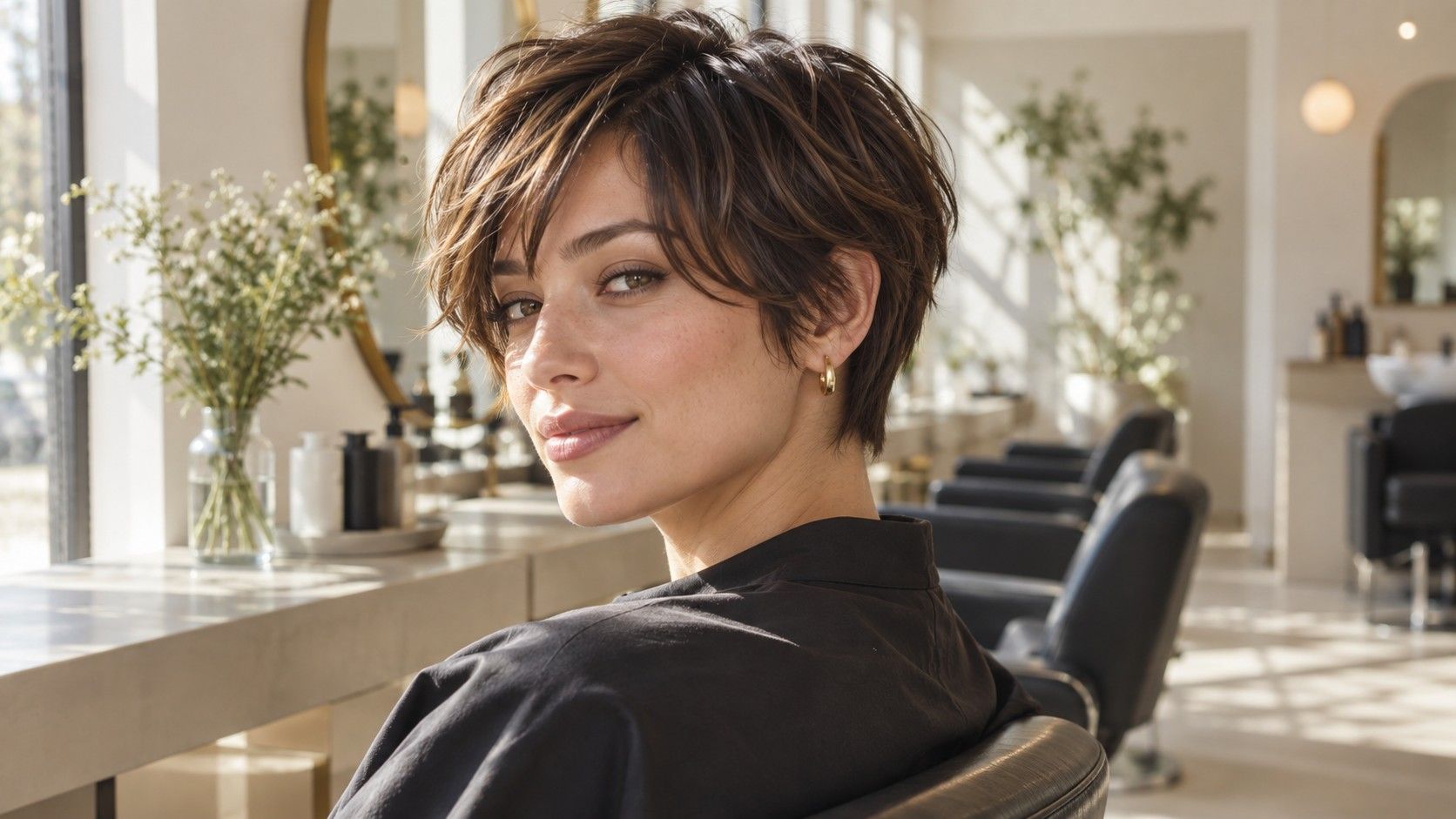
Short hairstyles can feel wonderfully clear-cut until you are sitting in the salon chair and realize that a photo does not show the model’s cowlick, density, or ten-minute styling routine. The best short haircut is usually less about being brave with length and more about putting weight, texture, and maintenance in places your own hair can support.
Decide how short is genuinely practical before choosing a shape
The first useful decision is not pixie versus bob. It is whether you are comfortable seeing your nape, ears, and natural growth pattern every morning. A cropped nape can look polished after a salon blow-dry but needs attention when hair grows unevenly at the neckline. If you wear glasses, headphones, or a bike helmet often, notice where hair already flips or gets pressed flat. Those small habits make a big difference once there is no extra length to hide them.
Bring photos at two distances: one close enough to show the fringe and crown, and one from the side and back. A strong short cut has a plan from every angle. Ask the stylist to point out the shortest point at the nape and the longest point around the face. That simple conversation prevents the vague request for “short but not too short,” which can mean three very different things to three different people.
Fine hair needs structure more than aggressive layering
Fine hair often looks its fullest when the perimeter stays deliberate. A compact bob, a softly rounded bixie, or a pixie with a longer top can create the impression of density because the ends do not taper into nothing. The tempting approach is to ask for lots of choppy layers; on very fine hair, too many short pieces can leave the bottom edge transparent and make daily styling feel like damage control.
For a fine-hair pixie, crown layers should be long enough to bend rather than stand up as separate spikes. A side part can give the top more direction, while a deep fringe may remove too much hair from the crown if the hairline is already sparse. Check how the cut dries without a round brush. If air-dried texture is nearly flat, choose a shape that still has a clean outline rather than one that depends on volume every day.
Thick hair and curls need bulk removed in the right places
Thick hair is not automatically easy short hair. A blunt jaw-length bob can expand at the sides, and a short crop can turn triangular if the interior weight is left untouched. The goal is not to thin everything out; it is to remove bulk where the head is widest while preserving enough weight at the ends for a readable shape. Internal layers and a slightly softened neckline often work better than visible, heavily razored pieces.
Curly hair adds another practical variable: spring. A curl that reaches the collarbone when wet may sit near the cheek when dry, so the cutting plan should account for the finished curl pattern rather than a stretched section. Ask for the nape and temple areas to be assessed dry if possible. A short curly cut can be excellent when each curl has room to form, but it is unforgiving when the top is cut much shorter than the sides without considering shrinkage.
| Hair type or concern | Short-cut direction | Check before booking |
|---|---|---|
| Fine, straight hair | Blunt bob or longer pixie with controlled crown layers | Will the perimeter still look full when air-dried? |
| Thick, straight hair | Bob or bixie with internal weight removal | Where will bulk be taken out without fraying the ends? |
| Loose waves | Textured bob with enough length for the wave to bend | Does the cut work without heat styling? |
| Curly hair | Rounded crop or curly bob shaped around dry curls | How much will each area shrink as it dries? |
Read the crown and cowlick instead of fighting it
A cowlick is not a character flaw, but it does set boundaries. At the crown, it can make a short top split into two directions; at the front, it can push a fringe straight upward. The fix is usually length and direction, not extra product. If your crown rotates strongly, leaving it slightly longer may let the hair settle into the swirl. Cutting it too short can turn every morning into a negotiation with a brush and a dryer.
Hairlines matter just as much. A low, dense hairline may support a cropped fringe, while a high or uneven one often looks more natural with a longer, side-swept front. Before committing, part your hair where you normally wear it and look at the front under ordinary bathroom light. Salon lighting is flattering; the practical test is whether the cut still makes sense on a rushed weekday.
Pixie, bixie, and bob solve different routine problems
A pixie is the shortest commitment and usually the most frequent-maintenance option. It can be quick to wash and dry, but the silhouette changes fast once the nape grows in. A bixie keeps some of the airy crown and face-framing movement of a pixie while giving the ears and neckline more softness. It is often a sensible bridge for someone who wants short hair ideas without exposing every contour of the head at once.
A bob offers more camouflage and more styling choices, especially around the jaw and neck. The trade-off is that a bob can require more blow-drying if the ends bend unpredictably. A chin-length version is not simply a longer pixie: its weight line has to sit cleanly, and the front should be chosen with the jawline and natural part in mind. The best short haircut is the one whose inconvenient part matches a task you do not mind doing.
Plan the grow-out before the first appointment
Short hair grows out in stages, not as one graceful slide toward a longer style. The nape can feel bulky first, then the sides begin to cover the ears, then the crown catches up. A good salon plan includes a maintenance visit after roughly four to eight weeks for a pixie or six to ten weeks for a bob, depending on how sharp you want the outline. That does not mean a mandatory expensive routine; it means knowing which part will change first.
Ask which longer shape the cut can become. A pixie may grow into a bixie, then a short bob. A blunt bob can become a collarbone lob with a few face-framing pieces. Keeping this route in mind helps avoid panic trimming when one area looks awkward for two weeks. Take a quick side and back photo after each appointment. It gives you a more useful record than trying to remember whether the crown felt too short last time.
Use a short consultation checklist that reflects real life
Good short hairstyles should fit the amount of effort you actually have, not the routine you wish you had. Tell the stylist whether you air-dry, wash daily, wear hats, use a diffuser, or avoid hot tools. Mention chemical processing, a sensitive neckline, and whether you need to tie back the front for work. These are not fussy details; they decide whether the cut remains easy once you leave the chair.
Finally, ask what the cut will look like at home on day three, not just on the day it is finished. A stylist who explains the crown direction, fringe behavior, and grow-out schedule is giving you something more valuable than a trendy name. Short hair can be freeing, but it works best when the structure is built around the hair that is actually on your head.