Thick hair is often described as easy because there is plenty of it. Anyone who has spent forty minutes drying a heavy mass of hair, or watched a neat bob widen into a shelf in humid weather, knows that is incomplete. The useful goal is not to remove as much hair as possible. It is to decide where the weight belongs so the haircut feels lighter and still has a shape worth keeping.
Find the place where the hair actually feels heavy
Bulk does not sit in the same place for everyone. Some people feel it at the nape, where a dense underlayer traps heat and makes a ponytail feel enormous. Others have fullness at the sides, so any blunt chin-length cut widens as soon as it dries. A third group has strong hair through the crown but fragile-looking ends, which means removing interior weight without weakening the perimeter is the real challenge.
Start with the hair down and dry. Notice whether it expands below the ears, piles up around the shoulders, or feels too dense only when it is tied back. Then look at the profile. A haircut can feel lighter from behind while becoming visually wider from the side if the ends have been cut into a horizontal bulk line. These observations are more useful than the vague instruction to take out weight.
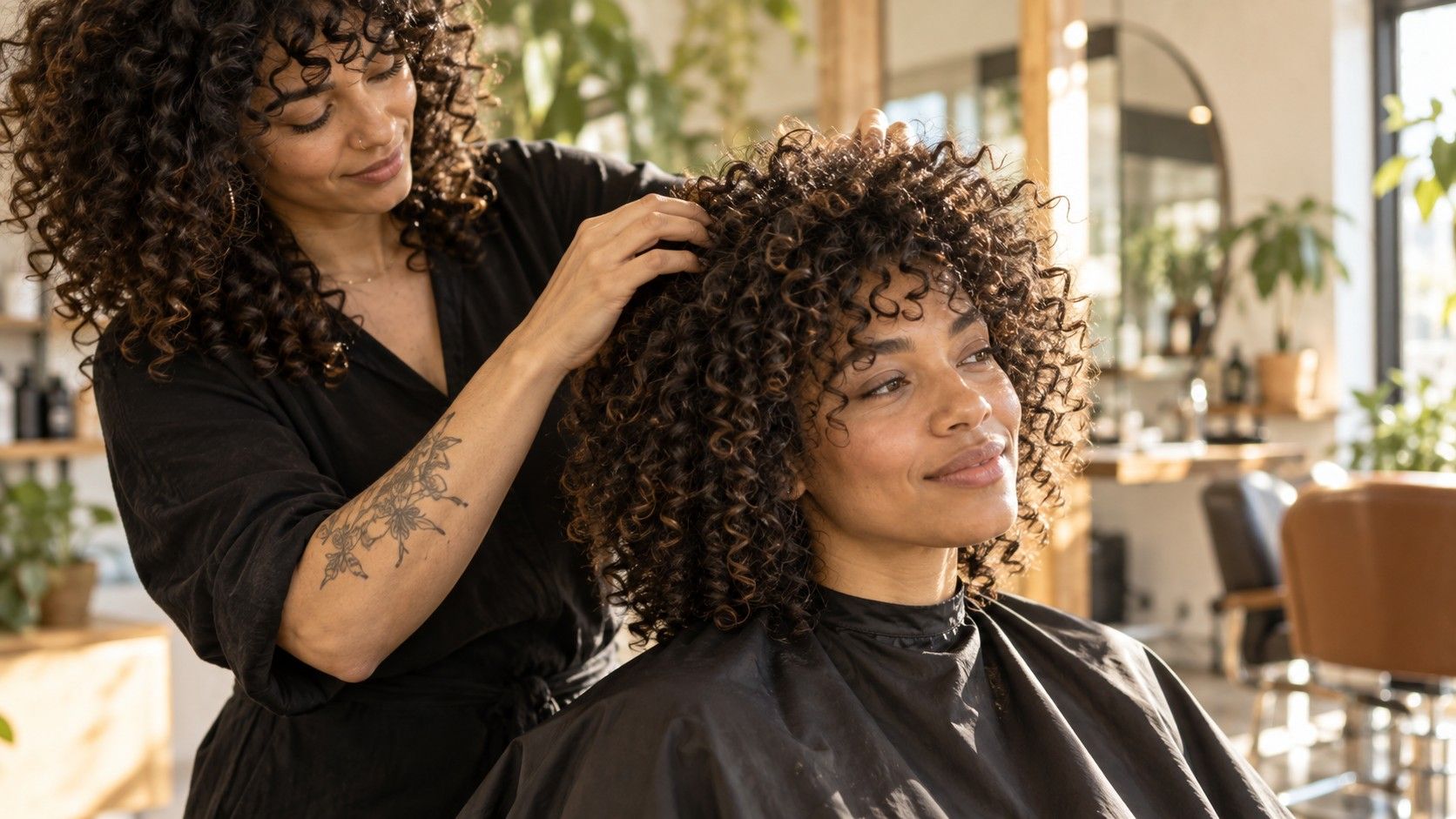
Texture changes the answer. Straight thick hair often reveals every blunt shelf, while wavy hair can disguise a layered transition but may gain width when humidity arrives. Tight curls require respect for shrinkage and for the way each curl clumps. A cut should be planned around the hair in its normal state, not around wet hair pulled straight with a comb. The best haircut for thick hair is specific about where it needs relief and where it needs support.
Internal layers and visible layers solve different problems
Internal layers, sometimes called hidden layers, remove selected weight beneath the surface while preserving the outer line. They can make a thick bob dry faster and let long hair move without making the ends look shredded. Done well, they are not obvious as separate steps; the hair settles more easily when you put it behind an ear or run a brush through it. Done aggressively, they can create unsupported top layers that puff up over a hollow interior.
Visible layers are meant to be seen. They create movement around the face, release a heavy curtain of length, and can stop thick hair from reading as one dense block. The trade-off is that each layer changes the silhouette. If the shortest layer begins too low, it can create a broad triangle around the shoulders. If it begins too high, the crown may look overbuilt while the lower section feels thin by comparison.
For many hairstyles for thick hair, the practical answer is a combination: modest internal weight removal around the densest zones, then a few longer visible layers to guide the outline. Ask the stylist to explain which sections will be hidden and which will show when the hair is air dried. That conversation catches a common disappointment: leaving the salon with light-feeling hair that becomes frizzy because too much internal structure was removed.
Pick a perimeter that narrows or softens instead of widening
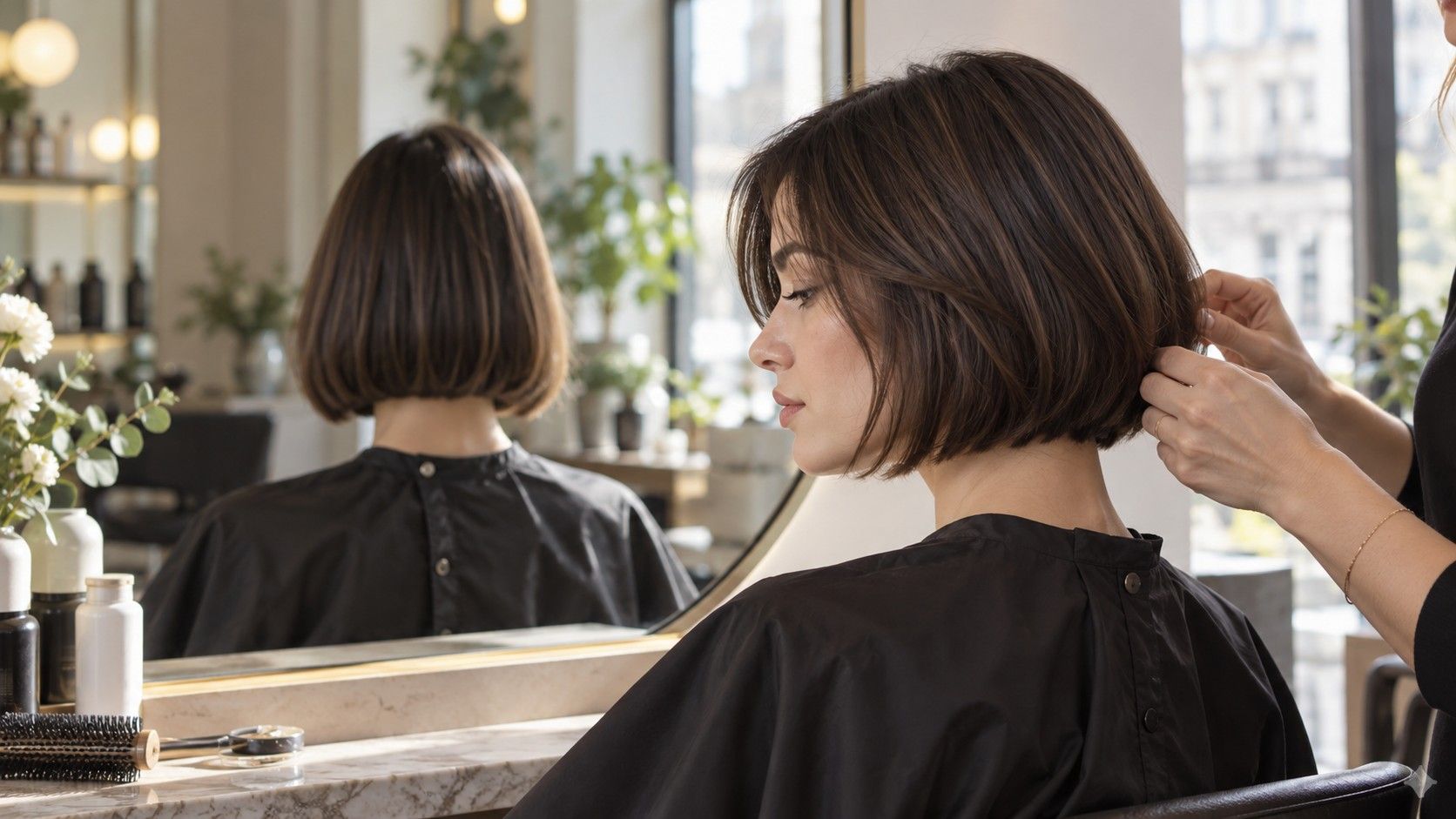
The perimeter is the outside edge of the haircut, and it has more influence on bulk than people expect. A one-length bob can be striking on thick hair, but it needs a length and angle that suit the neck and jaw. Cut exactly at the widest point of the jaw, it may push outward. A slightly longer front or a gently rounded back can let the shape follow the head instead of sitting beside it.
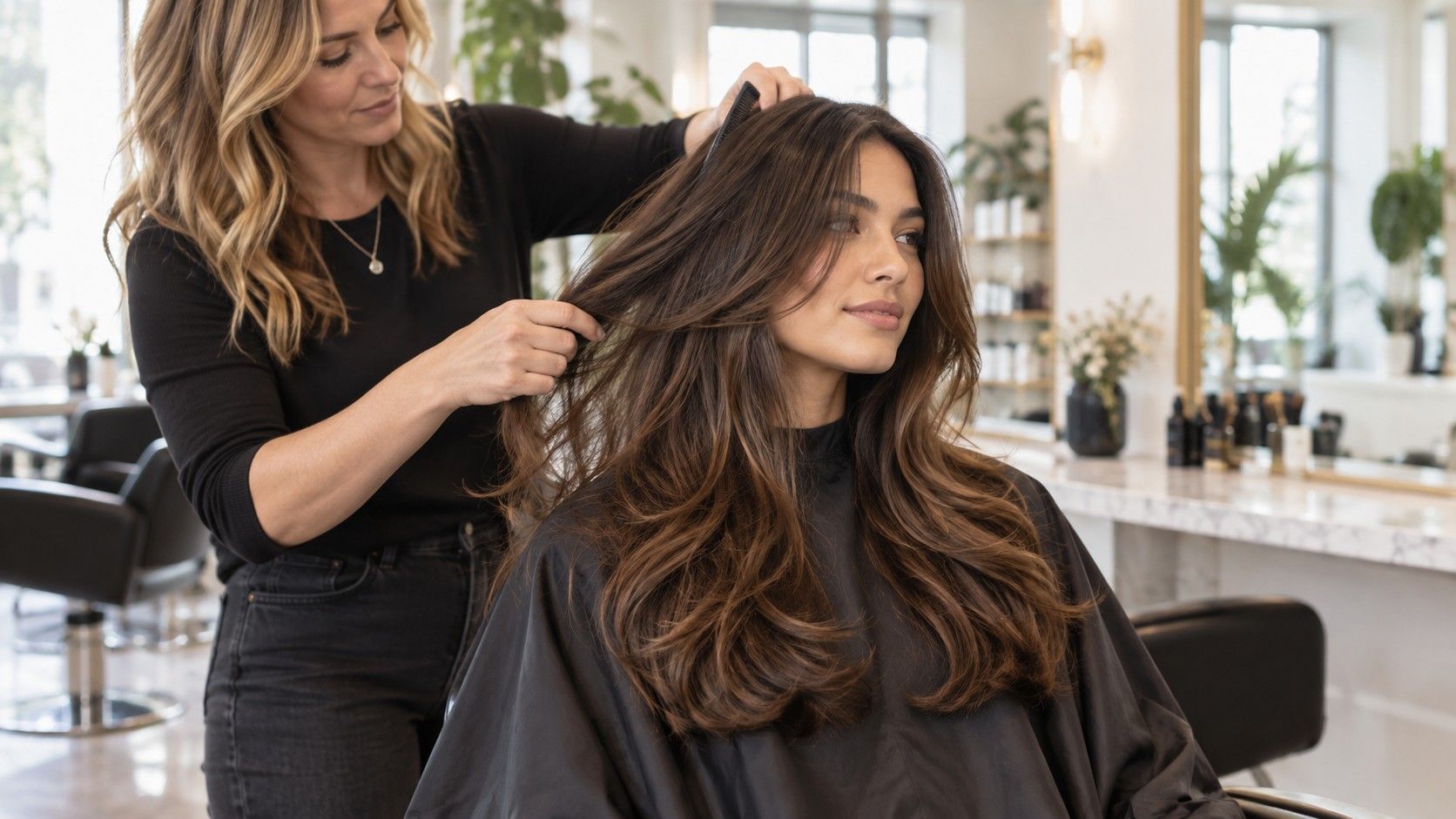
Long hair benefits from a perimeter that keeps some substance while avoiding a heavy rectangular curtain. A subtle U shape or a gentle rounded line can make the ends move without creating a dramatic V. The decision is not cosmetic only: a very sharp V concentrates length in the middle and can leave the sides feeling abrupt when the hair is worn forward. If you wear your hair mostly loose, look at the shape from the front as well as the back.
Face framing is useful when it connects to the perimeter rather than stopping as two isolated chunks near the chin. Thick hair often has enough natural presence; it does not need every front section cut short to gain interest. Long layers that begin below the cheekbone can break up the front, reduce the sense of a solid wall, and still tuck neatly behind the ears. That is easier to live with than dramatic pieces that must be heat-styled every morning.
| Approach | Best use | Potential problem |
|---|---|---|
| Hidden internal layers | Dense underlayers or slow drying time | Can turn puffy if too much support is removed |
| Long visible layers | Adding movement to heavy length | Can widen the sides when cut too high |
| Soft undercut | Very dense nape area and hair worn down often | Needs regular maintenance and may show in updos |
| Blunt perimeter | Creating a graphic, controlled outline | May form a shelf at the jaw or shoulders |
Be careful with thinning shears and indiscriminate texturizing
Thinning shears can be helpful in a narrow, thoughtful way, but they are not a universal bulk-removal tool. Repeatedly cutting short hairs through the same section can leave thick hair full of uneven pieces. Those pieces may stick out in humidity, catch on one another during a blow-dry, and create the fuzzy halo the cut was supposed to prevent. The immediate lightness can hide the problem until the hair grows for a few weeks.
Ask what technique is being used and where. Point cutting at the ends is different from thinning through the middle of the length. A razor can create beautiful softness in hair that has a cooperative wave, but it may also roughen a dry or highly porous texture. The right method depends on condition as much as density. If your ends already fray or your color has made the hair less smooth, protecting them may matter more than getting one extra ounce of movement.
There is also a difference between thick hair and coarse hair. Coarse strands can hold a strong shape, but they may resist overly delicate texturizing. Fine but dense hair may look bulky because there is a lot of it, yet it can become fragile if thinned too aggressively. A good stylist examines both the number of hairs and the feel of each strand before choosing a tool. That small assessment is why a tailored cut behaves better than a generic request for layers.
Make the cut workable on humid and rushed days
Humidity reveals whether a haircut has enough internal balance. When moisture enters the hair, shorter unsupported pieces tend to expand first. If the top grows wide while the ends stay compact, the shape can become mushroom-like. If the ends swell more than the crown, it can become triangular. Neither problem is solved by adding more hot-tool work every morning; usually the placement of layers and the choice of finish need reconsidering.
For wavy thick hair, a diffuser and a low-touch routine often work better than brushing until every wave is separated. Apply a light leave-in through the lengths, use a modest amount of hold where frizz starts, and let the hair form larger clumps. Scrunching out stiffness once dry can leave a softer surface without turning the whole cut into a cloud. Straight thick hair may prefer a smoothing blow-dry with the nozzle directed downward, followed by a quick bend at the ends rather than a full curl.
Drying time is a legitimate haircut factor. If washing your hair means an hour with a dryer, tell the stylist. A small amount of carefully placed internal removal can make a noticeable difference without changing the visible length. An undercut at the nape is another option for very dense hair, but it is a commitment: it requires upkeep and can be obvious when the hair is tied high. It should solve a real comfort problem, not be offered by default.
Give the stylist clear, practical details
Useful descriptions include where your hair feels heavy, what it does in rain, how you usually wear it, and how much time you will spend styling. Say whether you want to preserve a strong perimeter, whether you tuck it behind your ears, and whether you need it to fit into a low ponytail. Bring photos from the front and back, but identify the feature you want: the narrower outline, the movement at the ends, or the lighter nape.
It also helps to name your non-negotiable. Some people do not want an undercut; others do not want the lower edge thinned; others need to air dry most days. Those limits guide the haircut more effectively than asking for the latest trend. If a proposed technique sounds like it will create lots of short internal pieces, ask how it will look after eight weeks and how it will behave in humidity.
Thick hair offers generous material, but it still needs restraint. Keep enough weight to make the ends look healthy, remove bulk only where it interferes with comfort or shape, and choose layers that suit your real texture. When those decisions are made deliberately, the hair dries faster, sits closer to the head where you want it to, and still looks like a haircut rather than a reduction project.