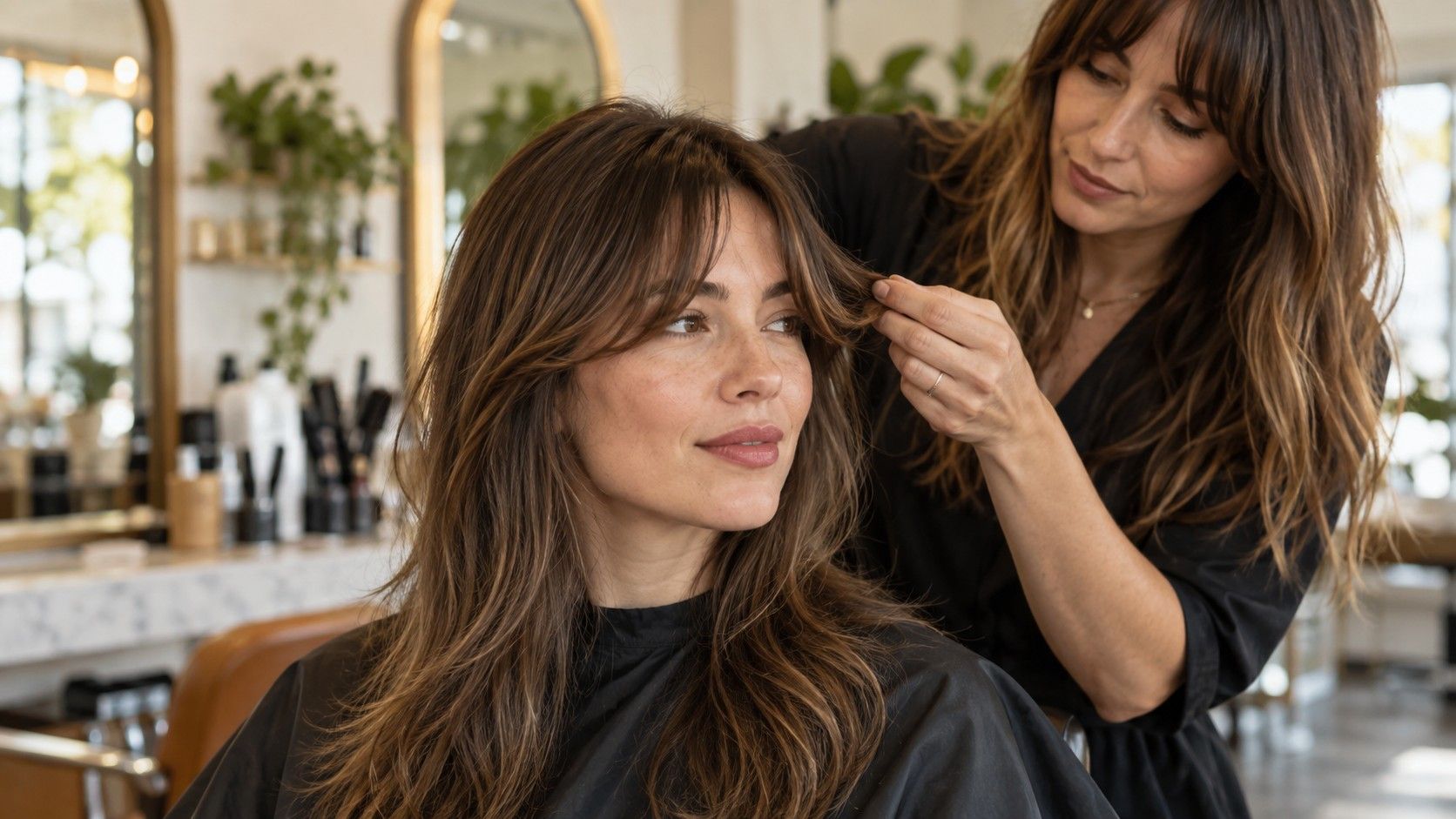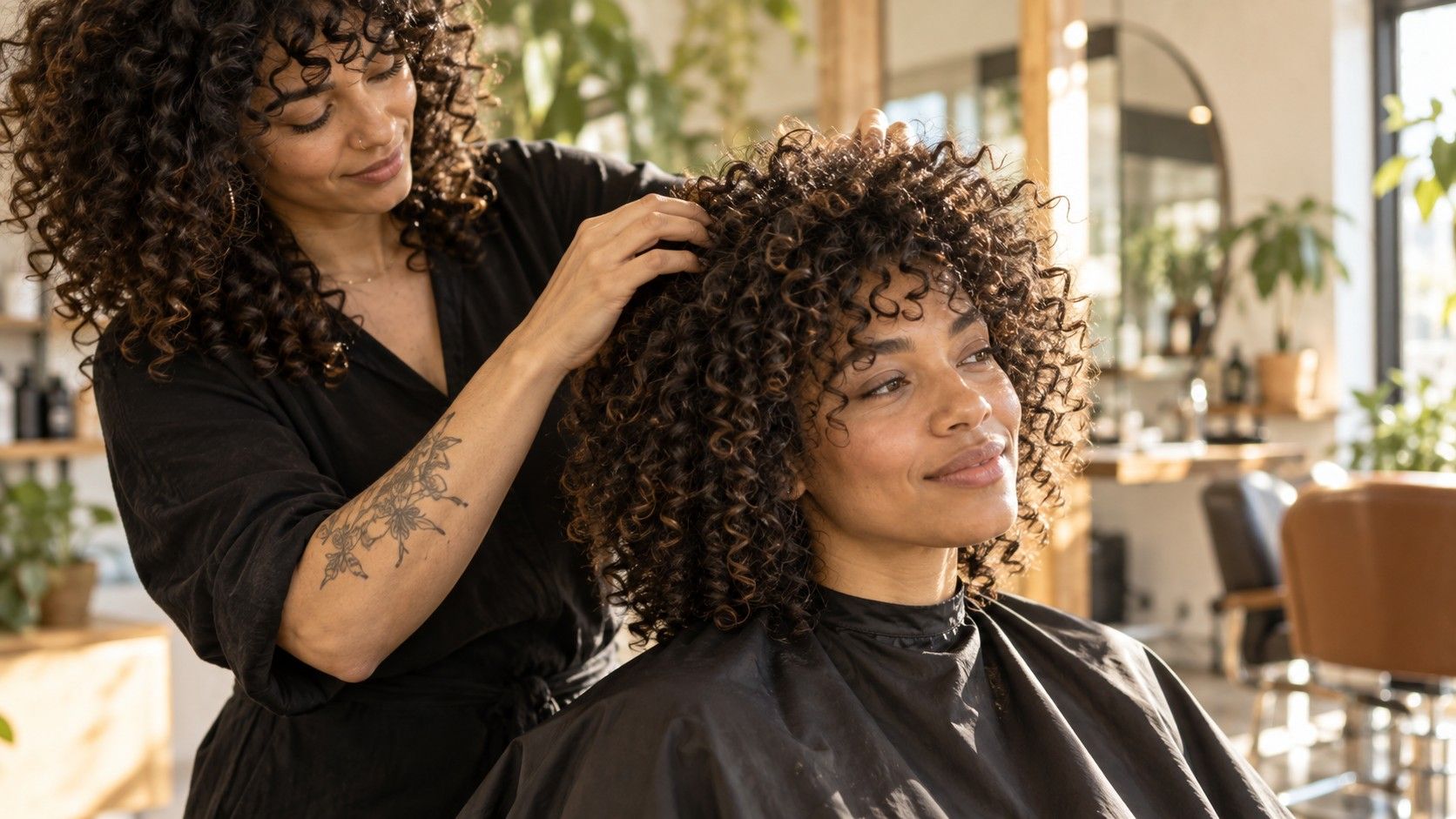
Wavy hair often gets treated as straight hair that needs more heat or curly hair that needs more product. In practice, it sits in a useful but changeable middle ground: it can look smooth at the roots, bend through the lengths, and turn into loose texture only after the right cut and drying method. The best haircut for wavy hair respects that inconsistency instead of asking every section to make the same wave.
Read your wave pattern before copying a photo
Look at your hair after it has been washed, conditioned, and left mostly alone. The key question is not whether it is officially wavy, but where the bend begins and how it groups. Some people have almost straight roots with an S-shape from the ears down. Others have waves close to the scalp but straighter, heavier ends. A haircut that works for one pattern may flatten another, even when both look similar in a pinned photo.
Density matters just as much. Fine wavy hair can separate into thin pieces when it is layered too aggressively, while dense wavy hair may form a bulky shelf if every length is blunt. Notice whether your hair gets wider when dry, whether the crown falls flat, and whether one side has a stronger wave. These observations give a stylist a practical map. They also stop you from choosing a cut solely because the model had a similar length or face shape.
Take photos on a normal day in natural light: front, both sides, and back. Include one image air-dried and one styled the way you actually style it. A salon consultation becomes much clearer when you can point to a flat crown, an area that puffs in humidity, or ends that go stringy after brushing. Good wavy hairstyles are designed around those repeating patterns, not an idealized first-hour finish.
When a blunt cut helps wavy hair
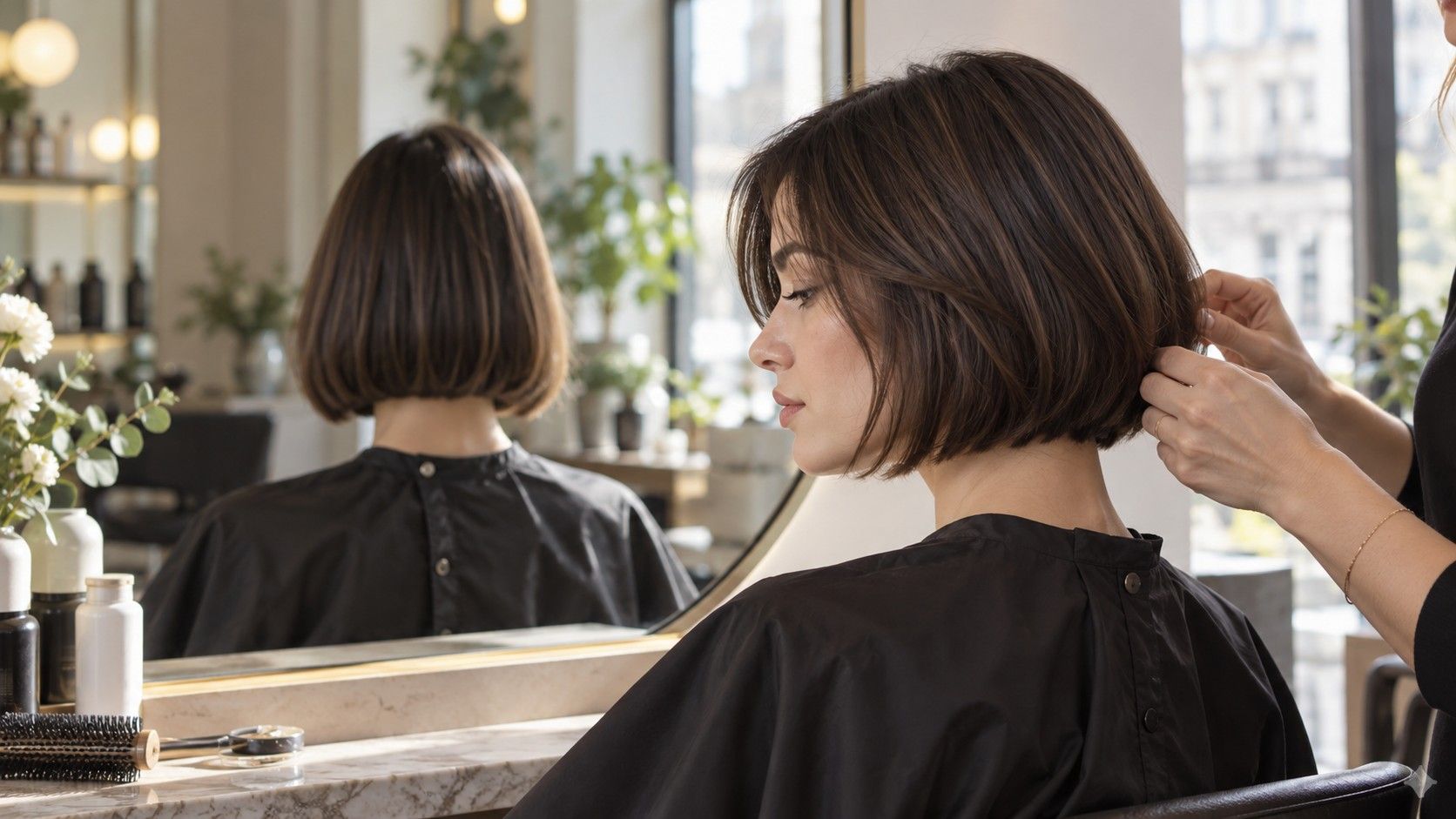
A blunt perimeter can be excellent for wavy hair when the ends need visual weight. It makes fine or medium-density hair look fuller, gives a soft S-wave something to bounce against, and can reduce the uneven look caused by old breakage. A chin-length or collarbone-length long bob is a common example: the solid line makes the hair look intentional even if the wave pattern is not identical on both sides.
The trade-off is movement. A very heavy blunt line may pull loose waves straighter, especially below the shoulders. If you air dry and want visible texture, ask for a perimeter that stays strong but is not cut as one dense block. Tiny adjustments within the line can prevent the ends from looking helmet-like without turning them into wisps. The difference is subtle, so it helps to explain whether you value fullness, swing, or both.
| Starting point | Cutting direction to discuss |
|---|---|
| Fine waves with thin-looking ends | Keep a stronger blunt perimeter and limited layers |
| Dense waves that form a heavy triangle | Use longer internal shaping while protecting the outline |
| Loose waves below the shoulders | Add gradual movement so the length does not pull flat |
| Waves that bend unevenly near the face | Set face framing by the dry position, not wet length |
Soft layers without creating extra frizz
Soft layers are useful when they give waves a place to form, not when they are used to remove as much hair as possible. The goal is usually to stop one heavy length from collapsing over the rest. On medium to long hair, longer layers can lift the upper sections and let the wave grouping show. On a shorter cut, too many short layers can create a fluffy surface that needs constant heat styling to look calm.
Ask how the layers will connect to the perimeter and where the shortest layer will fall when dry. Those two details are more meaningful than asking for layers in general. If your wave begins near the cheek, a carefully placed face frame may encourage movement. If your hair stays straight until the jaw, a short layer above that point may simply stick out. The best conversation names the behavior you want to change, such as a flat crown or a bulky lower half.
Frizz is not always a sign that you need less layering. It can appear because the hair was brushed dry, because the wave clumps were broken apart while drying, or because a section is shorter than its neighboring hair and cannot join the same pattern. A good cut gives the hair a coherent path; a simple styling method then helps it follow that path. Avoid expecting a haircut to make humidity irrelevant. It can improve shape, but weather still changes texture.
Parting and root lift can change the whole silhouette
Your parting is part of the haircut. A center part often makes a bob or long bob look clean and balanced, but it can expose a flat root area if your waves begin lower down. A soft side part can create immediate lift, yet it may push too much volume over one temple. Rather than committing to a dramatic part in the chair, try your usual part first and then move it slightly while the hair is dry. Small shifts can reveal the most stable shape.
Root lift does not have to mean teasing or daily high-heat work. When drying, hold the roots away from the scalp for a few minutes or clip the part while the hair sets. A diffuser on low airflow can support the bend without blowing it apart. If you prefer air drying, avoid repeatedly touching the roots while they are damp; that often flattens one section and creates fuzzy volume in another. The cut should allow some root movement without relying on a perfect blowout.
Tell your stylist if you switch partings during the week. A sharply stacked bob can be designed around one fixed direction, while a softer shape needs enough balance to travel from center to side. This is especially important with cowlicks near the front hairline. They are not a flaw to fight; they are information about which fringe length and part will be easiest to wear.
Air-drying and heat styling are different tests
Many haircuts for wavy hair look polished after a professional blowout because the hair has been stretched and directed with tension. That can be useful if you plan to blow dry most days, but it does not tell you how the shape will look after an air-dry. Ask to see at least some natural texture before leaving, or recreate it at home during the first wash. A cut that only works with a round brush is a different commitment from one that looks good with a diffuser.
For air drying, use products sparingly at first so you can read the result. A light leave-in or mousse may help wave grouping, while too much cream can pull fine waves straight and leave the roots limp. Scrunching encourages bend, but then the hair needs quiet time to set. For diffusing, use low to medium heat and low airflow, moving the dryer around rather than holding one section until it becomes rough. The aim is definition with movement, not a stiff shell.
Heat tools still have a place when you want a sleeker finish or a particular bend at the front. The practical question is frequency. If the hairstyle needs a curling iron every morning to look recognizable, make sure that is genuinely part of your routine. A softer cut that looks good air-dried and improves with occasional styling is often easier to maintain than a highly engineered shape that disappears after one night of sleep.
Make the next cut easier to maintain
Before booking, decide what maintenance means to you. It may be ten minutes with a diffuser, a quick refresh of the front pieces, or the ability to put the hair up without short layers escaping. A long bob is often a good middle ground because it keeps enough length for variety while removing the worn-out portion that can weigh waves down. Shorter cuts can be lively and practical too, but they usually need more frequent reshaping to preserve their line.
Plan trims around the cut rather than a generic schedule. A blunt bob can lose its crispness sooner than long layers, while a soft shoulder-length shape may still look good after several months if the ends are healthy. If you color your hair or use heat frequently, discuss how breakage may affect the perimeter. The haircut should account for the hair you have now, not only the hair you hope to grow.
After the appointment, give the shape a few wash cycles. Waves can settle differently once you use your own water, products, pillow, and weather. If the crown stays flat, the ends feel too sparse, or one side keeps flipping out, take a photo and return for a small adjustment. That feedback is far more useful than abandoning the cut after one difficult morning. The most dependable wavy hairstyle is one you can repeat without turning every wash day into a project.